Astaxanthin turns up in fat-burner stacks and metabolism blends often enough that it is worth addressing directly. The pitch usually runs through mitochondria: astaxanthin supports fat oxidation, fat oxidation burns fat, therefore astaxanthin burns fat.
The first step of that chain has some support. The last step does not. When trials have actually weighed people and measured their body composition, astaxanthin has not moved either one.
Key Takeaways
- A meta-analysis of 14 randomized controlled trials found no significant association between astaxanthin and BMI or body weight [1].
- A 2025 randomized, double-blind, placebo-controlled trial gave young male taekwondo athletes 12 mg per day for 4 weeks. Muscle mass and body fat mass did not change significantly, though sport-specific kicking performance improved [2].
- A large carotenoid meta-analysis (28,944 subjects) found low serum carotenoids are a risk marker for overweight and obesity (OR 1.73, 95% CI 1.57 to 1.91) [3]. That is an association across the whole carotenoid family, not evidence that an astaxanthin capsule causes weight loss.
- A 2025 fasting trial often cited as astaxanthin evidence used krill oil containing just 100 micrograms of astaxanthin per capsule, about 0.4 mg per day [4]. Typical supplements deliver 20 to 30 times that.
- The plausible and evidence-supported use is performance and recovery, not fat loss.
What The Pooled Human Data Says
The most direct evidence comes from a 2020 systematic review and meta-analysis that brought 14 randomized controlled trials into a quantitative analysis of astaxanthin outcomes [1]. Among the endpoints it examined were BMI and body weight. Neither was significantly associated with astaxanthin supplementation.
The analysis also found no association with fasting blood sugar, HbA1c, total cholesterol, LDL-C, triglycerides or blood pressure. The one significant result was a small HDL cholesterol increase of about 1.5 mg/dL [1]. If astaxanthin were meaningfully altering energy balance, body weight is exactly where you would expect it to show up across 14 trials. It did not.
The 2025 Athlete Trial: A Clean Test
A 2025 randomized, double-blind, placebo-controlled trial is useful because it tested astaxanthin in exactly the population where a body composition effect should be easiest to detect: young, training athletes with a controlled program [2].
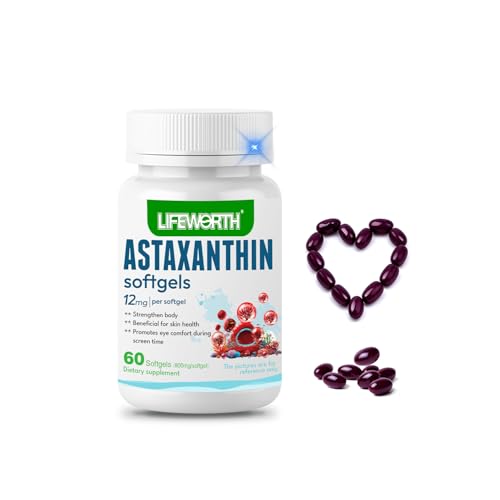
Young male taekwondo athletes took 12 mg per day of astaxanthin for 4 weeks. The result was split, and the split is the interesting part:
- Body composition: no significant changes in muscle mass or body fat mass [2].
- Performance: double jump kick performance rose from 67.2 to 70.1 kicks per 20 seconds in the astaxanthin group while the placebo group went from 67.9 to 66.9. The between-group difference reached significance from week 1 and held through week 4 (p < 0.05) [2].
- High roundhouse kick performance improved from 93.2 to 96.7 kicks per 60 seconds versus 94.7 to 93.6 on placebo [2].
So in the same trial, in the same people, over the same 4 weeks: measurable performance change, no body composition change. That is a fairly clean demonstration that whatever astaxanthin is doing, it is not remodeling fat mass.
The Carotenoid Association Study, Read Carefully
One study gets cited a lot in this context and deserves careful handling. A 2021 systematic review and meta-analysis examined carotenoids in people with overweight or obesity, pooling 7 randomized controlled trials and 8 observational studies covering 28,944 subjects across lycopene, astaxanthin, cryptoxanthin, alpha-carotene and beta-carotene [3].
It found that insufficient serum carotenoids were a risk factor for overweight and obesity, with an odds ratio of 1.73 (95% CI 1.57 to 1.91, p < 0.001), and that carotenoid supplementation was associated with body weight reduction [3].
Two things keep this from being an astaxanthin weight loss result. First, astaxanthin is one of five carotenoids in the pool, and the observational arm is dominated by dietary carotenoids from fruit and vegetables. Low serum carotenoids in a population are largely a marker of a diet low in produce, which travels with a great many other things that affect body weight. Second, the intervention arm spans doses from 1.2 to 60 mg per day across different compounds and durations from 20 days to 16 weeks [3]. Averaging across that range tells you something about carotenoids as a category and very little about an 8 mg astaxanthin softgel.

The Krill Oil Trial And A Dose You Should Check
A 2025 randomized trial studied krill oil supplementation during 8 weeks of alternate-day fasting in 41 adults with overweight and obesity [4]. The result was genuinely interesting: total body weight loss was the same in both groups (krill oil -4.6 kg, placebo -4.5 kg), but the placebo group lost fat-free mass and handgrip strength while the krill oil group did not [4].
That is a real finding about preserving lean mass during weight loss. It is not an astaxanthin finding. Each krill oil capsule in that trial contained 191 mg EPA, 94 mg DHA, 78 mg choline, and 100 micrograms of astaxanthin [4]. At four capsules a day that is 0.4 mg of astaxanthin, compared with the 4 to 12 mg in a standard astaxanthin softgel. The omega-3 and choline content is the far more plausible driver.
Our astaxanthin vs krill oil comparison goes deeper on why krill oil is a poor way to get astaxanthin specifically.
Where The Mitochondrial Argument Breaks Down
The mechanistic case is not nonsense. Astaxanthin does concentrate in mitochondrial membranes and does reduce lipid peroxidation there, and some animal work links it to increased fat utilization during exercise. Our mitochondria article covers that literature.

The leap is from substrate utilization to net fat loss. Shifting which fuel your muscles prefer during a workout does not, by itself, change how much energy you consume or expend over a day. Energy balance still governs body weight, and the human trials reflect that: the supplement changed some performance measures and left body composition alone.
What Astaxanthin Is Reasonable To Take For
If your goal is fat loss, astaxanthin is not the lever. Nothing in the pooled human record supports it, and the trial best positioned to find an effect found none.
The uses with better support are elsewhere on this site: exercise performance, muscle recovery, eye fatigue, and skin. If you already take astaxanthin for one of those and happen to be in a fat loss phase, there is no reason to stop. Just do not count it toward the outcome.
And if a product lists astaxanthin among a dozen ingredients on a fat burner label, check the dose. In our experience of reading these labels, the astaxanthin content is frequently a fraction of a milligram, present for the ingredient name rather than for any dose that has been studied.
Frequently Asked Questions
Does astaxanthin help you lose weight?
No. A meta-analysis of 14 randomized controlled trials found no significant association between astaxanthin supplementation and either BMI or body weight. A 2025 randomized, double-blind trial in athletes taking 12 mg per day for 4 weeks likewise found no significant change in body fat mass or muscle mass.
Does astaxanthin increase fat burning during exercise?
Some animal work suggests astaxanthin shifts substrate utilization toward fat during exercise, and it does concentrate in mitochondrial membranes. But shifting which fuel muscles prefer during a session does not by itself change daily energy balance, and the human trials that measured body composition found no change.
Why is astaxanthin in fat burner supplements?
Largely for the ingredient name and its mitochondrial and antioxidant story. Check the label dose. Astaxanthin in multi-ingredient fat burner blends is often a fraction of a milligram, well below the 4 to 12 mg used in clinical trials.
What about the krill oil study that preserved muscle during fasting?
That trial is real but it is not an astaxanthin result. Each krill oil capsule contained 100 micrograms of astaxanthin, roughly 0.4 mg per day at the dose used, alongside 191 mg EPA, 94 mg DHA and 78 mg choline per capsule. The omega-3 and choline content is the far more plausible explanation.
What is astaxanthin actually good for then?
The better supported uses are exercise performance and recovery, eye fatigue, and skin moisture and elasticity. Body composition is not among them.
References
- Xia W, et al. The effects of astaxanthin supplementation on obesity, blood pressure, CRP, glycemic biomarkers, and lipid profile: A meta-analysis of randomized controlled trials. Pharmacol Res. 2020;161:105113. PMID 32755613
- Zhang X, Liang J, et al. Effects of 4-week astaxanthin supplementation on athletic performance and body composition in young male taekwondo athletes: a randomized, double-blind, placebo-controlled trial. Front Nutr. 2025;12:1731899. PMID 41473192
- Yao N, Cui W, et al. The association between carotenoids and subjects with overweight or obesity: a systematic review and meta-analysis. Food Funct. 2021;12(11):4768-4782. PMID 33977977
- Alblaji M, et al. Benefits of Krill Oil Supplementation During Alternate-Day Fasting in Adults With Overweight and Obesity: A Randomized Trial. Obesity (Silver Spring). 2025;33(9):1694-1703. PMID 40671417
These statements have not been evaluated by the Food and Drug Administration. This information is not intended to diagnose, treat, cure, or prevent any disease. Content is for informational purposes only and is not medical advice; consult a qualified healthcare provider before starting any supplement. As an Amazon Associate we earn from qualifying purchases.
