Astaxanthin is a red-orange carotenoid produced by the microalgae Haematococcus pluvialis that has attracted growing interest among endurance athletes and recreational exercisers. Unlike most antioxidants, it occupies both the fat-soluble and water-soluble compartments of cell membranes simultaneously, giving it access to oxidative stress throughout the cell in ways that vitamin C or vitamin E alone cannot match.
The promise for athletes is straightforward in theory: intense exercise generates free radicals that damage muscle tissue, impair mitochondria, and slow recovery. An antioxidant that works at the membrane level could, in principle, reduce that damage and support faster adaptation. Whether that theoretical advantage translates into measurable gains on the road or in the gym is a separate question — and the clinical picture is more nuanced than supplement marketing typically suggests.
Key Takeaways
- Astaxanthin’s dual membrane-spanning structure and protection of the CPT I enzyme provide a sound biological rationale for exercise-related benefits [1].
- Human trial results on endurance performance are genuinely mixed: at least one study found improvement [2] while others in trained athletes found no significant effect [3][4].
- The most consistent positive findings come from older adults and less-conditioned populations, where baseline oxidative stress is higher and benefits to walking capacity and metabolic adaptation have been observed [5][6].
- Astaxanthin reliably raises antioxidant markers such as blood glutathione, but this biochemical effect does not reliably translate into measurable performance gains in well-trained athletes [7].
- The supplement is well-tolerated at doses up to 12 mg/day; the theoretical antioxidant paradox warrants consideration for athletes in heavy training phases, even though it has not been confirmed in human astaxanthin trials.
How Astaxanthin Targets Exercise-Induced Oxidative Stress
During hard training, mitochondria in working muscle generate reactive oxygen species (ROS) as a byproduct of energy production. At low levels these ROS act as signaling molecules that drive adaptation; at high levels they damage lipids, proteins, and DNA, contributing to the soreness and performance decrements that follow intense exercise bouts.
Astaxanthin’s molecular structure allows it to span the full thickness of the phospholipid bilayer, quenching singlet oxygen and neutralizing free radicals in both the inner and outer layers of cell membranes. Early laboratory work demonstrated that it can protect carnitine palmitoyltransferase I (CPT I) — the enzyme responsible for shuttling fatty acids into mitochondria — from oxidative modification during exercise, thereby helping to preserve fat-burning capacity [1]. Reviews of the broader literature describe it as a particularly potent membrane antioxidant with mechanistic plausibility for exercise applications [8].
More recent commentary has highlighted astaxanthin’s potential to support mitochondrial biogenesis and adaptation pathways, particularly in endurance training contexts [9]. The biological rationale is well-developed; the human evidence, as discussed below, is still accumulating.
Fat Oxidation and Metabolic Efficiency During Exercise
One of the most studied questions is whether astaxanthin shifts the fuel mix during exercise toward fat and away from carbohydrate — an attractive outcome for endurance athletes who want to spare muscle glycogen. Animal studies have shown this effect clearly, but human trials have produced inconsistent results.

One intervention found that astaxanthin supplementation reduced heart rate and carbohydrate oxidation rates during exercise in overweight individuals, suggesting a meaningful metabolic shift in a population with elevated baseline oxidative stress [10]. A separate study in elderly participants found that supplementation enhanced metabolic adaptations alongside an aerobic training program [5].
In healthy, well-trained men the picture is murkier. One trial found that astaxanthin increased blood glutathione concentrations — a meaningful antioxidant outcome — but did not change fat oxidation rates during exercise [7]. Two other controlled trials in trained cyclists found no significant improvement in fat utilization or performance [3][4]. The current evidence suggests metabolic benefits may be more pronounced in individuals with higher oxidative stress at baseline than in already well-trained athletes.
Endurance Performance: What the Controlled Trials Show
Direct performance outcomes — time trial results, power output, VO2 max — are the hardest test for any supplement, and here the astaxanthin evidence is genuinely mixed. An often-cited 2011 study found that astaxanthin supplementation improved cycling time trial performance compared to placebo [2], providing early support for the idea that antioxidant protection translates into faster times.
Subsequent trials have been less encouraging. A well-designed study of a 40 km cycling time trial found no statistically significant performance benefit from astaxanthin supplementation [3]. Another controlled study concluded that astaxanthin does not augment fat use or improve endurance performance in trained athletes [4]. A critical review of antioxidant supplementation in soccer found similarly inconsistent evidence across that sport-specific literature [11].
What can be drawn from this heterogeneity? Training status, dosage, supplementation duration, and baseline oxidative stress all vary across trials, making direct comparison difficult. Positive signals in less-trained or older populations are more consistent than those in competitive athletes, which may reflect the fact that highly trained individuals already have robust endogenous antioxidant systems that leave less room for supplementation to add value.
Recovery, Chronic Fatigue, and Muscle Damage
Beyond peak performance, athletes care about how quickly they can recover and return to quality training. Astaxanthin’s antioxidant and anti-inflammatory properties are mechanistically well-positioned to reduce exercise-induced muscle damage, and some early evidence supports this. A 2025 study examining astaxanthin’s effects on chronic exercise fatigue found measurable physiological benefits in this domain [12], adding to a growing area of work focused on recovery rather than acute output.
The broader review literature notes that astaxanthin may attenuate markers of exercise-induced inflammation and muscle damage, though the human trial evidence remains limited and effect sizes are generally modest [8]. For athletes managing heavy training loads, even modest reductions in recovery time could accumulate into meaningful benefit across a training cycle, though this hypothesis has not yet been tested in long-term controlled trials.

Exercise Capacity in Older Adults and Less-Trained Populations
The most consistent evidence for astaxanthin’s exercise-related benefits comes from older and less-conditioned populations. A study in nursing home residents found that supplementation improved walking capacity, with reduced oxidative stress as the proposed mechanism [6]. A separate trial demonstrated enhanced metabolic adaptations to aerobic training in elderly participants taking astaxanthin relative to those on placebo [5].
These findings align with the underlying biology: aging and deconditioning are associated with higher baseline oxidative stress and weaker endogenous antioxidant defenses, creating more headroom for an exogenous antioxidant to produce detectable functional improvements. For sedentary older adults beginning an exercise program, or for nursing home residents working to maintain mobility, the current evidence base is meaningfully more positive than it is for competitive athletes.
Safety, Dosage, and Practical Considerations for Athletes
Natural astaxanthin derived from Haematococcus pluvialis holds GRAS status. Human trials have used doses ranging from 4 mg to 20 mg per day, with studies at up to 12 mg/day for 12 weeks reporting no serious adverse effects. The most consistently noted side effect at very high doses — roughly above 20 mg/day — is carotenodermia, a reversible yellow-orange tint to the skin that is cosmetically noticeable but medically harmless. Supplementation during pregnancy or breastfeeding is not recommended due to insufficient safety data in those populations.
Because astaxanthin is fat-soluble, taking it alongside a meal containing dietary fat meaningfully improves absorption. Typical study durations range from four to twelve weeks; evidence does not currently support conclusions about longer-term use.
Athletes should also be aware of the antioxidant paradox: the concern that antioxidant supplementation during training might blunt the adaptive ROS signaling that drives fitness gains. Current human evidence does not clearly demonstrate this blunting effect for astaxanthin specifically, but it is a legitimate theoretical concern and a reason some sports nutrition researchers suggest timing supplementation away from the hardest training blocks rather than using it continuously year-round.
🛒 Where to Buy Astaxanthin
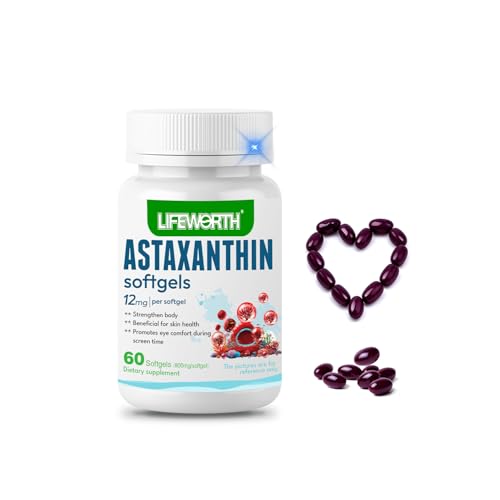
- Nutrex Hawaii BioAstin Hawaiian AstaxanthinLab-tested / studied
softgels, 12 mg per softgel, 90 count — Hawaiian-grown Haematococcus pluvialis, sold as the High Potency 90-softgel bottle - Pure Synergy SuperPure Astaxanthin Extract
capsules, 60 count — Sold as an astaxanthin extract in a capsule rather than a softgel; the listing does not state a mg per capsule, so check the label for the dose before comparing it with the 12 mg bottles here - Naturalis New Zealand Astaxanthin
softgels, 12 mg per softgel, 120 count — New Zealand-grown rather than Hawaiian, and the largest bottle on this list at 120 softgels - NOW Foods Astaxanthin
softgels, 4 mg per softgel — The entry-level 4 mg dose, built on the Zanthin astaxanthin ingredient; a lower starting point than the 12 mg bottles above
As an Amazon Associate we earn from qualifying purchases. Astaxanthin products vary mainly by dose and by source, with 4mg and 12mg the common strengths and most of them derived from Haematococcus pluvialis algae, so check the label for the astaxanthin content per serving and prefer products that publish third-party testing.
A Note on the Evidence
The human evidence base for astaxanthin and exercise is still relatively small, with many trials involving modest sample sizes and heterogeneous methodologies; results should not be generalized beyond the populations studied. Astaxanthin is not recommended during pregnancy or breastfeeding due to insufficient safety data, and anyone with a medical condition or taking medications should consult a qualified healthcare provider before adding any new supplement. This article is informational and does not constitute medical advice.
Frequently Asked Questions
Does astaxanthin improve athletic performance?
The evidence is mixed and population-dependent. One controlled trial found improved cycling time trial performance with astaxanthin supplementation [2], but subsequent trials in trained athletes found no significant performance benefit [3][4]. Benefits appear more consistent in older or less-trained populations than in competitive athletes.
Can astaxanthin help with post-exercise recovery?
There is early evidence that astaxanthin may reduce markers of chronic exercise fatigue [12], and the mechanistic rationale — membrane-level antioxidant protection during exercise-induced ROS production — is sound. However, large, well-controlled human recovery trials remain limited, and the review literature describes the evidence as promising but preliminary [8].
Does astaxanthin help the body burn more fat during exercise?
Some studies in overweight or elderly participants suggest a shift toward fat oxidation and reduced carbohydrate use [10][5], but multiple trials in trained athletes found no meaningful change in fat oxidation during exercise [7][4]. The effect appears population-dependent, with baseline fitness and oxidative stress level playing a significant moderating role.
What dose of astaxanthin is typically used in exercise studies?
Human trials have used doses ranging from approximately 4 mg to 20 mg per day, usually for four to twelve weeks. No serious adverse effects have been reported at doses up to 12 mg/day for 12 weeks. Very high doses above roughly 20 mg/day have been associated with reversible skin discoloration (carotenodermia), which is harmless but cosmetically noticeable.
Is astaxanthin particularly beneficial for older exercisers?
Yes, the most consistent evidence comes from older populations. Studies in elderly individuals and nursing home residents found improvements in walking capacity and metabolic adaptation to aerobic training [5][6]. This likely reflects the fact that aging is associated with higher baseline oxidative stress and weaker endogenous antioxidant defenses, giving exogenous supplementation more room to produce a measurable effect.
Could astaxanthin interfere with training adaptations?
This is an open theoretical question known as the antioxidant paradox. The concern is that ROS generated during exercise serve as signals that drive beneficial adaptation, and antioxidants could dampen those signals. Current human evidence does not clearly demonstrate this blunting effect for astaxanthin specifically, but it is a legitimate consideration that some sports scientists raise about antioxidant use during high-intensity training phases.
References
- Aoi W et al. Astaxanthin improves muscle lipid metabolism in exercise via inhibitory effect of oxidative CPT I modification. Biochemical and biophysical research communications (2008). PMID 18082622
- Earnest CP et al. Effect of astaxanthin on cycling time trial performance. International journal of sports medicine (2011). PMID 21984399
- Brown DR et al. The effect of astaxanthin supplementation on performance and fat oxidation during a 40 km cycling time trial. Journal of science and medicine in sport (2021). PMID 32660833
- Res PT et al. Astaxanthin supplementation does not augment fat use or improve endurance performance. Medicine and science in sports and exercise (2013). PMID 23274592
- Liu SZ et al. Astaxanthin supplementation enhances metabolic adaptation with aerobic training in the elderly. Physiological reports (2021). PMID 34110707
- Nakanishi R et al. Impacts of Astaxanthin Supplementation on Walking Capacity by Reducing Oxidative Stress in Nursing Home Residents. International journal of environmental research and public health (2022). PMID 36294075
- McAllister MJ et al. Astaxanthin Supplementation Increases Glutathione Concentrations but Does Not Impact Fat Oxidation During Exercise in Active Young Men. International journal of sport nutrition and exercise metabolism (2022). PMID 34611051
- Brown DR et al. Astaxanthin in Exercise Metabolism, Performance and Recovery: A Review. Frontiers in nutrition (2017). PMID 29404334
- Waldman H et al. Astaxanthin Supplementation as a Potential Strategy for Enhancing Mitochondrial Adaptations in the Endurance Athlete: An Invited Review. Nutrients (2024). PMID 38892683
- Wika AA et al. Astaxanthin Reduces Heart Rate and Carbohydrate Oxidation Rates During Exercise in Overweight Individuals. International journal of exercise science (2023). PMID 37114194
- Poulios A et al. The Effects of Antioxidant Supplementation on Soccer Performance and Recovery: A Critical Review of the Available Evidence. Nutrients (2024). PMID 39599590
- Liu S et al. Effects of Astaxanthin on Chronic Exercise Fatigue. Physiological research (2025). PMID 40886374
These statements have not been evaluated by the Food and Drug Administration. This information is not intended to diagnose, treat, cure, or prevent any disease. Content is for informational purposes only and is not medical advice; consult a qualified healthcare provider before starting any supplement. As an Amazon Associate we earn from qualifying purchases.
