Astaxanthin is a red-pink keto-carotenoid produced by the freshwater microalgae Haematococcus pluvialis. Unlike most dietary antioxidants, it anchors within both the aqueous and lipid layers of cell membranes simultaneously, giving it a broader reach for quenching singlet oxygen and free radicals than carotenoids that sit in only one membrane layer. Critically, it also crosses the blood-retinal barrier — a selective boundary that blocks most compounds from reaching retinal tissue — making it a logical candidate for eye-health research.
Interest in astaxanthin for eye health has grown alongside rising rates of digital eye strain and long-term concern about retinal oxidative stress. The eyes are metabolically demanding organs: the retina has one of the highest oxygen consumption rates of any tissue in the body, and photoreceptors are continuously exposed to both phototransduction byproducts and light-induced oxidative load. This article examines what astaxanthin does in eye tissue at a mechanistic level, what the available clinical evidence actually shows, and where important gaps remain.
Key Takeaways
- Astaxanthin is a keto-carotenoid that crosses the blood-retinal barrier and spans both layers of cell membranes, giving it unusually broad antioxidant reach in eye tissue.
- A two-year RCT (the CARMIS study) found that a multi-carotenoid antioxidant supplement including astaxanthin improved visual acuity and contrast sensitivity in early AMD patients [1], though the combination formula means benefits cannot be attributed to astaxanthin alone.
- Natural astaxanthin from Haematococcus pluvialis is well tolerated at 4–12 mg per day; the only notable side effect at high doses above 20 mg per day is a reversible yellow-orange skin tint.
- A role for astaxanthin in reducing digital eye fatigue is mechanistically plausible given its access to ciliary body tissue, but clinical evidence in this specific application is limited and needs replication in larger trials.
- Astaxanthin is a dietary supplement, not a treatment for any eye disease, and is not recommended during pregnancy or breastfeeding.
Why the Retina Is Especially Vulnerable to Oxidative Stress
Photoreceptors rely on intense mitochondrial activity to continuously regenerate the visual cycle, producing reactive oxygen species (ROS) as a byproduct at unusually high rates. At the same time, the retina is exposed to light — including the higher-energy blue wavelengths emitted by screens and LED lighting — which can directly generate singlet oxygen and trigger lipid peroxidation in photoreceptor membranes.
The outer segments of photoreceptors are densely packed with polyunsaturated fatty acids (PUFAs), making them particularly susceptible to oxidative damage. Over decades, the accumulation of oxidized lipids and proteins in retinal tissue is associated with progressive changes in macular function. The retinal pigment epithelium (RPE), which maintains photoreceptor health and recycles visual pigments, faces a comparable oxidative burden and is a key site of interest in research on dietary antioxidants and eye aging.
How Astaxanthin May Protect Eye Tissue: The Proposed Mechanisms
Astaxanthin’s chemical structure distinguishes it from carotenoids such as beta-carotene or lutein. Its polar end-group ketone and hydroxyl substituents allow the molecule to anchor within the phospholipid bilayer while extending into both aqueous compartments on either side — a membrane-spanning orientation that other carotenoids cannot adopt. This positioning allows it to intercept free radicals both inside and across the lipid layer, and its singlet-oxygen quenching capacity is substantially higher than that of many common antioxidants.

Because astaxanthin crosses the blood-retinal barrier, it can reach the macula, the choroid, and the photoreceptor layer directly. Once there, it is proposed to reduce lipid peroxidation in the PUFA-rich outer segments and to modulate inflammatory signaling pathways — including NF-κB — that are implicated in retinal inflammation. These mechanisms are supported by in vitro and animal research. Whether they translate into measurable clinical benefits in humans is a separate and more demanding question that requires well-designed controlled trials.

Carotenoid Supplementation and Macular Health: Clinical Evidence
The CARMIS study (Carotenoids in Age-related Maculopathy Italian Study) was a two-year randomized controlled trial that tested a multi-carotenoid antioxidant supplement — formulated with lutein, zeaxanthin, astaxanthin, vitamin C, vitamin E, zinc, and copper — against placebo in patients with early age-related macular degeneration. After 24 months, the supplemented group demonstrated statistically significant improvements in best-corrected visual acuity and contrast sensitivity compared to placebo [1].
A critical limitation must be stated plainly: the CARMIS formula was a combination product. Lutein and zeaxanthin are the dominant carotenoids concentrated in the macular pigment and have an extensive separate evidence base for macular support. The specific contribution of astaxanthin within the CARMIS formula cannot be isolated from this study. The result supports the multi-carotenoid antioxidant approach to macular health [1], but does not permit conclusions about astaxanthin’s independent effect on macular outcomes.
Astaxanthin and Digital Eye Fatigue
Eye fatigue — clinically termed asthenopia — is a common complaint among people who spend extended hours on screens. Symptoms include difficulty sustaining focus, aching around the eyes, blurred near vision, and headaches. The ciliary muscle, which contracts to adjust lens curvature for near focusing (accommodation), is thought to fatigue during prolonged close work, and oxidative stress in ciliary body tissue has been proposed as one contributing factor alongside muscular fatigue.
The ciliary body has a rich blood supply and significant metabolic activity during sustained visual effort, and astaxanthin’s documented ability to cross the blood-ocular barrier suggests it could reach this tissue. A supportive role in reducing oxidative load in the ciliary body and the surrounding vasculature is mechanistically plausible. However, this remains an area where the clinical evidence is limited in scale and where the study designs available do not allow strong conclusions; this is not a proven therapeutic benefit.
Safety Profile and Practical Dosage Considerations
Natural astaxanthin derived from Haematococcus pluvialis holds GRAS (Generally Recognized as Safe) status. Clinical trials in adults have used doses ranging from 4 mg to 12 mg per day for periods up to 12 weeks without serious adverse effects. The most consistently noted side effect at very high doses — above approximately 20 mg per day — is carotenodermia, a reversible yellow-orange skin discoloration caused by carotenoid accumulation in subcutaneous tissue. This is harmless and resolves when supplementation is stopped.

Evidence is insufficient to establish safety during pregnancy or breastfeeding, and supplementation is not recommended for those groups. As a fat-soluble compound, astaxanthin is better absorbed when taken with a meal containing dietary fat. Commercial supplements should be sourced from natural Haematococcus pluvialis extract; natural astaxanthin has a different stereoisomer profile from synthetic astaxanthin used in aquaculture, and the natural form is what has been tested in human clinical research.

Honest Assessment: What the Evidence Does and Does Not Show
The mechanistic case for astaxanthin in eye health is coherent. It crosses the blood-retinal barrier, it is a potent membrane-level antioxidant, and oxidative stress is a genuine contributing factor in both retinal aging and ciliary fatigue. The CARMIS trial showed that a carotenoid-antioxidant combination that included astaxanthin improved visual acuity and contrast sensitivity in early AMD patients over two years [1], and this is real, controlled human data. The limitation is that the multi-ingredient design prevents attribution of those benefits to astaxanthin specifically.
Larger, well-powered RCTs isolating astaxanthin’s independent contribution to visual outcomes are needed before strong claims can be made. The existing evidence justifies continued research and supports the use of astaxanthin within a broader antioxidant approach to eye health, but it does not yet support promoting it as a standalone treatment for any eye condition. Buyers should weigh mechanistic plausibility and the available combination-study data honestly against that gap.
🛒 Where to Buy Astaxanthin
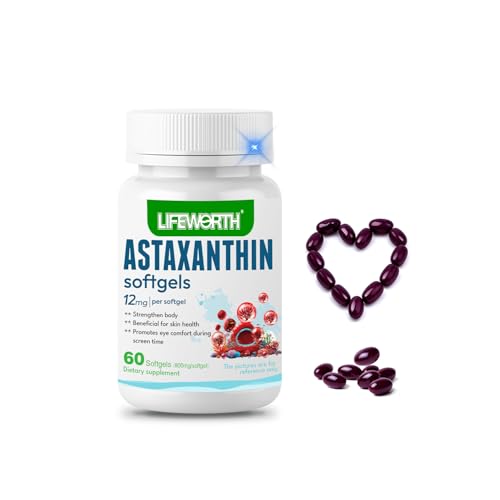
- Nutrex Hawaii BioAstin Hawaiian AstaxanthinLab-tested / studied
softgels, 12 mg per softgel, 90 count — Hawaiian-grown Haematococcus pluvialis, sold as the High Potency 90-softgel bottle - Pure Synergy SuperPure Astaxanthin Extract
capsules, 60 count — Sold as an astaxanthin extract in a capsule rather than a softgel; the listing does not state a mg per capsule, so check the label for the dose before comparing it with the 12 mg bottles here - Naturalis New Zealand Astaxanthin
softgels, 12 mg per softgel, 120 count — New Zealand-grown rather than Hawaiian, and the largest bottle on this list at 120 softgels - NOW Foods Astaxanthin
softgels, 4 mg per softgel — The entry-level 4 mg dose, built on the Zanthin astaxanthin ingredient; a lower starting point than the 12 mg bottles above
As an Amazon Associate we earn from qualifying purchases. Astaxanthin products vary mainly by dose and by source, with 4mg and 12mg the common strengths and most of them derived from Haematococcus pluvialis algae, so check the label for the astaxanthin content per serving and prefer products that publish third-party testing.
A Note on the Evidence
The available clinical evidence for astaxanthin specifically in eye health is promising but limited: the strongest human RCT data comes from a combination supplement study rather than astaxanthin-only trials, and further large-scale research is needed. If you have an existing eye condition, take medications, are pregnant or breastfeeding, or are considering supplementation for a child, consult a qualified eye care or healthcare professional before starting.
Frequently Asked Questions
Does astaxanthin actually reach the retina?
Yes — unlike many antioxidants, astaxanthin has the documented capacity to cross the blood-retinal barrier, which means it can accumulate in retinal tissue including the macula and photoreceptor layer. Reaching the tissue is a necessary prerequisite for biological activity there, though it does not by itself confirm a clinical benefit; that requires controlled trial evidence.
Is there human clinical trial evidence for astaxanthin and eye health?
The CARMIS study was a two-year randomized controlled trial that included astaxanthin as part of a multi-carotenoid antioxidant supplement in patients with early age-related macular degeneration. The supplemented group showed significant improvements in visual acuity and contrast sensitivity versus placebo [1]. Because the supplement was a combination product, the result supports the overall formulation rather than astaxanthin independently.
Can astaxanthin relieve eye strain from prolonged screen use?
Oxidative load in the ciliary body during sustained near-focus work is a plausible contributor to screen-related eye fatigue, and astaxanthin’s ability to reach ocular tissues makes a supportive role biologically reasonable. The clinical evidence specific to screen fatigue is limited in scale, and no definitive conclusion can be drawn from the studies cited here. It should not be presented as a proven remedy for digital eye strain.

How does astaxanthin differ from lutein and zeaxanthin for eye health?
Lutein and zeaxanthin are the dominant carotenoids that form the macular pigment and have an extensive independent evidence base for macular support. Astaxanthin has a structurally different molecule that spans the full phospholipid bilayer — an orientation lutein and zeaxanthin do not adopt — and is a more potent singlet-oxygen quencher by some measures. They are often studied together in combination formulas, as in the CARMIS study [1], because they may act through complementary mechanisms rather than competing ones.
What dose of astaxanthin is used in research?
Clinical trials in adults have used between 4 mg and 12 mg per day, and at these doses natural astaxanthin from Haematococcus pluvialis has not been associated with serious adverse effects in trials up to 12 weeks in duration. Because it is fat-soluble, absorption is improved when taken with a fat-containing meal.
Is astaxanthin safe to take daily?
Natural astaxanthin holds GRAS status and has not produced serious adverse effects in trials at up to 12 mg per day for 12 weeks. At very high doses above approximately 20 mg per day, a reversible yellow-orange skin discoloration (carotenodermia) has been reported; this resolves after stopping supplementation. There is insufficient evidence to support its safety during pregnancy or breastfeeding, so it is not recommended for those groups.
References
- Piermarocchi S et al. Carotenoids in Age-related Maculopathy Italian Study (CARMIS): two-year results of a randomized study. European journal of ophthalmology (2012). PMID 22009916
These statements have not been evaluated by the Food and Drug Administration. This information is not intended to diagnose, treat, cure, or prevent any disease. Content is for informational purposes only and is not medical advice; consult a qualified healthcare provider before starting any supplement. As an Amazon Associate we earn from qualifying purchases.
