Krill oil and standalone astaxanthin supplements sit closer together than most buying guides suggest. Krill oil naturally contains astaxanthin — it’s the pigment responsible for krill oil’s distinctive red color — alongside omega-3 fatty acids EPA and DHA in phospholipid form. That overlap raises a genuine question for anyone comparing the two: is a krill oil capsule already delivering a meaningful astaxanthin dose, or does it function as a different supplement entirely that happens to share one ingredient?
The honest answer is that krill oil and standalone astaxanthin extract serve different primary purposes, and the astaxanthin content in krill oil is real but small relative to purpose-built astaxanthin supplements. Understanding the numbers, the delivery mechanism, and what each product is actually optimized for matters more than treating them as interchangeable.
Key Takeaways
- Krill oil naturally contains astaxanthin as its red pigment, but at a fraction of the dose (typically well under 1 mg per serving) found in dedicated astaxanthin supplements (usually 4–12 mg).
- Krill oil’s core value proposition is EPA/DHA delivered in phospholipid form, not astaxanthin — reviews of the bioavailability literature note the comparison to fish oil remains genuinely difficult to settle from existing human trials [1][2].
- Astaxanthin from Haematococcus pluvialis extract is absorbed via the same fat-dependent pathway across species, including dogs and cats, where uptake studies show it associates mainly with HDL in the bloodstream [3].
- Someone who wants omega-3s with an antioxidant bonus is better served by krill oil; someone who wants a therapeutic astaxanthin dose for skin, eye, or exercise-recovery goals needs a dedicated astaxanthin supplement.
- The two can be stacked without concern — they aren’t redundant, and the combined omega-3 plus higher-dose astaxanthin approach is common in practice.
What’s Actually in a Krill Oil Capsule
Krill oil is extracted from Antarctic krill (Euphausia superba), a small crustacean at the base of the Southern Ocean food web. Its defining feature relative to fish oil is that most of its omega-3 content is bound to phospholipids rather than triglycerides, which some researchers have proposed improves absorption. A review of the bioavailability literature comparing krill oil to fish oil found the picture more complicated than marketing claims suggest: differing EPA/DHA doses, intervention lengths, and study populations across the available trials make it difficult to draw a firm conclusion about superior absorption [2]. A separate reexamination of the same body of evidence reached a similar conclusion — no human trial has yet matched EPA/DHA doses head-to-head between the two oils with rigorous bloodstream measurement [1].
The astaxanthin in krill oil is what gives it a deep red-orange color, the same pigment responsible for salmon flesh and lobster shells. But the concentration is low. A typical krill oil softgel delivers somewhere in the range of a few hundred micrograms of astaxanthin at most — nowhere close to the 4 to 12 mg found in a standalone astaxanthin capsule sourced from concentrated Haematococcus pluvialis extract.

Why the Dose Gap Matters
Most of the human research behind astaxanthin’s specific benefits — skin photoprotection, exercise recovery, eye strain, cardiovascular markers — uses doses in the 4 to 12 mg per day range sustained over weeks. At the microgram-level doses present in krill oil, astaxanthin is functioning more as a natural preservative that protects the oil’s own omega-3 content from oxidation than as a therapeutic ingredient in its own right. That’s a legitimate and useful role, but it is a different job than what a dedicated astaxanthin supplement is designed to do.
This distinction shows up clearly in how the two products are absorbed and used by the body. Uptake research in dogs and cats — species with digestive and lipid-handling physiology relevant to comparative absorption science — found that orally dosed astaxanthin reaches peak plasma concentration around 6 hours post-dose and is taken up mainly bound to HDL cholesterol, with a plasma elimination half-life of roughly 9 to 18 hours [3]. That absorption pathway depends on adequate dietary fat being present regardless of the source, so a fat-free meal will blunt uptake whether the astaxanthin is coming from a krill oil softgel or a standalone extract capsule.
Should You Choose One or Take Both?
The decision comes down to what problem is being solved. Someone shopping primarily for omega-3 support — general cardiovascular health, triglyceride management, or an alternative to fish oil for those who dislike fishy aftertaste — is buying krill oil for its EPA/DHA phospholipid content, and the astaxanthin along for the ride is a minor bonus, not the point.
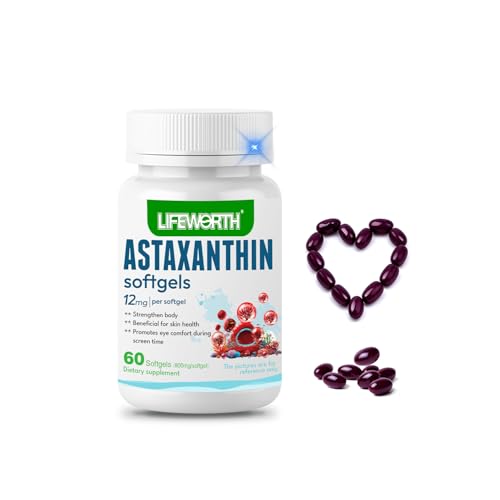
Someone targeting astaxanthin-specific outcomes — skin elasticity and UV protection, reduced exercise-induced muscle damage, eye fatigue, or general antioxidant support at research-backed doses — needs a supplement that actually delivers a 4 to 12 mg dose. Krill oil alone will not get there; the astaxanthin content is simply too dilute.

Because the two supplements are addressing different primary needs, there’s no redundancy in taking both. A person already on krill oil for omega-3 support who wants astaxanthin’s specific benefits can add a dedicated astaxanthin capsule without concern about overlap or excess — the combined daily astaxanthin exposure will still land well within the doses used safely in published human trials.
Practical Buying Guidance
When comparing labels, look past marketing language like “contains astaxanthin” on a krill oil bottle and check whether an actual milligram amount is disclosed. Many krill oil products don’t list astaxanthin content at all because the marketing value of “contains a powerful antioxidant” doesn’t require disclosing that the amount is a few hundred micrograms. A dedicated astaxanthin supplement, by contrast, should clearly state its milligram dose (commonly 4, 6, or 12 mg) and ideally its extraction source (Haematococcus pluvialis is the standard natural source used in most published research).
Take either supplement with a meal containing some dietary fat to support absorption, since both astaxanthin and the omega-3s in krill oil rely on fat-dependent uptake pathways.
Frequently Asked Questions
Does krill oil provide a meaningful dose of astaxanthin on its own?
No. Krill oil typically contains only trace amounts of astaxanthin — well under a milligram per serving in most products — compared to the 4 to 12 mg used in astaxanthin-specific research. Krill oil’s primary value is its EPA/DHA content, not its astaxanthin content.
Can I take krill oil and a standalone astaxanthin supplement together?
Yes. The two aren’t redundant since they serve different primary purposes, and combined daily astaxanthin intake from both sources would still fall well within doses shown to be well-tolerated in human trials.
Is krill oil’s astaxanthin more bioavailable because it’s paired with phospholipids?
This is plausible in principle but not conclusively demonstrated. The broader krill oil vs. fish oil bioavailability literature itself remains difficult to interpret due to inconsistent study designs, and no trial has specifically isolated astaxanthin bioavailability from krill oil versus a standalone extract at matched doses.
Which is better for general antioxidant support, krill oil or astaxanthin supplements?
For antioxidant support specifically at research-relevant doses, a standalone astaxanthin supplement is the more direct choice given the dose gap. Krill oil is better positioned as an omega-3 supplement with a minor antioxidant contribution from its natural astaxanthin content.
References
- A reexamination of krill oil bioavailability studies. Lipids Health Dis (2014). PMID 25156381
- Comparison of bioavailability of krill oil versus fish oil and health effect. Vasc Health Risk Manag (2015). PMID 26357480
- Astaxanthin uptake in domestic dogs and cats. Nutr Metab (Lond) (2010). PMID 20565971
These statements have not been evaluated by the Food and Drug Administration. This information is not intended to diagnose, treat, cure, or prevent any disease. Content is for informational purposes only and is not medical advice; consult a qualified healthcare provider before starting any supplement. As an Amazon Associate we earn from qualifying purchases.
