Delayed-onset muscle soreness—the ache that peaks 24 to 72 hours after hard training—is one of the most common barriers to consistent exercise. Researchers have long suspected that the oxidative stress and inflammation triggered by eccentric contractions play a central role in DOMS severity, which is why antioxidant compounds have attracted serious scientific attention as potential recovery aids. Astaxanthin, a marine keto-carotenoid produced by the microalgae Haematococcus pluvialis, is among the most potent antioxidants studied in this context, largely because its elongated molecular structure lets it anchor across the full thickness of a cell membrane and neutralize both fat-soluble and water-soluble free radicals simultaneously.
The picture that emerges from recent trials and reviews is genuinely mixed—and that honesty matters if you are weighing whether to add astaxanthin to your recovery toolkit. Some controlled studies report meaningful reductions in subjective soreness, while others find no statistically significant change in objective damage biomarkers. This article walks through the proposed mechanisms, the strongest available evidence on both sides, and the practical considerations around dose and population, so you can form a realistic expectation before you spend money on a supplement.
Key Takeaways
- Astaxanthin’s membrane-spanning antioxidant action gives it a plausible mechanistic rationale for reducing exercise-induced oxidative damage, particularly in muscle cell membranes.
- Human trials show the most consistent signal for reduced subjective muscle soreness (DOMS); evidence for lowering objective blood-based damage markers like creatine kinase is less consistent [1][2][3].
- A dose-dependent relationship has been observed for exercise-induced muscle damage outcomes, suggesting that dose matters, though the optimal amount is not yet precisely defined [4].
- Endurance athletes may have additional reasons to consider astaxanthin given its potential to support mitochondrial function, though human RCT evidence for that specific endpoint remains limited [5].
- Doses up to 12 mg per day for 12 weeks have a good safety profile in healthy adults; fat-soluble formulations taken with food improve absorption.
How Astaxanthin Is Thought to Protect Exercising Muscle
Intense or unaccustomed exercise—especially eccentric movements like downhill running or the lowering phase of a squat—generates a rapid surge of reactive oxygen species (ROS) inside muscle fibers. When ROS production outpaces the cell’s endogenous defenses, oxidative damage to lipid membranes, proteins, and DNA follows, and this damage is one trigger of the subsequent inflammatory cascade that produces soreness and functional impairment.
Astaxanthin’s proposed advantage over simpler antioxidants like vitamin C or vitamin E is structural. Because it spans both the hydrophilic and lipophilic zones of the phospholipid bilayer, it can intercept free radicals at the membrane surface—where lipid peroxidation chains start—while also scavenging singlet oxygen in the aqueous cytoplasm. It also appears to modulate several inflammatory signaling pathways and may support mitochondrial function under metabolic stress [6]. Preserving mitochondrial integrity is especially relevant for endurance athletes, whose training adaptations depend on healthy mitochondrial turnover [5].
It is important to note that ROS are not purely harmful; they are also essential signaling molecules that drive training adaptations including mitochondrial biogenesis. The ISSN’s 2026 position stand on dietary antioxidants cautions that blanket suppression of exercise-induced oxidative stress with high-dose supplementation may theoretically blunt these adaptations in some contexts [7]. Astaxanthin is not a blanket ROS scavenger in the way some synthetic antioxidants are, which may explain why its effects on performance and recovery appear more selective.
Evidence for Reduced Muscle Soreness (DOMS)
The clearest signal in favor of astaxanthin comes from subjective soreness outcomes. A 2023 trial in resistance-trained men found that astaxanthin supplementation significantly reduced self-reported muscle soreness ratings following an eccentric exercise protocol compared to placebo [1]. This is meaningful because DOMS is the outcome athletes actually feel and the one most likely to affect training frequency and quality in the days following a hard session.

A 2026 dose-response study extended this line of inquiry by examining whether the magnitude of the effect changes with the amount taken, finding dose-dependent effects on exercise-induced muscle damage outcomes in exercising males [4]. Dose-dependent relationships are considered a marker of biological plausibility, suggesting that the effect is not simply noise, though the optimal dose for muscle recovery is not yet precisely defined in the literature.
A 2025 randomized controlled trial specifically targeting cycling performance found measurable effects on oxidative stress markers alongside muscle damage biomarkers following a structured cycling protocol in young adults [8]. Taken together, these data suggest astaxanthin has a credible case for attenuating the subjective and oxidative dimensions of exercise-induced damage—but the full picture requires considering the null results as well.
Where the Evidence Is Less Clear: Objective Damage Biomarkers
Not all trials have found the same pattern. A well-designed 2023 study in resistance-trained males specifically measuring circulating markers of muscle damage and inflammation—including creatine kinase and inflammatory cytokines—after an exercise-induced muscle damage protocol found no statistically significant effect of astaxanthin supplementation compared to placebo [2]. This is a null result in a controlled population and deserves equal weight alongside the positive findings.
The 2026 systematic review and meta-analysis pooling data across multiple trials on exercise recovery biomarkers and performance concluded that results across studies are heterogeneous—that is, different studies find different outcomes, and no single effect size can be cleanly generalized to all athletes [3]. Differences in study population (trained versus untrained), exercise protocol (eccentric versus mixed modality), dose, supplementation duration, and the specific outcomes measured all contribute to this variability.
The practical interpretation is that astaxanthin appears more consistently effective at reducing subjective soreness than at measurably lowering blood-based damage markers like creatine kinase. Whether that distinction matters depends on what you are optimizing for. If the goal is to feel less sore and return to training sooner, the subjective signal is clinically meaningful. If the goal is to reduce structural muscle damage at a biochemical level, current evidence does not robustly support that outcome.
Immune and Inflammatory Markers After Exercise
Beyond muscle soreness per se, exercise—particularly prolonged or high-intensity efforts—transiently suppresses several immune parameters. A 2023 study found that astaxanthin supplementation countered exercise-induced decreases in immune-related plasma proteins, suggesting a potential role in supporting the immune response during periods of heavy training load [9]. This is an emerging area and the clinical significance for healthy athletes is not yet clear, but it adds a dimension to astaxanthin’s mechanistic profile beyond straightforward antioxidant action.
A separate randomized trial examined whether antioxidant supplementation could reduce cardiac troponin release in cyclists following strenuous effort—troponin being a marker of cardiac stress that rises after intense prolonged exercise [10]. Results in this area are preliminary and the context is endurance sport rather than resistance training, but they illustrate that astaxanthin’s potential protective scope may extend to exercise stress beyond skeletal muscle alone. These findings should be interpreted cautiously given the complexity of exercise-induced troponin kinetics.

Endurance Athletes and Mitochondrial Considerations
For endurance athletes specifically, astaxanthin’s interaction with mitochondrial biology may be as relevant as its antioxidant effects on acute muscle damage. A 2024 invited review concluded that astaxanthin supplementation represents a plausible strategy for supporting mitochondrial adaptations in endurance athletes, citing its ability to modulate mitochondrial function and reduce mitochondrial oxidative stress during prolonged aerobic effort [5]. The review acknowledged that much of this evidence is mechanistic or derived from animal studies, and that well-powered human RCTs specifically targeting mitochondrial endpoints in endurance athletes remain limited.
A 2017 review of astaxanthin across exercise metabolism, performance, and recovery synthesized earlier evidence and noted that effects on fat oxidation, lactate accumulation, and exercise capacity had been observed in some but not all human trials [6]. The authors highlighted dose and supplementation duration as important moderating variables. Most positive outcomes in endurance contexts used supplementation periods of four weeks or longer, suggesting that shorter loading windows may be insufficient to produce measurable adaptation.
Dose, Duration, and Practical Considerations
Human trials investigating astaxanthin for muscle recovery have generally used doses ranging from 4 mg to 20 mg per day, with most evidence clustering around 6 to 12 mg daily. Natural astaxanthin from Haematococcus pluvialis holds GRAS (Generally Recognized as Safe) status in the United States, and clinical trials have not identified serious adverse effects at doses up to 12 mg per day for 12 weeks. At very high doses above 20 mg per day, a reversible yellowing or orange tinting of the skin (carotenodermia) has been reported, but this resolves with discontinuation and poses no known health risk.
Astaxanthin is fat-soluble and its bioavailability increases substantially when taken with a meal containing dietary fat. Several trials have also examined astaxanthin derived from Antarctic krill oil, which packages the compound alongside phospholipids that may enhance absorption and also provides omega-3 fatty acids with independent anti-inflammatory properties [11]. Whether krill-derived astaxanthin produces meaningfully different recovery outcomes compared to algae-derived astaxanthin in supplement form has not been definitively established in head-to-head trials.
Supplementation duration appears to matter. Studies that measured outcomes after single acute doses or very short supplementation windows have been less likely to show significant effects than those using four weeks or more of consistent daily intake. Athletes considering astaxanthin for recovery should plan on a multi-week trial rather than expecting acute benefit from a single pre-workout dose.
🛒 Where to Buy Astaxanthin
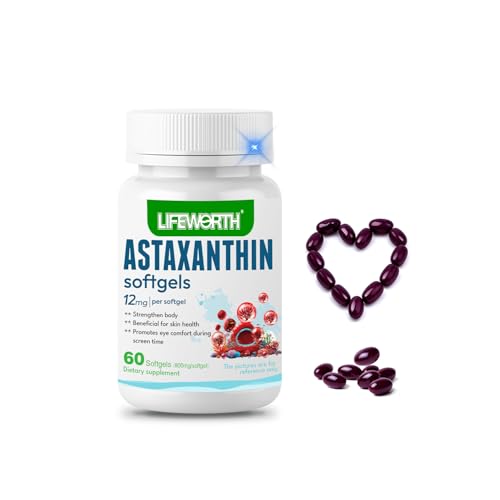
- Nutrex Hawaii BioAstin Hawaiian AstaxanthinLab-tested / studied
softgels, 12 mg per softgel, 90 count — Hawaiian-grown Haematococcus pluvialis, sold as the High Potency 90-softgel bottle - Pure Synergy SuperPure Astaxanthin Extract
capsules, 60 count — Sold as an astaxanthin extract in a capsule rather than a softgel; the listing does not state a mg per capsule, so check the label for the dose before comparing it with the 12 mg bottles here - Naturalis New Zealand Astaxanthin
softgels, 12 mg per softgel, 120 count — New Zealand-grown rather than Hawaiian, and the largest bottle on this list at 120 softgels - NOW Foods Astaxanthin
softgels, 4 mg per softgel — The entry-level 4 mg dose, built on the Zanthin astaxanthin ingredient; a lower starting point than the 12 mg bottles above
As an Amazon Associate we earn from qualifying purchases. Astaxanthin products vary mainly by dose and by source, with 4mg and 12mg the common strengths and most of them derived from Haematococcus pluvialis algae, so check the label for the astaxanthin content per serving and prefer products that publish third-party testing.
A Note on the Evidence
The evidence base for astaxanthin and muscle recovery is growing but still limited by small sample sizes, heterogeneous protocols, and relatively short study durations; no single finding should be treated as definitive. Astaxanthin supplementation is not recommended during pregnancy or breastfeeding due to insufficient safety data in those populations, and anyone with a medical condition or who takes medications should consult a healthcare provider before adding any supplement to their routine. This article is informational only and does not constitute medical advice.
Frequently Asked Questions
Does astaxanthin actually reduce muscle soreness after workouts?
Some controlled trials in resistance-trained men have found that astaxanthin supplementation significantly reduces self-reported muscle soreness ratings following eccentric exercise [1]. However, at least one similarly designed study found no significant effect on objective damage markers in the same population [2]. A 2026 meta-analysis concluded results across studies are heterogeneous [3], so it would be inaccurate to say the evidence is uniform—it is promising but not conclusive.
How long do I need to take astaxanthin before it might help with recovery?
Based on the trial durations that have shown positive effects, most researchers recommend at least four weeks of consistent daily supplementation before evaluating outcomes. A 2017 review noted that shorter supplementation windows are less likely to produce measurable results, likely because tissue saturation takes time [6]. Taking it once before a hard session is unlikely to produce the same effect as sustained daily intake.
What dose should I take for muscle recovery?
Most human trials investigating exercise recovery have used doses between 6 and 12 mg per day. A 2026 study found dose-dependent effects on exercise-induced muscle damage, suggesting higher doses within the studied range may produce stronger effects [4]. Natural astaxanthin from H. pluvialis has been studied at up to 12 mg per day for 12 weeks without serious adverse effects. Exceeding 20 mg per day is not supported by current evidence and may cause reversible skin discoloration.
Is astaxanthin useful for endurance athletes as well as strength athletes?
There is plausible evidence for both populations, but the mechanisms may differ. For endurance athletes, astaxanthin’s potential to support mitochondrial function under prolonged aerobic stress is an additional rationale beyond acute muscle damage protection [5]. A 2025 RCT in cyclists found effects on both oxidative stress and muscle damage biomarkers following a structured cycling protocol [8]. For strength athletes, the DOMS-reduction signal is more studied, though with mixed results on objective markers.
Can I get astaxanthin from krill oil instead of a standalone supplement?
Krill oil is one dietary source of astaxanthin and has been studied in the context of skeletal muscle injury recovery after resistance exercise [11]. However, krill oil also contains omega-3 fatty acids with their own anti-inflammatory properties, making it difficult to attribute any observed effects specifically to astaxanthin. If your primary goal is astaxanthin supplementation, a standardized H. pluvialis extract offers better control over the dose you are actually consuming.
Could taking antioxidants like astaxanthin interfere with training adaptations?
This is a legitimate concern that researchers take seriously. The ISSN’s 2026 position stand on dietary antioxidants notes that ROS produced during exercise also serve as signaling molecules for adaptations like mitochondrial biogenesis, and that aggressive antioxidant supplementation could theoretically blunt these signals in some contexts [7]. Current evidence does not specifically confirm this blunting effect for astaxanthin at typical doses, but it is a reason to avoid unnecessarily high doses and to consider periodizing supplementation rather than taking it year-round without evaluation.
References
- Barker GA et al. Astaxanthin Supplementation Reduces Subjective Markers of Muscle Soreness following Eccentric Exercise in Resistance-Trained Men. Muscles (Basel, Switzerland) (2023). PMID 40757570
- Waldman HS et al. Astaxanthin Supplementation Does Not Affect Markers of Muscle Damage or Inflammation After an Exercise-Induced Muscle Damage Protocol in Resistance-Trained Males. Journal of strength and conditioning research (2023). PMID 36727984
- Liu S et al. The Effects of Astaxanthin Supplementation on Exercise Recovery Biomarkers and Exercise Performance: A Systematic Review and Meta-Analysis. Nutrients (2026). PMID 42197030
- Yılmaz M et al. Dose-Dependent Effects of Astaxanthin on Exercise-Induced Muscle Damage in Exercising Males. Journal of human kinetics (2026). PMID 42051615
- Waldman H et al. Astaxanthin Supplementation as a Potential Strategy for Enhancing Mitochondrial Adaptations in the Endurance Athlete: An Invited Review. Nutrients (2024). PMID 38892683
- Brown DR et al. Astaxanthin in Exercise Metabolism, Performance and Recovery: A Review. Frontiers in nutrition (2017). PMID 29404334
- Gonzalez DE et al. International Society of Sports Nutrition position stand: effects of dietary antioxidants on exercise and sports performance. Journal of the International Society of Sports Nutrition (2026). PMID 41701327
- Tsao JP et al. Effect of astaxanthin supplementation on cycling performance, muscle damage biomarkers and oxidative stress in young adults: a randomized controlled trial. BMC sports science, medicine & rehabilitation (2025). PMID 40615903
- Nieman DC et al. Astaxanthin supplementation counters exercise-induced decreases in immune-related plasma proteins. Frontiers in nutrition (2023). PMID 37025615
- Klinkenberg LJ et al. Effect of antioxidant supplementation on exercise-induced cardiac troponin release in cyclists: a randomized trial. PloS one (2013). PMID 24260184
- Yang S et al. Impact of Antarctic krill oil supplementation on skeletal muscle injury recovery after resistance exercise. European journal of nutrition (2023). PMID 36566465
These statements have not been evaluated by the Food and Drug Administration. This information is not intended to diagnose, treat, cure, or prevent any disease. Content is for informational purposes only and is not medical advice; consult a qualified healthcare provider before starting any supplement. As an Amazon Associate we earn from qualifying purchases.
