Male fertility depends heavily on sperm quality — motility, morphology, and DNA integrity above all — and oxidative stress is one of the most well-documented threats to all three. Sperm cells are unusually vulnerable to reactive oxygen species (ROS) because their plasma membranes are rich in polyunsaturated fatty acids and they carry only limited antioxidant defenses of their own. Astaxanthin, a keto-carotenoid derived from the microalgae Haematococcus pluvialis, has attracted research interest in this context because its molecular structure lets it quench free radicals and singlet oxygen across both the lipid and aqueous phases of cell membranes simultaneously.
The question is whether that antioxidant capacity translates into measurable improvements in human sperm parameters. Research published through 2026 spans human cryopreservation studies, two systematic reviews with meta-analyses, and a range of animal and preclinical models. The picture is promising but still incomplete: the strongest human evidence comes from sperm banking contexts, while evidence for oral supplementation improving natural fertility in men remains early. This article summarizes what the current science actually shows, without overstating it.
Key Takeaways
- Astaxanthin’s membrane-spanning antioxidant structure makes it mechanistically well-suited to protecting sperm, which are highly vulnerable to lipid peroxidation and ROS damage.
- The strongest human evidence comes from cryopreservation research, where adding astaxanthin to the extender solution improved post-thaw motility, morphology, DNA integrity, and reduced ROS in human sperm [1][2].
- Two 2026 meta-analyses found consistent positive directional evidence across clinical and preclinical studies, but noted that human oral supplementation trials in infertile men are still limited [2][3].
- Animal studies suggest astaxanthin may protect sperm against specific toxins — including heavy metals and chemotherapy agents — via Nrf2/HO-1 pathway activation and CatSper1 gene upregulation [4][5][6].
- Natural astaxanthin is well tolerated up to 12 mg/day, but men with fertility concerns should pursue a full specialist evaluation rather than treating supplementation as a standalone solution.
Why Oxidative Stress Is Central to Male Infertility
Sperm cells generate ROS as a byproduct of normal mitochondrial activity, and low levels of ROS actually play a signaling role in capacitation and fertilization. Problems arise when ROS production overwhelms the body’s antioxidant defenses. The lipid-rich sperm membrane is particularly susceptible to lipid peroxidation — a chain reaction that degrades membrane fluidity and impairs motility. Oxidative damage to sperm DNA can reduce fertilization rates and, if fertilization occurs, affect embryo development.
Diet, environmental toxins, obesity, and inflammatory states can all tip the balance toward excess ROS. Rat research demonstrated that high-fat diet feeding caused significant testicular tissue damage, while dietary restriction combined with antioxidant intervention was protective [7]. Separately, mouse research showed that lipopolysaccharide-induced systemic inflammation produced measurable subfertility, and astaxanthin supplementation attenuated this effect by activating the Nrf2/HO-1 antioxidant pathway — one of the body’s central cellular defense systems [4]. These findings position antioxidants broadly, and astaxanthin specifically, as mechanistically credible candidates for fertility support.
How Astaxanthin Works in Reproductive Tissue
Astaxanthin’s molecular structure sets it apart from simpler antioxidants like vitamin C or vitamin E. Its polar end-groups anchor into both the inner and outer leaflets of cell membranes, while its conjugated polyene chain spans the membrane’s hydrophobic core. This dual positioning allows it to intercept free radicals at multiple sites and quench singlet oxygen far more potently than most carotenoids. For sperm, this is especially relevant because lipid peroxidation is initiated and propagated in exactly the hydrophobic environment astaxanthin spans.
Beyond direct ROS scavenging, astaxanthin appears to upregulate the cell’s own antioxidant machinery. The mouse subfertility study identified Nrf2/HO-1 pathway activation as the key protective mechanism [4] — when Nrf2 is activated, it drives production of endogenous antioxidant enzymes. Animal research also found that astaxanthin induced expression of the CatSper1 gene in mouse sperm — a calcium channel critical for hyperactivated motility needed for fertilization — while simultaneously protecting against cadmium-induced testicular toxicity [5]. This suggests astaxanthin’s fertility-relevant effects extend beyond simple antioxidant action.

Human Evidence: Sperm Cryopreservation Studies
The most direct human evidence for astaxanthin’s effects on sperm comes from cryopreservation research, where sperm face intense oxidative stress during freezing and thawing. A 2024 human study found that including astaxanthin in the sperm extender during vitrification and liquid nitrogen vapor freezing improved post-thaw motility, morphology, and survival while reducing ROS levels and DNA fragmentation [1]. The DNA fragmentation finding is clinically meaningful: elevated sperm DNA fragmentation is associated with lower fertilization rates and higher miscarriage risk.
A 2026 systematic review and meta-analysis focused specifically on astaxanthin supplementation during the human sperm freeze-thaw process confirmed that the antioxidant produced measurable improvements in sperm quality parameters [2]. A broader 2026 systematic review and meta-analysis examining both clinical and preclinical astaxanthin research in male infertility further supported these findings, drawing on studies across multiple species and methodologies [3]. A separate review of astaxanthin’s protective effects on reproductive cell cryopreservation, with emphasis on its antioxidative properties, reinforced the mechanistic consistency of these observations [8].
A critical caveat applies here: most of this human evidence involves adding astaxanthin to extender solutions in the laboratory rather than oral supplementation by the patient. Whether ingested astaxanthin reaches testicular and sperm tissue at concentrations sufficient to replicate these effects remains less established.
Animal and Veterinary Evidence on Motility, Morphology, and Toxin Protection
A substantial body of animal research provides supporting mechanistic evidence and explores dose-response relationships that would be difficult to study ethically in humans. Studies in boars found that astaxanthin in the storage medium improved sperm quality across multiple storage and incubation conditions, with benefits to motility and membrane integrity [9]. Research in beef bulls found that astaxanthin concentration in the extender influenced sperm kinetics and reduced lipid peroxidation after cryopreservation in a dose-dependent manner [10] — suggesting that concentration matters, not just presence or absence. Dog semen research produced similar findings [11].
Animal research also demonstrates protection against specific toxic insults relevant to human male fertility. In mice, astaxanthin supplementation inhibited the cytotoxic and genotoxic effects of cyclophosphamide — a chemotherapy drug known to damage germ cells — on sperm [6]. This has potential relevance for men considering fertility preservation before cancer treatment, though human studies in that specific context have not yet been conducted. The cadmium model further showed that astaxanthin protected sperm function against heavy metal toxicity while upregulating CatSper1 [5], consistent with the multi-pathway protection seen in other models.
What the 2026 Meta-Analyses Conclude
Two systematic reviews and meta-analyses published in Scientific Reports in 2026 represent the highest-level synthesis currently available. The first, focused on human sperm quality during the freeze-thaw process, found that astaxanthin produced significant improvements in key sperm quality parameters [2]. The second, covering both clinical and preclinical studies on male infertility more broadly, confirmed consistent positive directional evidence across species and study designs for astaxanthin’s effects on sperm motility, morphology, and oxidative stress markers [3].
The meta-analytic conclusions are broadly favorable, but both reviews reflect a field still maturing. Study sizes tend to be small, follow-up durations short, and the majority of human data comes from assisted reproduction laboratory settings rather than from randomized trials of oral supplementation in infertile men trying to conceive naturally. These are meaningful limitations that the evidence base itself acknowledges.

Practical Context: What This Means for Men Considering Astaxanthin
For men undergoing sperm cryopreservation — whether for fertility preservation before chemotherapy or as part of assisted reproduction — the evidence that astaxanthin added to extender solutions protects sperm quality is reasonably consistent across human studies and multiple animal models [2][1][8]. This is a laboratory-level intervention managed by the clinic.
For men considering oral astaxanthin supplementation to improve natural fertility, the evidence base is thinner. The mechanistic rationale is sound: astaxanthin does reach reproductive tissue, oxidative stress is a genuine factor in male subfertility, and the Nrf2/HO-1 pathway activation seen in animal models [4] represents a plausible route to benefit. But large, well-controlled human trials of oral astaxanthin in infertile men — measuring pregnancy rates rather than intermediate sperm parameters — have not yet been conducted. Natural astaxanthin from Haematococcus pluvialis is generally well tolerated; trials in other health contexts have used doses up to 12 mg per day for 12 weeks without serious adverse effects, with the only reported side effect at very high doses being reversible carotenodermia.
Men with unexplained subfertility, elevated sperm DNA fragmentation, or those facing chemotherapy may find the existing evidence sufficient reason to discuss astaxanthin with a reproductive urologist or fertility specialist. It is not, however, an established treatment, and it should not replace evaluation and management of underlying causes of male infertility.
🛒 Where to Buy Astaxanthin
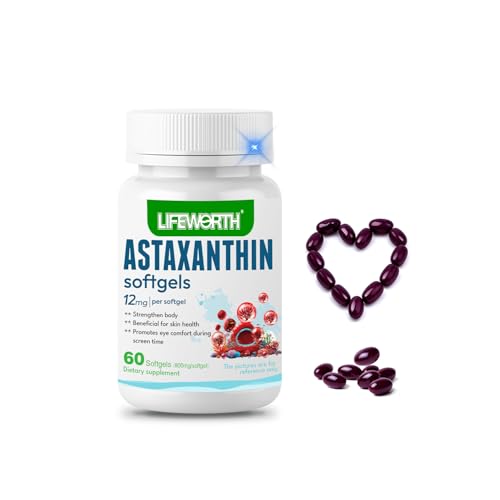
- Nutrex Hawaii BioAstin Hawaiian AstaxanthinLab-tested / studied
softgels, 12 mg per softgel, 90 count — Hawaiian-grown Haematococcus pluvialis, sold as the High Potency 90-softgel bottle - Pure Synergy SuperPure Astaxanthin Extract
capsules, 60 count — Sold as an astaxanthin extract in a capsule rather than a softgel; the listing does not state a mg per capsule, so check the label for the dose before comparing it with the 12 mg bottles here - Naturalis New Zealand Astaxanthin
softgels, 12 mg per softgel, 120 count — New Zealand-grown rather than Hawaiian, and the largest bottle on this list at 120 softgels - NOW Foods Astaxanthin
softgels, 4 mg per softgel — The entry-level 4 mg dose, built on the Zanthin astaxanthin ingredient; a lower starting point than the 12 mg bottles above
As an Amazon Associate we earn from qualifying purchases. Astaxanthin products vary mainly by dose and by source, with 4mg and 12mg the common strengths and most of them derived from Haematococcus pluvialis algae, so check the label for the astaxanthin content per serving and prefer products that publish third-party testing.
A Note on the Evidence
The majority of evidence for astaxanthin’s effects on sperm quality comes from animal studies and laboratory-based cryopreservation protocols rather than from randomized trials of oral supplementation in infertile men, so results should not be extrapolated as proof of benefit for natural conception without further human research. Men experiencing fertility concerns should consult a reproductive urologist for a complete evaluation, and astaxanthin supplementation during pregnancy or breastfeeding is not recommended due to insufficient safety data in those populations.
Frequently Asked Questions
Does astaxanthin actually improve sperm motility in humans?
The clearest human evidence comes from cryopreservation studies, where astaxanthin added to sperm extender solutions improved post-thaw motility alongside reductions in ROS and DNA fragmentation [1]. A 2026 meta-analysis of human freeze-thaw studies confirmed these effects [2]. Evidence for oral supplementation improving motility in men trying to conceive naturally is more limited and requires larger randomized controlled trials before firm conclusions can be drawn.
Can astaxanthin reduce sperm DNA fragmentation?
A 2024 human study found that including astaxanthin during the cryopreservation process reduced DNA fragmentation in post-thaw sperm [1]. This is clinically relevant because high sperm DNA fragmentation is associated with fertilization failure and higher miscarriage risk. Whether oral astaxanthin supplementation produces the same effect in vivo has not been established by large human trials.
How does astaxanthin protect sperm biologically?
Astaxanthin spans both the lipid and aqueous phases of cell membranes, intercepting free radicals that cause lipid peroxidation — the main mechanism of oxidative damage to sperm. It also activates the Nrf2/HO-1 antioxidant pathway, boosting the cell’s own defenses [4], and has been shown in animal research to upregulate CatSper1, a calcium channel essential for full sperm motility activation [5].
Is there evidence astaxanthin protects sperm from environmental toxins or chemotherapy?
Yes, in animal models. Astaxanthin inhibited the cytotoxic and genotoxic effects of cyclophosphamide — a chemotherapy agent — on mouse germ cells [6], and protected sperm function against cadmium toxicity while upregulating CatSper1 [5]. These findings are preclinical and have not been replicated in human trials, but they suggest a protective role against chemical and environmental reproductive stressors.
What oral dose of astaxanthin has been studied for male fertility?
Most human research on astaxanthin’s effects on sperm involves adding it to laboratory extender solutions rather than oral dosing by the patient. In broader human health trials across other indications, natural astaxanthin from Haematococcus pluvialis has been studied at doses up to 12 mg/day for 12 weeks without serious adverse effects. The optimal oral dose specifically for male fertility benefit has not been established by clinical trials.
Does astaxanthin in sperm extenders help in fertility clinic settings?
Laboratory evidence and a 2025 review of astaxanthin’s protective effects on reproductive cell cryopreservation indicate it can meaningfully reduce oxidative damage during the freeze-thaw process [8], and a 2026 meta-analysis confirmed improvements in human sperm quality parameters under these conditions [2]. Whether these laboratory-level improvements translate to higher clinical pregnancy rates in prospective trials remains to be demonstrated.
References
- Thanintranon S et al. Effects of astaxanthin supplementation during vitrification and liquid nitrogen vapor freezing on motility, morphology, survival, reactive oxygen species (ROS), and DNA fragmentation of post-cryopreserved human sperm. JBRA assisted reproduction (2024). PMID 39352311
- Babaei Hoolari B et al. Effects of astaxanthin supplementation on human sperm quality during the freeze thaw process: a systematic review and meta analysis. Scientific reports (2026). PMID 41714661
- Dehpahni MF et al. A systematic review and meta-analysis of astaxanthin efficacy in male infertility: evidence from clinical and preclinical studies. Scientific reports (2026). PMID 41714744
- Wang L et al. Astaxanthin Ameliorates the Lipopolysaccharides-Induced Subfertility in Mouse via Nrf2/HO-1 Antioxidant Pathway. Dose-response : a publication of International Hormesis Society (2019). PMID 31598118
- Saberi E et al. Astaxanthin Induces the Expression of CatSper1 Gene and Protects Sperms in Toxicity Induced by Cadmium in Mice. Drug research (2021). PMID 34407557
- Tripathi DN et al. Astaxanthin inhibits cytotoxic and genotoxic effects of cyclophosphamide in mice germ cells. Toxicology (2008). PMID 18485558
- Mohammadi Roushandeh A et al. Protective effects of restricted diet and antioxidants on testis tissue in rats fed with high-fat diet. Iranian biomedical journal (2015). PMID 25864814
- Raouf Sarshoori J et al. Protective effect of astaxanthin on reproductive cell cryopreservation, focusing on its antioxidative properties. Cryobiology (2025). PMID 41086626
- Basioura A et al. Effect of astaxanthin on the quality of boar sperm stored at 17°C, incubated at 37°C or under in vitro conditions. Reproduction in domestic animals = Zuchthygiene (2018). PMID 29333626
- Silva LFS et al. Impact of Astaxanthin Concentration in Extender on Sperm Kinetics and Lipid Peroxidation After Cryopreservation in Beef Bulls. Reproduction in domestic animals = Zuchthygiene (2026). PMID 42223300
- Qamar AY et al. The effect of astaxanthin supplementation on the post-thaw quality of dog semen. Reproduction in domestic animals = Zuchthygiene (2020). PMID 32602977
These statements have not been evaluated by the Food and Drug Administration. This information is not intended to diagnose, treat, cure, or prevent any disease. Content is for informational purposes only and is not medical advice; consult a qualified healthcare provider before starting any supplement. As an Amazon Associate we earn from qualifying purchases.
