Astaxanthin is a keto-carotenoid with an unusual chemical structure that allows it to anchor across the full thickness of a cell membrane, sitting in both the fat-soluble interior and the water-facing outer layer simultaneously. This positioning is thought to underlie its particularly broad antioxidant activity. Unlike beta-carotene or lycopene, astaxanthin is not made by land plants; it originates almost exclusively in aquatic environments, produced by certain microalgae and marine bacteria under stress conditions.
If you eat salmon, shrimp, or lobster and notice their characteristic pink or red flesh, you are looking at astaxanthin. Every milligram of it in those animals traces back through the food chain to photosynthetic microorganisms. Understanding where astaxanthin comes from in nature helps clarify both why dietary intakes are generally modest and why concentrated supplements are formulated the way they are.
Key Takeaways
- Astaxanthin is produced by microalgae (primarily Haematococcus pluvialis) and accumulates in marine animals (salmon, shrimp, lobster, crab, and krill) through the food chain.
- Wild sockeye salmon has among the highest astaxanthin concentrations of common food sources; farmed salmon often receives astaxanthin through feed, sometimes synthetic.
- Typical dietary intakes from food are modest and generally below the doses (4 to 12 mg/day) used in human clinical trials.[1]
- In small human studies of supplements, astaxanthin absorption was higher when taken with a meal, and lipid-based formulations gave higher plasma exposure than a commercial supplement [10][11][3]
- Haematococcus pluvialis algae is the primary commercial source for supplements; no serious adverse effects have been reported in trials at up to 12 mg/day, and the EU authorises supplements up to 8 mg/day [9].
The Primary Producer: Haematococcus pluvialis Microalgae
Haematococcus pluvialis is a freshwater green microalga and the most prolific natural producer of astaxanthin on Earth. When the algae experience environmental stress (intense ultraviolet light, nutrient deprivation, or high salinity) they shift into a dormant cyst stage and accumulate astaxanthin in large intracellular droplets. This pigment acts as a photoprotective shield, absorbing and neutralizing damaging radiation. Dry-weight astaxanthin content in stressed Haematococcus cultures can reach levels far exceeding those found in any food source, which is why this alga is the preferred feedstock for commercial astaxanthin production.
Haematococcus-derived astaxanthin is mostly in ester form, with the monoester the predominant form, rather than the free form [5][6]. The ester forms require hydrolysis before absorption, which occurs to varying degrees in the human digestive tract. Human trials have used doses ranging from 4 mg to 12 mg per day, typically derived from this species. US FDA GRAS notices cover only small amounts of the extract added to foods (0.1 and 0.15 mg astaxanthin per serving), not supplement doses, and the EU authorises supplements up to 8 mg per day [7][8][9]. No other microalgal source approaches it for yield or commercial viability at present.
Wild Salmon: The Best-Known Dietary Source
Salmon accumulate astaxanthin by consuming krill, copepods, and smaller fish that themselves fed on astaxanthin-producing microalgae. The pigment is stored in muscle tissue and in the skin, giving wild salmon its characteristic deep-orange flesh. Not all salmon species carry equal amounts: sockeye salmon (Oncorhynchus nerka) tends to be among the richest, with flesh concentrations substantially higher than pink salmon or Atlantic salmon. The actual amount in any given fish depends on the species, its age, the composition of its wild diet, and the season.
More astaxanthin reached absorbable form from wild salmon in the lab, but blood levels in men did not follow
43% wild, 12% farmed
From uncooked wild salmon, 43% of astaxanthin moved into absorbable micelles, versus only 12% from uncooked farmed salmon.
Plateau 39 vs 52 nmol/l
Twenty-eight men ate 250 g of wild or farmed salmon daily for 4 weeks. Plasma astaxanthin plateaued at 39 nmol/l on wild and 52 nmol/l on farmed.
Food gives tens of nmol/l
Blood levels from a food source were in the tens of nmol/l, and the lab ranking did not predict the blood ranking.
Wild salmon looked better in a digestion model, but blood levels in men were not higher on wild salmon.
Lab digestion result and human trial result are from different studies. Source: Chitchumroonchokchai et al., Food research international 2017; Rufer et al., The British journal of nutrition 2008.
Embed this chart
Free to reuse on your site. Copy the code below; please keep the credit link.
Research note: In healthy men eating salmon daily, plasma astaxanthin plateaued at 39 nmol/l on wild salmon and 52 nmol/l on farmed salmon, so blood levels from a food source were in the tens of nmol/l [14].
Farmed Atlantic salmon, which dominates global salmon consumption, presents a different picture. Without natural prey containing astaxanthin, farmed fish would have pale grey flesh. To produce the coloring consumers expect, and to confer some nutritional benefit, most aquaculture operations add astaxanthin to feed. Historically, much of this was synthetic astaxanthin (produced petrochemically), which is chemically similar in structure but differs in stereochemistry from the predominant form found in nature. Some producers now use Haematococcus-derived astaxanthin or astaxanthin from other biological sources. If the origin matters to you, checking product labels or asking suppliers is the most reliable approach.
Farmed salmon is not an astaxanthin-only source: in one analysis canthaxanthin made up 79.5% of the keto-carotenoids in farmed salmon, and in a lab analysis wild salmon flesh contained about 10 times more astaxanthin than farmed salmon [13][6].
Shrimp, Lobster, Crab, and Krill
Crustaceans are excellent visual indicators of astaxanthin in nature. In living shrimp and lobster, astaxanthin is bound to a protein called crustacyanin, which shifts the pigment’s color toward blue or brown. Cooking denatures that protein, freeing the astaxanthin and revealing its characteristic red-orange hue, which is why raw shrimp turn pink when heated. The astaxanthin content in shellfish varies considerably by species and environment. Shrimp generally contain modest concentrations, with most of it concentrated in the shell rather than the flesh.
Krill, the small crustaceans that form the backbone of many marine food webs, are a particularly concentrated source relative to their size and have attracted commercial interest. Krill oil products sold as supplements contain both omega-3 fatty acids and astaxanthin, though the astaxanthin concentration in krill oil is considerably lower than in dedicated astaxanthin supplements from Haematococcus. Crab, particularly the shell and roe, also contains measurable astaxanthin, as do certain species of crayfish and barnacles. In all these animals, the pigment originates from dietary algae and zooplankton, not from the animals themselves.
Other Marine and Freshwater Sources
Rainbow trout accumulate astaxanthin similarly to salmon, and wild-caught trout can carry meaningful concentrations in their flesh. Sea bream (Pagrus major), red sea bream, and other fish raised on astaxanthin-enriched feed in aquaculture also contain the pigment, deliberately added to produce the reddish skin color prized in some markets. Arctic char, a salmonid related to both salmon and trout, is another source worth noting.
Certain yeasts, particularly Phaffia rhodozyma (now reclassified as Xanthophyllomyces dendrorhous), produce astaxanthin naturally and have been explored as a fermentation-based production route. Though not a typical food source for humans, this organism illustrates that astaxanthin biosynthesis is not exclusive to algae. Flamingos and roseate spoonbills owe their distinctive pink plumage to dietary astaxanthin from the brine shrimp and blue-green algae they consume: a vivid illustration of how this pigment moves through food chains and accumulates in tissues.
Plant-Based Sources and Who May Struggle to Get Enough
Astaxanthin is not a plant-food carotenoid. A review of its sources lists microorganisms as the natural producers, naming Haematococcus pluvialis, Chlorella zofingiensis, Chlorococcum and the yeast Phaffia rhodozyma.[2] Carrots supply beta-carotene and tomatoes supply lycopene, but no common fruit, vegetable or herb is a meaningful source, so marketing that suggests otherwise is probably describing a different carotenoid.
That leaves several groups with little or no dietary route to astaxanthin:
- People who eat no seafood, including vegetarians and vegans, because the food sources are marine.
- People with seafood allergies, who cannot use the main food sources at all.
- People for whom wild salmon is out of reach on cost.
- Anyone aiming for the 4 to 12 mg per day used in trials, which food rarely supplies.
For these groups an algae-derived supplement is the practical option; people with a shellfish allergy should still check the label for the source organism.
How Much Astaxanthin Do These Foods Actually Provide?
Placing realistic expectations on dietary intake matters when astaxanthin is discussed in the context of supplementation research. A typical serving of wild sockeye salmon provides a few milligrams of astaxanthin at most, and values can vary substantially depending on the fish’s individual history. Shrimp, unless you are consuming large quantities of shell, delivers much less per serving. Krill oil capsules typically provide a fraction of a milligram per dose. These amounts are nutritionally meaningful and contribute to overall carotenoid intake, but they are lower than the doses used in most human clinical trials, which have commonly ranged from 4 mg to 12 mg of purified astaxanthin daily.

This gap between typical dietary intake and experimental dosing is important context. Eating salmon and shellfish regularly supports a varied, nutrient-dense diet and provides some astaxanthin, but it is unlikely to replicate the concentrated intakes studied in controlled trials. Whether those trial doses confer clinically meaningful benefits (and whether lower, food-derived intakes do the same over time) remain open questions that current evidence does not definitively answer.
Algae vs. Salmon: What the Source Changes
Algae and salmon deliver the same pigment, because salmon get theirs from the food chain that starts with microalgae. What differs is how much arrives, in what form, and how predictable the dose is.
| Question | Haematococcus algae (supplements) | Salmon (food) |
|---|---|---|
| Where it comes from | Cultivated algae pushed into a stress response | Krill and small prey that fed on astaxanthin-producing algae |
| Typical form | Mostly fatty-acid mono- and di-esters, which need hydrolysis before absorption | Often free or loosely bound in the flesh |
| How concentrated | Up to 3.8% of dry weight in H. pluvialis[2] | A few milligrams per serving at most, varying by species, season and feed |
| Dose certainty | Labeled amount per capsule, commonly 4 mg or 12 mg | Varies with the fish, the feed and the portion |
Two further differences are worth knowing about. First, geometric isomers: astaxanthin can sit in an all-E configuration or in Z (cis) forms. In laying hens fed astaxanthin from the bacterium Paracoccus carotinifaciens at 8 mg per kg of diet, a diet with 50.6% Z-isomers raised egg-yolk astaxanthin by about fivefold and plasma astaxanthin by more than fivefold compared with an all-E diet, which the authors read as higher bioavailability of the Z form.[4] That is an animal result with a different source organism, and no human trial compares isomer forms, so it is a reason to keep the question open rather than a reason to choose one product over another.
Second, natural versus synthetic. A safety review of astaxanthin concluded that synthetic astaxanthin is chemically different from natural astaxanthin and that results from synthetic material should not be used to judge the safety of the natural form.[1] Synthetic astaxanthin is the one widely used as an aquaculture pigment, and a 2021 review of astaxanthin in the food industry notes that its use in foods is limited by the unknown effects of long-term consumption of the synthetic form, by few sources and by the high cost of natural astaxanthin.[5] For salmon, that is the practical reason to check whether a fish was fed natural or synthetic astaxanthin when the label says.
The practical split is simple. Salmon adds some astaxanthin to a varied diet alongside its other nutrients; an algae-derived supplement is the route to a consistent, labeled dose in the range used in trials.
Bioavailability: Does the Form Matter?
Astaxanthin is fat-soluble, meaning absorption improves substantially when consumed alongside dietary fat. The human data on this come from supplements, and information on how well people absorb astaxanthin from fish and shellfish is very limited [12][10]. Taking an astaxanthin supplement with a meal containing some fat is consistently recommended in product guidance and aligns with what is known about carotenoid absorption generally. Fish and shellfish are rich in lipids, but a 2024 review concluded that information on human absorption of carotenoids from them is very limited. In a simulated digestion, 43% of the astaxanthin in uncooked wild salmon moved into absorbable micelles versus 12% from uncooked farmed salmon, and 41 to 67% became bioaccessible from commercial soft-gel supplements [12][6].
The molecular form of astaxanthin also varies across sources. In Haematococcus algae, it occurs largely as fatty-acid esters; in synthetic astaxanthin, it is predominantly free (unesterified); in crustaceans, it is protein-bound; in fish flesh, it is often free or loosely bound. Whether these differences produce meaningful distinctions in human bioavailability is an active area of investigation, and it would be premature to make firm claims about one form being definitively superior to another based on current evidence. The clearest human evidence is for supplements: in a small study of an algal extract, exposure (AUC) was 7,219 microg h/l when taken after a meal versus 2,968 microg h/l before one [11]. In a single-dose study in healthy men, three lipid-based formulations gave 1.7 to 3.7 times the bioavailability of a commercial food supplement.[3]
🛒 Where to Buy Astaxanthin
- Nutrex Hawaii BioAstin Hawaiian Astaxanthin
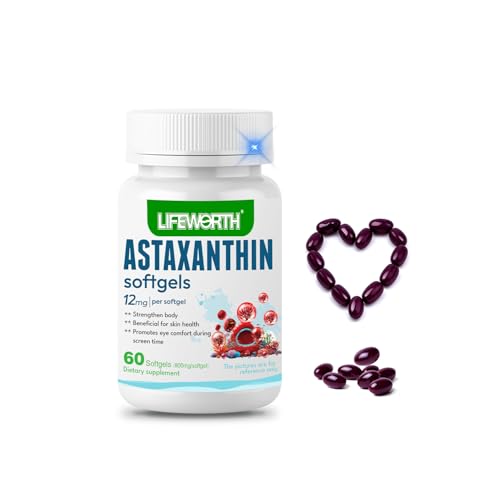
softgels, 12 mg per softgel, 90 count: Hawaiian-grown Haematococcus pluvialis, sold as the High Potency 90-softgel bottle - Pure Synergy SuperPure Astaxanthin Extract
capsules, 60 count: Sold as an astaxanthin extract in a capsule rather than a softgel; the listing does not state a mg per capsule, so check the label for the dose before comparing it with the 12 mg bottles here - Naturalis New Zealand Astaxanthin
softgels, 12 mg per softgel, 120 count: New Zealand-grown rather than Hawaiian, and the largest bottle on this list at 120 softgels - NOW Foods Astaxanthin
softgels, 4 mg per softgel: The entry-level 4 mg dose, built on the Zanthin astaxanthin ingredient; a lower starting point than the 12 mg bottles above
As an Amazon Associate we earn from qualifying purchases. Astaxanthin products vary mainly by dose and by source, with 4mg and 12mg the common strengths and most of them derived from Haematococcus pluvialis algae, so check the label for the astaxanthin content per serving and prefer products that publish third-party testing.
A Note on the Evidence
The human research on astaxanthin, while promising in areas such as eye fatigue, skin aging, and exercise recovery, consists largely of small, short-duration trials, and no health claims have been approved by regulatory agencies. Dietary sources provide astaxanthin as part of an overall nutritional pattern and should not be viewed as a treatment for any condition; consult a qualified healthcare provider before using astaxanthin supplements, especially if you are pregnant, breastfeeding, taking medications, or managing a health condition.
Frequently Asked Questions
Which food has the highest natural astaxanthin content?
Haematococcus pluvialis microalgae accumulates the highest concentrations of any natural source, which is why it is the primary basis for commercial supplements. Among commonly eaten foods, wild sockeye salmon is generally considered among the richest sources, with flesh concentrations varying by individual fish, season, and diet history.

Does cooking destroy astaxanthin in salmon or shrimp?
Cooking changes how astaxanthin is bound to surrounding proteins, which is why shrimp turn red when heated, but it also costs some of the pigment. In one lab analysis, home-style cooking reduced astaxanthin by 48 to 57% in wild salmon flesh and by 35 to 47% in farmed salmon flesh. Some survives, but a cooked portion supplies less than a raw one [6].
Is the astaxanthin in farmed salmon the same as in wild salmon?
Both can contain astaxanthin, but the source differs. Wild salmon obtain it through their natural diet of krill and smaller prey. Farmed salmon typically receive it through supplemented feed, historically often as synthetic astaxanthin, though some producers use Haematococcus-derived astaxanthin. Synthetic astaxanthin has a slightly different stereochemical profile than the predominant natural form, and ongoing research examines whether this distinction is biologically significant.
Can I get enough astaxanthin from diet alone to match supplement doses?
Human clinical trials have typically used 4 to 12 mg per day of purified astaxanthin. A serving of wild salmon provides a few milligrams at most, and other food sources generally provide less. Achieving consistent intake at trial doses through diet alone would require very frequent consumption of astaxanthin-rich seafood, making supplementation the more practical route for those seeking specific amounts.
Is astaxanthin from krill oil the same as from a dedicated astaxanthin supplement?
Both derive from biological sources and contain naturally occurring astaxanthin. However, krill oil products contain astaxanthin at much lower concentrations, typically a fraction of a milligram per dose, compared to dedicated astaxanthin supplements that may deliver 4 to 12 mg per capsule. Krill oil is primarily marketed for its omega-3 fatty acid content; the astaxanthin is a secondary component.
Are there any risks associated with astaxanthin from food sources?
Astaxanthin from seafood is considered safe for most people as part of a normal diet. Skin discoloration (carotenodermia) is well documented for very high beta-carotene intake but has not been reported in published human astaxanthin studies. Evidence in pregnancy is insufficient, so supplementation during pregnancy or breastfeeding is not recommended, though dietary intake from food at normal levels is not known to be problematic. Anyone with shellfish allergies should be aware that some supplements are derived from crustacean-based sources.
Are there any plant foods or herbs that contain astaxanthin?
No common plant food or herb is a meaningful source. The natural producers are microorganisms such as Haematococcus pluvialis algae and the yeast Phaffia rhodozyma, and animals such as salmon and shrimp get the pigment from them through the food chain. Marketing that suggests a plant source is likely describing beta-carotene or lutein instead.
Is astaxanthin from salmon as potent as from algae supplements?
It is the same pigment, but a serving of salmon supplies a few milligrams at most and the amount varies with the species, season and feed, while a capsule gives a labeled dose. Algae-derived astaxanthin is mostly esterified and salmon flesh is often free or loosely bound; whether that difference matters in people has not been settled by head-to-head human trials.
Do Z-isomers of astaxanthin work differently from E-isomers?
In laying hens, a diet rich in Z-isomers raised egg-yolk and plasma astaxanthin about fivefold compared with an all-E diet, suggesting higher bioavailability of the Z form in that animal. No human trial has compared the two forms, so it is not yet known whether the difference matters for people.
References
- Astaxanthin: How much is too much? A safety review. Phytotherapy Research (2019). PMID 31788888
- Astaxanthin: sources, extraction, stability, biological activities and its commercial applications – a review. Marine Drugs (2014). PMID 24402174
- Mercke Odeberg J, Lignell A, Pettersson A, Höglund P. Oral bioavailability of the antioxidant astaxanthin in humans is enhanced by incorporation of lipid based formulations. European Journal of Pharmaceutical Sciences (2003). PMID 12885395
- Honda M et al. Astaxanthin Z-isomer-rich diets enhance egg yolk pigmentation in laying hens compared to that in all-E-isomer-rich diets. Animal Science Journal (2021). PMID 33522058
- Stachowiak B, Szulc P. Astaxanthin for the Food Industry. Molecules (2021). PMID 34063189
- Chitchumroonchokchai C et al. Bioaccessibility and intestinal cell uptake of astaxanthin from salmon and commercial supplements. Food research international (Ottawa, Ont.) (2017). PMID 28847430
- US Food and Drug Administration GRN No. 294: Haematococcus pluvialis extract containing astaxanthin esters. US Food and Drug Administration (2010). source
- US Food and Drug Administration GRN No. 580: Haematococcus pluvialis extract containing astaxanthin esters. US Food and Drug Administration (2015). source
- European Food Safety Authority (EFSA NDA Panel) Safety of astaxanthin for its use as a novel food in food supplements. European Food Safety Authority (EFSA NDA Panel) (2020). source
- Nur Rafiqah Abdol Wahab et al. Nanocarrier System: State-of-the-Art in Oral Delivery of Astaxanthin. Antioxidants (2022). PMID 36139750
- Yumika Okada et al. Bioavailability of Astaxanthin inHaematococcusAlgal Extract: The Effects of Timing of Diet and Smoking Habits. Bioscience Biotechnology and Biochemistry (2009). PMID 19734684
- Tan K et al. Carotenoid content and composition: A special focus on commercially important fish and shellfish. Critical reviews in food science and nutrition (2024). PMID 35930379
- Chureeporn Chitchumroonchokchai et al. Bioaccessibility and intestinal cell uptake of astaxanthin from salmon and commercial supplements. The FASEB Journal (2017). doi:10.1096/fasebj.31.1_supplement.635.16
- Rüfer CE et al. Bioavailability of astaxanthin stereoisomers from wild (Oncorhynchus spp.) and aquacultured (Salmo salar) salmon in healthy men: a randomised, double-blind study. The British journal of nutrition (2008). PMID 17967218
These statements have not been evaluated by the Food and Drug Administration. This information is not intended to diagnose, treat, cure, or prevent any disease. Content is for informational purposes only and is not medical advice; consult a qualified healthcare provider before starting any supplement. As an Amazon Associate we earn from qualifying purchases.
