Astaxanthin is a red-orange pigment produced primarily by the microalgae Haematococcus pluvialis. Its molecular structure is unusual among dietary antioxidants: the polar keto and hydroxyl groups at each end of its carbon chain anchor it across both surfaces of a cell membrane, while the central conjugated double-bond system neutralizes reactive oxygen species in the lipid core. This means astaxanthin operates in both the water-soluble and fat-soluble compartments of a cell simultaneously — a property that distinguishes it from vitamin C, which works only in aqueous environments, and vitamin E, which is confined to lipid phases.
Over the past decade, researchers have moved beyond cell and animal studies to test astaxanthin in randomized controlled trials involving real patients. Results have been measured across skin aging, UV protection, reproductive health, metabolic conditions, and heart failure. The trials are generally small and short, and the supplement is not a treatment for any disease. What follows is a plain-language summary of what the published human evidence actually shows, with every factual claim tied to a specific study.
Key Takeaways
- Astaxanthin spans both lipid and aqueous cell membrane phases, enabling antioxidant activity in compartments where most dietary antioxidants cannot reach [1][2].
- Small randomized controlled trials show measurable effects on UV-induced skin damage and skin aging markers, though studies are limited in size [3][4].
- Human RCTs in endometriosis and PCOS report reductions in oxidative stress and inflammatory biomarkers, but each represents a single trial and findings need replication [5][6].
- Natural astaxanthin at doses up to 12 mg/day has shown a favorable safety profile in trials up to 12 weeks; the main high-dose side effect is reversible skin discoloration.
- The mechanistic case for astaxanthin as an antioxidant is well-supported; the clinical evidence is directionally consistent but limited by small trial sizes and short durations [7].
The Antioxidant Mechanism: How Astaxanthin Neutralizes Reactive Oxygen Species
The dominant antioxidant pathway for astaxanthin involves quenching singlet oxygen — a highly reactive, non-radical form of oxygen that damages lipids, proteins, and DNA. Research has shown that carotenoids accomplish this via ultrafast energy transfer, accepting the excited energy from singlet oxygen and dissipating it as heat through a process involving superexchange dynamics [1]. In a model membrane environment, astaxanthin and other dietary carotenoids have been confirmed to quench singlet oxygen efficiently within the lipid bilayer itself, where much of the oxidative damage to cells originates [2].
More recent work has explored exactly how astaxanthin’s molecular geometry affects its quenching power. A 2022 spectroscopic study found that different optical and geometric isomers of astaxanthin vary in their antioxidant activity against singlet oxygen, suggesting that the natural 3S,3’S configuration found in Haematococcus-derived astaxanthin may have specific advantages [8]. A 2025 study extended this to a food-science context, demonstrating mechanistically how astaxanthin quenches singlet oxygen and inhibits myoglobin-induced photooxidation — a reaction relevant to oxidative degradation in biological systems [9]. Beyond singlet oxygen, marine carotenoids including astaxanthin have been described as playing multiple antioxidant roles in biological systems, including direct radical scavenging and modulation of antioxidant enzyme activity [10].
Skin Aging and UV Protection: What RCTs Show
Skin is one of the most studied areas for astaxanthin supplementation in humans, partly because UV-generated singlet oxygen and free radicals are a well-established driver of photoaging. A randomized, double-blind, placebo-controlled trial in healthy volunteers found that astaxanthin supplementation measurably reduced UV-induced skin deterioration compared to placebo, suggesting a photoprotective role rather than just cosmetic moisturization [3]. This is consistent with the mechanism: astaxanthin’s membrane-spanning position places it where UV-generated reactive species form.

A 2021 systematic review and meta-analysis pooled results from multiple clinical trials on astaxanthin and human skin aging. The review found evidence of improvements in skin moisture, elasticity, and the appearance of wrinkles, though the authors noted that trial sample sizes were generally small and study designs varied, calling for larger confirmatory trials [4]. The consistency of direction across studies is encouraging, but the magnitude of effect and the optimal dose remain uncertain.
Inflammation and Oxidative Stress in Women's Health Conditions
Two recent randomized clinical trials have examined astaxanthin in female reproductive health contexts where oxidative stress is thought to play a pathological role. In a triple-blind, placebo-controlled trial in endometriosis patients undergoing assisted reproduction, astaxanthin supplementation was associated with reduced inflammatory markers and oxidative stress alongside improved reproductive outcomes compared to placebo [5]. Endometriosis involves chronic inflammation and elevated reactive oxygen species, making it a plausible target for antioxidant intervention, though this was a single trial and replication is needed.
A separate triple-blind randomized clinical trial tested astaxanthin in women with polycystic ovary syndrome (PCOS), a condition also characterized by elevated oxidative stress and insulin resistance. Supplementation was associated with reductions in oxidative stress markers, improvements in lipid profile parameters, and effects on blood pressure and insulin resistance [6]. Again, this is one trial and should not be interpreted as astaxanthin being a treatment for PCOS; it does, however, support the broader biological plausibility of astaxanthin’s anti-inflammatory and antioxidant effects in humans.
Cardiovascular Signals: Oxidative Markers and Atherosclerosis Risk
Oxidative stress is central to cardiovascular disease pathology, and a small number of human trials have begun to examine whether astaxanthin can shift relevant biomarkers. A 2025 randomized clinical trial in heart failure patients found that astaxanthin supplementation had a measurable impact on oxidative markers, uric acid levels, and clinical symptoms compared to placebo [11]. Heart failure involves significant oxidative and inflammatory burden, and while this is an early finding, it adds to a growing body of human data.
At a mechanistic and preclinical level, astaxanthin has been studied for potential anti-atherosclerotic properties, including effects on LDL oxidation, macrophage foam cell formation, and inflammatory signaling pathways implicated in plaque development [12]. The translation of these findings to human clinical outcomes in atherosclerosis specifically has not yet been demonstrated in large trials, and this area should be regarded as exploratory.
The Broader Evidence Landscape: What a 2021 Review Found
A 2021 evidence-based review focused specifically on human clinical trials catalogued the state of astaxanthin research across multiple health domains. The authors found that existing RCT evidence supports antioxidant, anti-inflammatory, and potentially metabolic effects, while also noting that trial sizes are typically small, durations are short, and standardization of doses and formulations varies across studies [7]. This honest accounting of the limitations is important: the mechanistic rationale for astaxanthin as an antioxidant is strong, and early human data is directionally consistent, but the field has not yet produced the large, long-term trials that would support strong clinical claims.

The practical implication is that astaxanthin looks meaningfully different from many supplements where even the mechanistic foundation is weak. The gap here is primarily in trial scale and duration, not in basic biological plausibility. For a healthy adult interested in antioxidant support, that distinction matters — but it also means expectations should be calibrated accordingly.
Safety, Dosing, and Who Should Exercise Caution
Natural astaxanthin from Haematococcus pluvialis holds Generally Recognized as Safe (GRAS) status in the United States. Human trials have used doses ranging from 4 mg to 12 mg per day and have consistently reported a favorable safety profile at these levels for durations up to 12 weeks. The most frequently noted side effect at very high doses — typically above 20 mg per day — is carotenodermia, a reversible yellow-orange tint to the skin caused by carotenoid accumulation in subcutaneous tissue. This resolves when supplementation is stopped.
Astaxanthin is fat-soluble, so taking it with a meal containing dietary fat improves absorption. Evidence in pregnancy and lactation is insufficient to establish safety, and supplementation during pregnancy or breastfeeding is not recommended. People taking blood-thinning medications or immunosuppressants should consult a healthcare provider before adding any antioxidant supplement, as interactions, though not well-documented for astaxanthin specifically, remain a consideration.
🛒 Where to Buy Astaxanthin
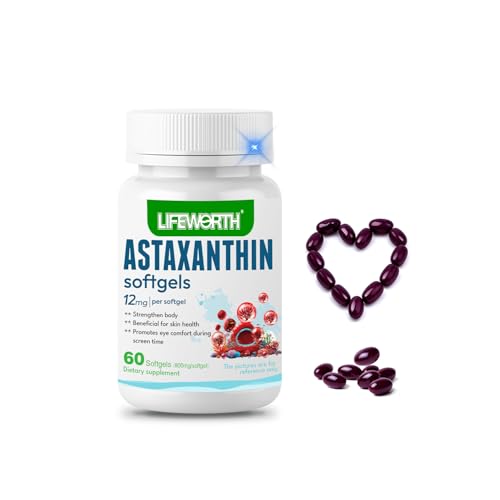
- Nutrex Hawaii BioAstin Hawaiian AstaxanthinLab-tested / studied
softgels, 12 mg per softgel, 90 count — Hawaiian-grown Haematococcus pluvialis, sold as the High Potency 90-softgel bottle - Pure Synergy SuperPure Astaxanthin Extract
capsules, 60 count — Sold as an astaxanthin extract in a capsule rather than a softgel; the listing does not state a mg per capsule, so check the label for the dose before comparing it with the 12 mg bottles here - Naturalis New Zealand Astaxanthin
softgels, 12 mg per softgel, 120 count — New Zealand-grown rather than Hawaiian, and the largest bottle on this list at 120 softgels - NOW Foods Astaxanthin
softgels, 4 mg per softgel — The entry-level 4 mg dose, built on the Zanthin astaxanthin ingredient; a lower starting point than the 12 mg bottles above
As an Amazon Associate we earn from qualifying purchases. Astaxanthin products vary mainly by dose and by source, with 4mg and 12mg the common strengths and most of them derived from Haematococcus pluvialis algae, so check the label for the astaxanthin content per serving and prefer products that publish third-party testing.
A Note on the Evidence
The human trial evidence for astaxanthin is promising but largely limited to small, short-duration studies; no large long-term trials have established it as a treatment for any disease, and findings across different health conditions should be regarded as preliminary [7]. Astaxanthin supplementation is not recommended during pregnancy or breastfeeding due to insufficient safety data, and anyone with a chronic health condition or on medication should consult a qualified healthcare provider before adding any supplement.
Frequently Asked Questions
How does astaxanthin differ from other antioxidants like vitamin C or vitamin E?
Most antioxidants work in only one cellular environment — vitamin C in water-based compartments, vitamin E in fat-based ones. Astaxanthin’s molecular structure allows it to anchor across the full width of a cell membrane and quench reactive oxygen species in both phases simultaneously [10]. This dual-phase positioning is considered one of its distinguishing mechanistic features [1].
What does 'singlet oxygen quenching' mean and why does it matter?
Singlet oxygen is a highly reactive, non-radical form of oxygen generated by UV light and metabolic processes that damages lipids, proteins, and DNA within cells. Quenching refers to absorbing the excess energy from singlet oxygen and releasing it harmlessly as heat before it can cause oxidative damage. Astaxanthin has been shown to do this efficiently within membrane environments where much oxidative damage originates [2][9].
Is there human evidence for astaxanthin affecting skin aging?
Yes, to a limited degree. A randomized placebo-controlled trial found that supplementation reduced UV-induced skin deterioration in healthy subjects [3], and a systematic review and meta-analysis of multiple clinical trials found evidence of improvements in skin moisture, elasticity, and wrinkle appearance [4]. The authors of the review noted that trials were generally small and called for larger studies to confirm the findings.
Can astaxanthin help with inflammation?
Human trial evidence suggests it can reduce inflammatory and oxidative biomarkers in specific populations. A randomized trial in endometriosis patients found reductions in inflammatory markers alongside improved reproductive outcomes [5], and another in PCOS patients found effects on oxidative stress and metabolic markers [6]. These are early-stage findings from individual trials — not proof that astaxanthin treats inflammation as a general condition.
Are there any safety concerns with astaxanthin supplementation?
At doses up to 12 mg per day for 12 weeks, natural astaxanthin has shown a consistently favorable safety profile in trials. The primary side effect reported at very high doses (typically above 20 mg/day) is carotenodermia — a reversible orange-yellow tint to the skin — which resolves after discontinuation. Evidence in pregnant or breastfeeding women is insufficient, and supplementation is not recommended during pregnancy or lactation.
Does the form or source of astaxanthin matter?
Research indicates that different optical and geometric isomers of astaxanthin have different antioxidant potencies against singlet oxygen [8]. Natural astaxanthin from Haematococcus pluvialis microalgae is the form with the most human trial data and holds GRAS status. Synthetic astaxanthin exists but is primarily used in aquaculture and has a different isomer profile; it is not the form used in human supplement trials reviewed here.
References
- Tamura H et al. Quenching of Singlet Oxygen by Carotenoids via Ultrafast Superexchange Dynamics. The journal of physical chemistry. A (2020). PMID 32482065
- Cantrell A et al. Singlet oxygen quenching by dietary carotenoids in a model membrane environment. Archives of biochemistry and biophysics (2003). PMID 12646267
- Ito N et al. The Protective Role of Astaxanthin for UV-Induced Skin Deterioration in Healthy People-A Randomized, Double-Blind, Placebo-Controlled Trial. Nutrients (2018). PMID 29941810
- Zhou X et al. Systematic Review and Meta-Analysis on the Effects of Astaxanthin on Human Skin Ageing. Nutrients (2021). PMID 34578794
- Rostami S et al. Astaxanthin ameliorates inflammation, oxidative stress, and reproductive outcomes in endometriosis patients undergoing assisted reproduction: A randomized, triple-blind placebo-controlled clinical trial. Frontiers in endocrinology (2023). PMID 37020589
- Jabarpour M et al. Astaxanthin supplementation impact on insulin resistance, lipid profile, blood pressure, and oxidative stress in polycystic ovary syndrome patients: A triple-blind randomized clinical trial. Phytotherapy research : PTR (2024). PMID 37874168
- Donoso A et al. "Therapeutic uses of natural astaxanthin: An evidence-based review focused on human clinical trials". Pharmacological research (2021). PMID 33549728
- Zheng X et al. Assessment of the antioxidant activities of representative optical and geometric isomers of astaxanthin against singlet oxygen in solution by a spectroscopic approach. Food chemistry (2022). PMID 35779503
- Chen Y et al. Mechanistic exploration of astaxanthin quenching singlet oxygen and inhibiting myoglobin-induced photooxidation. Food chemistry (2025). PMID 40633170
- Miyashita K et al. Function of marine carotenoids. Forum of nutrition (2009). PMID 19367118
- Mohammadi SG et al. Impact of astaxanthin on oxidative markers, uric acid, and clinical symptoms in heart failure: a randomized clinical trial. BMC cardiovascular disorders (2025). PMID 41162864
- Kishimoto Y et al. Potential Anti-Atherosclerotic Properties of Astaxanthin. Marine drugs (2016). PMID 26861359
These statements have not been evaluated by the Food and Drug Administration. This information is not intended to diagnose, treat, cure, or prevent any disease. Content is for informational purposes only and is not medical advice; consult a qualified healthcare provider before starting any supplement. As an Amazon Associate we earn from qualifying purchases.
