Astaxanthin is increasingly marketed for mental energy and focus, usually with a reference to a single Japanese trial. That trial exists and it is a reasonable piece of work.
It also tested a two-ingredient product, was funded by the company that makes it, and enrolled 24 people. Those facts do not make it worthless. They do determine what it can support, and the gap between that and the marketing claim is wide.
Key Takeaways
- A randomized, double-blind, placebo-controlled crossover study in 24 healthy volunteers found supplementation significantly improved recovery from mental fatigue versus placebo [1].
- The supplement was astaxanthin plus sesamin, not astaxanthin alone, so the effect cannot be attributed to either ingredient [1].
- The trial also found no differences in work efficiency, autonomic nerve activity or other subjective feelings, its secondary outcomes [1].
- Test supplements and research expenses were provided by the manufacturer, and company-affiliated individuals appear among the authors [1].
- Astaxanthin results in adjacent physical domains are inconsistent: a 2024 firefighter trial found reduced inflammatory response [2], while a 2023 trial in resistance-trained men found no effect on muscle damage or inflammation markers [3].
- The eye fatigue evidence is a separate and better-supported literature, and the two are often conflated.
The Trial In Full
The study that essentially all mental-fatigue marketing traces back to was published in Nutrients in 2018 [1]. Its design is genuinely good for its size: randomized, double-blind, placebo-controlled, and crossover, meaning each participant served as their own control.
Twenty-four healthy volunteers took astaxanthin plus sesamin (AS) and placebo, each for four weeks. After each supplementation period they completed tasks designed to induce fatigue of two kinds: a visual display terminal task for mental fatigue and an ergometer task for physical fatigue [1].
Subjective fatigue was rated on a visual analogue scale during and after each task, and daily fatigue was assessed with the Chalder fatigue questionnaire. Secondary outcomes included other subjective feelings, work efficiency, autonomic nerve activity, and plasma phosphatidylcholine hydroperoxide as an oxidative stress marker [1].
The results:

- Supplementation was associated with significantly improved recovery from mental fatigue compared with placebo [1].
- The rise in plasma phosphatidylcholine hydroperoxide during both mental and physical tasks was attenuated by supplementation [1].
- No differences were detected between supplement and placebo in the secondary outcomes [1].
- No adverse effects were observed [1].
The authors’ own conclusion was appropriately hedged: the supplement may be a candidate to promote recovery from mental fatigue [1]. That is a more careful statement than most of the pages citing it.
The Three Limits That Matter
It was a combination product. Sesamin, a lignan from sesame seed, has its own antioxidant literature and is not an inert filler. When a two-ingredient supplement beats placebo, the correct inference is that the combination beat placebo. Attributing it to astaxanthin requires a trial that isolates astaxanthin, and that trial has not been run for this endpoint.
It was industry funded. The paper discloses that research expenses and the test supplements were provided by FUJIFILM, and that company-affiliated individuals are among the authors [1]. This is disclosed properly, which is the right behavior, and it is also a known predictor of positive findings across nutrition research generally. It does not invalidate the result. It is a reason to want independent replication before treating it as settled.
The secondary outcomes were null. Work efficiency did not improve. Autonomic nerve activity did not change. Other subjective feelings did not differ [1]. So the finding is narrow: a specific measure of recovery from a specific induced mental fatigue, in a specific 24-person sample. It is not a general cognitive or productivity result, and anything claiming so has overreached.
Why The Adjacent Evidence Does Not Settle It Either
Astaxanthin trials in physically demanding contexts have come out both ways, which is useful context for how much weight one small trial should carry.
On the positive side, a 2024 randomized, double-blinded, placebo-controlled crossover study in 15 career firefighters gave 12 mg per day of AstaReal astaxanthin for four weeks alongside a standardized resistance training program [2]. Astaxanthin lessened the inflammatory response to an incremental maximal exercise test and attenuated interleukin increases [2].

On the negative side, a 2023 crossover trial in 13 resistance-trained men, also at 12 mg per day for four weeks, found no statistical effects on markers of muscle damage, inflammation, delayed-onset muscle soreness or anaerobic performance [3].
Same dose, same duration, similar crossover design, opposite conclusions. That is what a literature looks like when effects are small, samples are tiny, and outcomes are numerous. Our muscle recovery article covers that inconsistency in depth.
The Oxidative Stress Marker Is The Most Solid Part
If anything in the mental fatigue trial deserves confidence, it is the biochemistry rather than the questionnaire. Plasma phosphatidylcholine hydroperoxide is an objective measure of lipid peroxidation, and its rise during both mental and physical tasks was attenuated [1].
That is exactly what you would predict from astaxanthin’s known behavior: it embeds in membranes and limits lipid peroxidation there. Our antioxidant evidence article covers the human data on that mechanism.
The open question is whether reducing a lipid peroxidation marker translates into feeling less mentally tired. The trial found both together in 24 people. That is a hypothesis worth testing properly, not a demonstrated causal chain.
Do Not Confuse This With Eye Fatigue
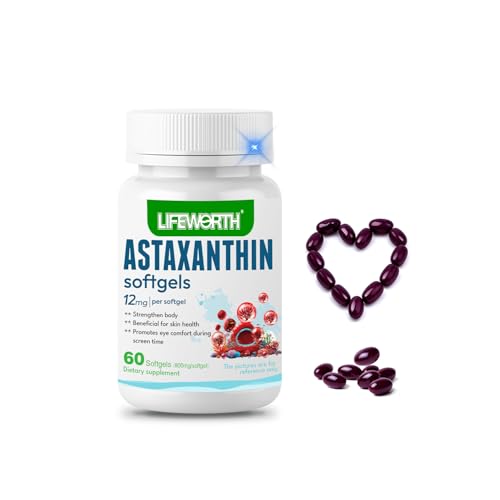
Astaxanthin’s best-supported fatigue-adjacent claim is not mental fatigue at all. It is eye fatigue and accommodation, where there is a larger and older body of Japanese clinical work on visual display terminal workers, using astaxanthin alone rather than in combination.
The two get merged constantly in marketing copy, partly because the mental fatigue trial also used a visual display terminal task. They are different endpoints with different evidence bases, and the eye one is stronger.
The Honest Bottom Line
If you want to know whether astaxanthin reduces mental fatigue, the accurate answer is that nobody has tested that. What has been tested is whether astaxanthin plus sesamin improves recovery from induced mental fatigue in 24 healthy adults, in a manufacturer-funded crossover trial, with null results on every secondary outcome.
That is a legitimate preliminary signal. It is not a basis for buying astaxanthin as a nootropic. If mental energy is your goal, the honest assessment is that the evidence does not yet support this purchase, and our brain health article reaches a similar conclusion about cognition more broadly.
If you already take astaxanthin for skin, eyes or exercise recovery, any effect on mental fatigue would be a bonus rather than a reason to keep taking it.
Frequently Asked Questions
Does astaxanthin reduce mental fatigue?
That specific question has not been tested. The trial usually cited gave 24 healthy volunteers astaxanthin combined with sesamin, not astaxanthin alone. It found significantly improved recovery from induced mental fatigue versus placebo, but the effect cannot be attributed to astaxanthin by itself.
Was the astaxanthin mental fatigue study independent?
No. The paper discloses that research expenses and the test supplements were provided by FUJIFILM, and company-affiliated individuals appear among the authors. That disclosure is appropriate, and it is also a reason to want independent replication before treating the result as settled.
Did the trial show improved work performance?
No. Work efficiency was a secondary outcome and showed no difference from placebo, as did autonomic nerve activity and other subjective feelings. The only positive findings were recovery from mental fatigue and a reduced rise in a lipid peroxidation marker.
Is astaxanthin a nootropic?
The evidence does not support that framing. One small crossover trial of a two-ingredient product is not a basis for taking astaxanthin for cognition or focus. The broader brain health literature in humans is also thin.
What about astaxanthin for eye fatigue?
That is a different and better-supported claim. Eye fatigue and accommodation have a larger body of clinical work using astaxanthin alone rather than in combination. The two claims get merged in marketing copy but rest on separate evidence.
References
- Imai A, et al. Effects of Dietary Supplementation of Astaxanthin and Sesamin on Daily Fatigue: A Randomized, Double-Blind, Placebo-Controlled, Two-Way Crossover Study. Nutrients. 2018;10(3):281. PMID 29495607
- Gonzalez DE, et al. Impact of astaxanthin supplementation on markers of cardiometabolic health and tactical performance among firefighters. J Int Soc Sports Nutr. 2024;21(1):2427751. PMID 39568140
- Waldman HS, et al. Astaxanthin Supplementation Does Not Affect Markers of Muscle Damage or Inflammation After an Exercise-Induced Muscle Damage Protocol in Resistance-Trained Males. J Strength Cond Res. 2023;37(7):e413-e421. PMID 36727984
These statements have not been evaluated by the Food and Drug Administration. This information is not intended to diagnose, treat, cure, or prevent any disease. Content is for informational purposes only and is not medical advice; consult a qualified healthcare provider before starting any supplement. As an Amazon Associate we earn from qualifying purchases.
