Astaxanthin is an unusually reactive molecule. The same conjugated double-bond structure that lets it quench singlet oxygen also makes it easy to oxidize, and the supplement industry has quietly acknowledged this at the standards level.
Most storage advice on supplement labels is generic boilerplate. For astaxanthin there is actual degradation research, with numbers, and it points at a few specific things worth doing and one common habit worth stopping.
Key Takeaways
- Temperatures above 60 degrees C and UV exposure beyond 48 hours produced degradation above 20% in a controlled study of astaxanthin in solution [1].
- Prolonged UV also caused isomerization, with a 9,13-di-cis isomer appearing at 288 hours of irradiation [1].
- In dried algal biomass stored 20 weeks, low temperature plus vacuum packing held degradation to as little as 12.3% [2].
- Freeze-drying recovered 41% more astaxanthin than the more common spray-drying [2], which is a manufacturing variable you cannot see on a label.
- In microcapsule work, retention was highest at 4 degrees C and lowest at pH 3.0, and vacuum storage significantly improved retention [3].
- A pharmacopeial committee lowered the astaxanthin content limit in the USP Krill Oil monograph specifically to reflect stability study data. The degradation is formally recognized, not a marketing worry.
What Actually Degrades Astaxanthin
Four things: heat, light (particularly UV), oxygen, and acidity. The research separates them reasonably well.
A 2024 study used confocal Raman spectroscopy to watch astaxanthin degrade in real time in solution stored in glass, varying temperature and UV irradiation duration [1]. Because Raman is non-destructive, the same sample could be tracked rather than sacrificed at each timepoint.
The headline numbers: temperatures above 60 degrees C and prolonged UV exposure beyond 48 hours each caused degradation rates above 20% [1]. Separately, the researchers tracked geometric isomerization and found a 9,13-di-cis isomer appearing after 288 hours of UV irradiation [1].
That isomerization point is worth pausing on. Degradation is not only loss of astaxanthin; some of what remains has been structurally rearranged. All-trans astaxanthin is the form studied in most trials, so a bottle that has been cooked or light-soaked may contain a somewhat different mixture than the one tested for efficacy.
The Twenty Week Storage Experiment
The most directly applicable study dried Haematococcus pluvialis biomass by either spray-drying or freeze-drying, then stored it under vacuum or in air at temperatures from -20 to 37 degrees C for 20 weeks [2].
Two findings came out of it. First, freeze-drying led to 41% higher astaxanthin recovery than the commonly used spray-drying [2]. Second, low storage temperature (-20 or 4 degrees C) combined with vacuum packing kept degradation as low as 12.3 plus or minus 3.1 percent across the full 20 weeks [2].
The framing matters. That 12.3% is the best case: freezer temperature, no oxygen, in the dark. It is the floor, not the typical outcome for a bottle in a bathroom cabinet.
The drying method finding is a manufacturing variable you have essentially no visibility into as a buyer. It is one more reason the practical quality signals are things like a named ingredient brand and a certificate of analysis, which our third-party testing article covers in detail.

The Acidity Finding
Work on astaxanthin microcapsules made with peanut oil bodies tested light, oxygen, temperature and pH across 14 days of storage [3]. Retention was highest at 4 degrees C and lowest at pH 3.0, and vacuum storage significantly increased retention [3].
The pH 3.0 result is the interesting one, because that is roughly stomach acidity. It is also, usefully, an argument for the softgel format: an oil-filled softgel keeps astaxanthin in a lipid matrix and delivers it past the stomach faster than a loose powder would sit in one. Our softgels versus capsules article goes into the delivery-format comparison.
One result in that study runs against intuition and should be flagged rather than smoothed: retention under light conditions was reported as higher than under dark conditions for those particular oil-body microcapsules [3]. That is a single finding in one encapsulation system and it conflicts with the broader UV literature. It is not a reason to store your supplement on a windowsill.
What The Standards Bodies Have Conceded
There is no standalone astaxanthin monograph in USP-NF. Astaxanthin appears there as an assayed component of the Krill Oil monograph, and the Non-Botanical Dietary Supplements Expert Committee lowered its required astaxanthin content limit from not less than 0.01% to not less than 0.005% [4]. The stated reason was to reflect new data from stability studies on astaxanthin [4].
That is a pharmacopeial body formally halving a content specification because the compound does not hold its level. It is the strongest single piece of evidence that astaxanthin degradation is a recognized, quantified reality rather than a supplement-industry scare story.
What To Actually Do
Translating the research into practice:

- Keep it sealed. Oxygen exposure is a primary degradation route, and vacuum storage improved retention in both storage studies [2][3]. Close the bottle properly and leave the desiccant packet in it.
- Keep it cool and stable. Room temperature in a cupboard is fine. Above a stove, on top of a refrigerator, near a radiator or in a car in summer is not. The 60 degrees C threshold is easy to reach inside a parked car.
- Keep it dark. Opaque or amber bottles exist for a reason. If yours came in clear plastic, store it in a closed cupboard rather than on an open shelf.
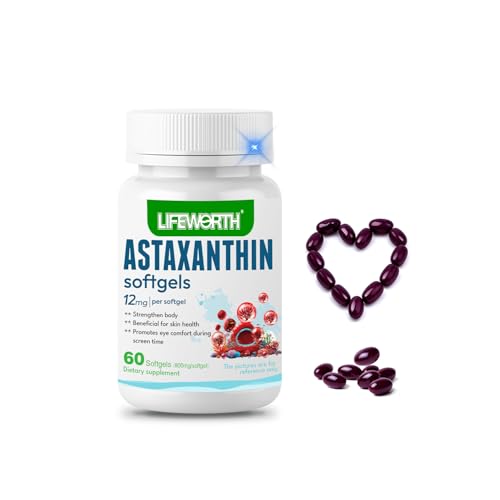
- Stop decanting into weekly pill organizers. This is the common habit worth changing. A clear plastic organizer on a kitchen counter exposes softgels to light and air for days at a stretch, which is close to the conditions the degradation studies used. Fill a day or two ahead, not a month.
- Do not refrigerate softgels by default unless the label says to. Refrigeration helps with temperature but repeated cold-to-warm cycling in a humid kitchen invites condensation inside the bottle, and moisture is its own problem.
- Respect the expiration date, and buy sizes you will finish. A 360-count bottle at one capsule a day is a year of storage. Two 180-count bottles bought six months apart spend less total time degrading.
An Honest Limit On All Of This
Every study cited here tested astaxanthin in a model system: solution in glass, dried algal biomass, oil-body microcapsules, emulsions. None of them tested sealed commercial softgels under household conditions, which is what you actually own.
Commercial softgels are meaningfully better protected than any of these models. The astaxanthin sits in an oil matrix inside an opaque gelatin shell inside a sealed, often opaque bottle, frequently with antioxidants such as tocopherols added to the fill. Those are all deliberate defenses against exactly the degradation described above.
So the correct read is directional rather than quantitative. You should not conclude that your bottle loses 20% of its astaxanthin in 48 hours on a sunny counter. You should conclude that heat, light and air are the specific enemies here, that manufacturers already spend real money defending against them, and that it is worth not undoing that work at home.
Reassuringly, when ConsumerLab tested popular standalone astaxanthin products in 2026, all of the brands it selected contained their listed amounts or more, which suggests manufacturing and distribution storage is generally holding up. That testing is covered in our certifications article.
Frequently Asked Questions
How should I store astaxanthin supplements?
Sealed, cool, dark and dry. Keep the bottle closed with its desiccant packet, store it in a cupboard rather than an open shelf or a windowsill, and keep it away from heat sources such as a stove, radiator or parked car. Research found degradation above 20% at temperatures over 60 degrees C, which a car interior can reach.
Does astaxanthin go bad?
It degrades rather than spoils. Astaxanthin is readily oxidized, and prolonged UV exposure also causes isomerization, with a 9,13-di-cis isomer detected after 288 hours of irradiation in one study. In dried algal biomass stored 20 weeks, even the best case of freezer temperature plus vacuum packing still lost about 12%.
Should I refrigerate astaxanthin?
Not unless the label says to. Lower temperature does improve retention in storage studies, but moving softgels between a cold fridge and a humid kitchen invites condensation inside the bottle, and moisture creates its own problems. A stable, cool cupboard is the better default.
Can I put astaxanthin in a weekly pill organizer?
It is better not to for long stretches. A clear plastic organizer on a counter exposes softgels to light and air for days, which resembles the conditions used in degradation studies. Filling one or two days ahead is fine; filling a month ahead is the habit worth dropping.
Is there an official standard for astaxanthin content?
There is no standalone astaxanthin monograph in USP-NF. Astaxanthin appears there only as an assayed component of the Krill Oil monograph, and its required content limit was lowered from not less than 0.01% to not less than 0.005% specifically to reflect new astaxanthin stability data.
References
- Liu X, et al. Evaluation of astaxanthin stability under varying temperatures and ultraviolet irradiation durations based on Raman spectroscopy. Food Chem X. 2024;24:101947. PMID 39582650
- Ahmed F, et al. Effect of drying, storage temperature and air exposure on astaxanthin stability from Haematococcus pluvialis. Food Res Int. 2015;74:231-236. PMID 28411988
- Zhao X, et al. Physical and oxidative stability of astaxanthin microcapsules prepared with liposomes. J Sci Food Agric. 2022;102(11):4909-4917. PMID 35246844
- USP-NF. Notice to Revise the Krill Oil Monograph, Non-Botanical Dietary Supplements Expert Committee (astaxanthin content limit lowered from NLT 0.01% to NLT 0.005% to reflect stability study data). uspnf.com
These statements have not been evaluated by the Food and Drug Administration. This information is not intended to diagnose, treat, cure, or prevent any disease. Content is for informational purposes only and is not medical advice; consult a qualified healthcare provider before starting any supplement. As an Amazon Associate we earn from qualifying purchases.
