Astaxanthin is a keto-carotenoid produced primarily by the microalgae Haematococcus pluvialis. Unlike most dietary antioxidants, it spans both the lipid and aqueous phases of cell membranes simultaneously, which allows it to intercept free radicals and quench singlet oxygen in environments where other antioxidants cannot reach. One particularly relevant property for brain health is its ability to cross the blood-brain barrier, placing it among a small group of lipophilic compounds that can act directly within neural tissue.
Research into astaxanthin and brain health has grown considerably over the past decade, with studies ranging from rodent models of neurodegeneration and aging to small randomized controlled trials in humans with cognitive complaints. The findings are early but consistent enough to warrant attention. This article summarizes what the current evidence supports, where the gaps remain, and what an honest reading of the science suggests for anyone considering astaxanthin as part of a brain-health strategy.
Key Takeaways
- Astaxanthin crosses the blood-brain barrier and can act directly in neural tissue, which distinguishes it from many other dietary antioxidants.
- Preclinical studies consistently show it reduces oxidative stress, supports mitochondrial function, and protects neurons in models of aging, dementia, traumatic injury, and inflammation [1][2][3].
- Animal research suggests it may support hippocampal neurogenesis and spatial memory, which are directly relevant to age-related memory decline [4].
- Human RCT evidence is early and limited: trials are mostly small, short, and often test astaxanthin in combination with other nutrients, making isolated conclusions difficult [5][6].
- Natural astaxanthin from Haematococcus pluvialis at doses up to 12 mg/day for 12 weeks has shown no serious adverse effects in trials, making its risk profile favorable while the evidence continues to develop.
How Astaxanthin Works in the Brain: Proposed Mechanisms
The central mechanism linking astaxanthin to neuroprotection is its exceptional antioxidant capacity. The brain is particularly vulnerable to oxidative damage because it consumes a disproportionately large share of the body’s oxygen while being rich in polyunsaturated fatty acids that are highly susceptible to lipid peroxidation. Astaxanthin’s unique molecular structure allows it to anchor itself across the full thickness of a cell membrane, scavenging reactive oxygen species on both the inner and outer leaflets at the same time.
Beyond direct radical quenching, research in animal models points to several secondary pathways. One involves the SIRT1/NRF2 signaling axis, a master regulator of cellular antioxidant defenses. In a mouse model of traumatic brain injury, astaxanthin treatment reduced neuronal apoptosis and oxidative stress markers through this pathway [3]. Another involves Wnt/β-catenin signaling, which plays a role in neuronal development and survival; a 2026 study found that astaxanthin attenuated brain inflammation by modulating this pathway in a carrageenan-induced mouse model [7]. Mitochondrial integrity is a third area of interest, since oxidative stress can impair mitochondrial function in neurons and astaxanthin has been shown to help restore normal mitochondrial dynamics in several preclinical models [1].
Hippocampal Neurogenesis and Spatial Memory
The hippocampus is the brain region most closely associated with forming new memories, and it is one of the few areas in the adult brain where new neurons continue to be generated throughout life. A 2016 study in mice found that dietary astaxanthin supplementation significantly enhanced adult hippocampal neurogenesis and improved performance on spatial memory tasks compared to controls [4]. While mouse models do not map perfectly onto human cognition, the finding is notable because the hippocampus is also among the first regions to show atrophy in Alzheimer’s disease.


Supporting this, a 2024 rat study on vascular dementia — a condition caused by reduced blood flow to the brain — found that astaxanthin rescued memory impairments and protected hippocampal neurons from death [2]. Vascular dementia is the second most common form of dementia after Alzheimer’s, and interventions that preserve hippocampal integrity are of genuine clinical interest. It is important to stress that these are animal studies, and whether the doses and mechanisms translate to humans is not yet established.
Oxidative Stress, Brain Aging, and Neurodegeneration
Oxidative stress is implicated in normal brain aging and in neurodegenerative conditions including Alzheimer’s disease. A 2024 review examining the role of antioxidants in Alzheimer’s pathology identified oxidative stress as a key driver of amyloid plaque formation and tau hyperphosphorylation, two hallmarks of the disease, and noted astaxanthin among the antioxidants with relevant preclinical evidence [8].
In a rat model of accelerated brain aging induced by d-galactose — a widely used method to study age-related neurological decline — astaxanthin supplementation ameliorated oxidative stress markers, improved mitochondrial function, and favorably regulated metabolic markers associated with aging [1]. A separate line of research has examined astaxanthin in the context of acute brain injury: in a mouse model of subarachnoid hemorrhage, early treatment with astaxanthin reduced oxidative stress and protected against early brain injury [9]. These findings suggest the compound may be relevant across a range of contexts — from slow neurodegeneration to acute neurological events — though the translation to human outcomes requires much more study.
Diabetes-related cognitive decline is another area of preclinical interest. A 2021 in vitro and in vivo study found that an astaxanthin-derived compound reduced high-glucose-induced neuronal toxicity and improved cognitive function in a diabetic rat model, with effects linked to reduced oxidative stress and improved mitochondrial function [10]. This is consistent with the broader picture of astaxanthin acting at the intersection of oxidative stress and metabolic health.
Anti-Inflammatory Effects in Neural Tissue
Neuroinflammation — sustained inflammatory signaling in the brain — is now recognized as a contributor to both aging-related cognitive decline and neurodegenerative disease. Astaxanthin has demonstrated anti-inflammatory activity in several preclinical brain models. A 2026 study found that astaxanthin significantly attenuated carrageenan-induced oxidative stress and inflammatory markers in mouse brain tissue, with evidence pointing to modulation of the Wnt/β-catenin pathway as a mechanism [7].
In the context of early brain development, a 2025 study found that astaxanthin reversed neurodevelopmental impairment caused by prenatal alcohol exposure in animal models, an effect attributed to decreased oxidative stress-induced disruption of Maf/Bcl2 signaling pathways that regulate neuronal survival [11]. While this particular application is far from a clinical recommendation, it illustrates the breadth of neural contexts in which astaxanthin’s antioxidant and anti-apoptotic properties appear relevant. A broader review published in 2022 summarized astaxanthin’s potential role across multiple age-related conditions, noting its anti-inflammatory profile as one of its most consistently observed properties across study models [12].


Human Evidence: Cognitive Function in Clinical Trials
Preclinical findings are promising, but the human evidence base for astaxanthin and cognition is still limited. A 2020 systematic review of randomized controlled trials examined the combined effects of lutein and astaxanthin on cognitive function in healthy adults. The review found modest improvements in processing speed, working memory, and attention in some trials, but noted significant heterogeneity between studies in terms of dosing, duration, and outcome measures, making firm conclusions difficult [5].
A 2024 double-blind, placebo-controlled RCT evaluated a nutraceutical supplement containing astaxanthin in adults with self-reported cognitive complaints. Compared to placebo, the supplementation group showed improvements in cognitive measures alongside reductions in perceived stress, with participants also reporting better eye health and skin satisfaction outcomes [6]. Because the supplement included multiple ingredients, the contribution of astaxanthin specifically cannot be isolated from this trial. This is a recurring limitation in human astaxanthin research: many trials combine it with other carotenoids or nutrients, making it difficult to attribute effects to astaxanthin alone.
At this stage, the human data is suggestive but not conclusive. The trials are generally small, use varying doses (commonly 6–12 mg/day), and run for relatively short periods (8–12 weeks). Larger, longer, and better-controlled trials focused on astaxanthin as a single agent in cognitive outcomes are needed before strong clinical recommendations can be made.
🛒 Where to Buy Astaxanthin
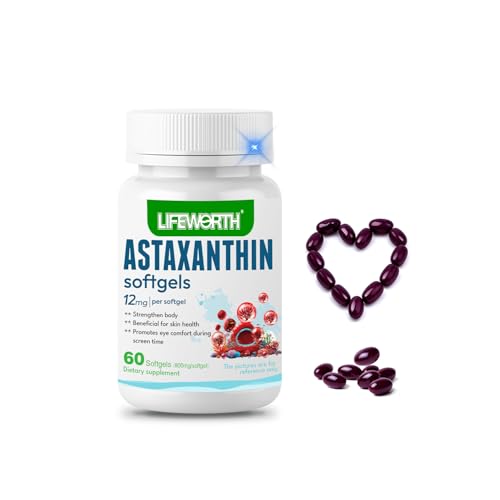
- Nutrex Hawaii BioAstin Hawaiian AstaxanthinLab-tested / studied
softgels, 12 mg per softgel, 90 count — Hawaiian-grown Haematococcus pluvialis, sold as the High Potency 90-softgel bottle - Pure Synergy SuperPure Astaxanthin Extract
capsules, 60 count — Sold as an astaxanthin extract in a capsule rather than a softgel; the listing does not state a mg per capsule, so check the label for the dose before comparing it with the 12 mg bottles here - Naturalis New Zealand Astaxanthin
softgels, 12 mg per softgel, 120 count — New Zealand-grown rather than Hawaiian, and the largest bottle on this list at 120 softgels - NOW Foods Astaxanthin
softgels, 4 mg per softgel — The entry-level 4 mg dose, built on the Zanthin astaxanthin ingredient; a lower starting point than the 12 mg bottles above
As an Amazon Associate we earn from qualifying purchases. Astaxanthin products vary mainly by dose and by source, with 4mg and 12mg the common strengths and most of them derived from Haematococcus pluvialis algae, so check the label for the astaxanthin content per serving and prefer products that publish third-party testing.
A Note on the Evidence
The majority of evidence on astaxanthin and brain health comes from animal models; human RCTs are few, small, and often test astaxanthin alongside other ingredients, which limits causal conclusions. This article is informational only and is not a substitute for medical advice — individuals with cognitive symptoms, neurological conditions, or who are pregnant or breastfeeding should consult a qualified healthcare provider before using any supplement.
Frequently Asked Questions
Can astaxanthin actually reach the brain?
Yes. Astaxanthin is highly lipophilic and has been shown in animal studies to cross the blood-brain barrier, allowing it to act directly within neural tissue. This distinguishes it from many water-soluble antioxidants that cannot cross this barrier. This property underpins much of the preclinical neuroprotection research [12].
What cognitive benefits have been observed in human trials?
Human evidence is preliminary. A systematic review of RCTs found modest improvements in processing speed, working memory, and attention with astaxanthin (often combined with lutein) in healthy adults, but noted significant study heterogeneity [5]. A more recent placebo-controlled trial in adults with self-reported cognitive complaints found improvements in cognitive measures alongside reductions in stress, though the supplement contained multiple ingredients [6].

Does astaxanthin help with Alzheimer's disease?
There is no human clinical evidence that astaxanthin treats or prevents Alzheimer’s disease. Preclinical research suggests it may address oxidative stress pathways relevant to Alzheimer’s pathology [8], and animal studies show hippocampal protection in dementia models [2], but this has not been validated in human Alzheimer’s trials. Anyone with concerns about Alzheimer’s risk should speak with a neurologist.
How might astaxanthin protect against brain aging?
In rodent aging models, astaxanthin has been shown to reduce markers of oxidative stress, support mitochondrial function, and improve metabolic markers associated with neurological aging [1]. It also appears to support hippocampal neurogenesis in mice, which declines with age [4]. Whether these mechanisms produce meaningful benefits in aging humans has not yet been confirmed in clinical trials.
What dose is used in brain health research?
Human trials on cognition have typically used doses in the range of 6–12 mg/day for 8–12 weeks. Natural astaxanthin from Haematococcus pluvialis at up to 12 mg/day for 12 weeks has shown no serious adverse effects in trials. Very high doses above 20 mg/day may cause a reversible yellow-orange skin tint (carotenodermia), though this is not harmful.
Is astaxanthin safe for long-term brain health supplementation?
Natural astaxanthin holds GRAS (Generally Recognized As Safe) status and has not produced serious adverse effects in trials at standard doses. However, long-term safety data beyond 12 weeks in humans is limited, and evidence is insufficient to recommend supplementation during pregnancy or breastfeeding. As with any supplement, consult a healthcare provider before starting, especially if you take medications or have existing health conditions.
References
- Liu H et al. Astaxanthin attenuates d-galactose-induced brain aging in rats by ameliorating oxidative stress, mitochondrial dysfunction, and regulating metabolic markers. Food & function (2020). PMID 32343758
- Wei N et al. Astaxanthin Rescues Memory Impairments in Rats with Vascular Dementia by Protecting Against Neuronal Death in the Hippocampus. Neuromolecular medicine (2024). PMID 39014255
- Zhang XS et al. Astaxanthin ameliorates oxidative stress and neuronal apoptosis via SIRT1/NRF2/Prx2/ASK1/p38 after traumatic brain injury in mice. British journal of pharmacology (2021). PMID 33326114
- Yook JS et al. Astaxanthin supplementation enhances adult hippocampal neurogenesis and spatial memory in mice. Molecular nutrition & food research (2016). PMID 26643409
- Nouchi R et al. Effects of Lutein and Astaxanthin Intake on the Improvement of Cognitive Functions among Healthy Adults: A Systematic Review of Randomized Controlled Trials. Nutrients (2020). PMID 32120794
- Lopresti AL et al. An Examination into the Effects of a Nutraceutical Supplement on Cognition, Stress, Eye Health, and Skin Satisfaction in Adults with Self-Reported Cognitive Complaints: A Randomized, Double-Blind, Placebo-Controlled Trial. Nutrients (2024). PMID 38892705
- Mokhtari Sangdehi SR et al. Astaxanthin attenuates carrageenan-induced oxidative stress and inflammation in mice brain: possible role of the wnt/β-catenin signaling pathway. Nutritional neuroscience (2026). PMID 40731238
- Kamaljeet et al. Emerging role of antioxidants in Alzheimer's disease: Insight into physiological, pathological mechanisms and management. Pharmaceutical science advances (2024). PMID 41550171
- Zhang XS et al. Amelioration of oxidative stress and protection against early brain injury by astaxanthin after experimental subarachnoid hemorrhage. Journal of neurosurgery (2014). PMID 24724856
- Loganathan C et al. Astaxanthin-s-allyl cysteine diester against high glucose-induced neuronal toxicity in vitro and diabetes-associated cognitive decline in vivo: Effect on p53, oxidative stress and mitochondrial function. Neurotoxicology (2021). PMID 34339762
- Zeng X et al. Astaxanthin reverses neurodevelopmental impairment by decreasing oxidative stress-induced disruption of Maf/Bcl2 signaling in prenatal alcohol exposure. Neuroreport (2025). PMID 40810272
- Bjørklund G et al. The Role of Astaxanthin as a Nutraceutical in Health and Age-Related Conditions. Molecules (Basel, Switzerland) (2022). PMID 36363994
These statements have not been evaluated by the Food and Drug Administration. This information is not intended to diagnose, treat, cure, or prevent any disease. Content is for informational purposes only and is not medical advice; consult a qualified healthcare provider before starting any supplement. As an Amazon Associate we earn from qualifying purchases.
