Astaxanthin is a red keto-carotenoid produced primarily by the microalgae Haematococcus pluvialis. Its unusual molecular structure lets it span the full thickness of cell membranes, quenching free radicals in both the lipid-soluble interior and the water-soluble surface simultaneously. That biological reach is part of why it has attracted research interest across eye health, skin aging, exercise recovery, and inflammation. As astaxanthin supplements move into wider use, questions about interactions with prescription drugs and contraindications for certain groups have become more pressing.
The honest answer is that human clinical evidence on astaxanthin drug interactions is very thin. Only one published case report currently documents a clinically significant interaction in a patient. Most of what practitioners discuss is extrapolated from astaxanthin’s known biological mechanisms—its anti-inflammatory action, its influence on lipid metabolism, and its possible effects on liver enzymes that process drugs—rather than from controlled pharmacokinetic studies. That gap matters in both directions: serious interactions may exist but remain undiscovered, and many theoretical warnings circulating online are precautionary rather than evidence-based.
Key Takeaways
- The only documented human drug interaction for astaxanthin involves warfarin: a case report found elevated INR when astaxanthin was co-administered, suggesting possible inhibition of the CYP2C9 enzyme that metabolizes warfarin [1].
- Interactions with other anticoagulants, antiplatelet agents, statins, NSAIDs, and immunosuppressants are theoretically plausible based on astaxanthin’s biological mechanisms, but none have been confirmed in controlled human studies.
- Astaxanthin is not recommended during pregnancy or breastfeeding because human safety evidence in those populations is absent.
- Algae-derived astaxanthin is not a shellfish allergen, but individuals with severe seafood allergies should verify manufacturing practices on product labels.
- At standard doses of 4–12 mg per day, astaxanthin appears generally well-tolerated in healthy adults; always disclose supplement use to any prescribing physician, particularly if you take medications with narrow therapeutic windows.
The Only Documented Interaction: Astaxanthin and Warfarin
The sole published human case report of a clinically significant astaxanthin drug interaction involves warfarin, a vitamin K antagonist anticoagulant prescribed to prevent blood clots and stroke. A 2019 case report documented a patient whose international normalized ratio (INR)—a standard measure of how slowly blood is clotting—became elevated after starting astaxanthin supplementation alongside their established warfarin therapy [1]. An elevated INR on warfarin means the blood is clotting more slowly than the therapeutic target, which raises the risk of dangerous bleeding.
The proposed mechanism is that astaxanthin may inhibit the cytochrome P450 enzyme CYP2C9, which is the primary pathway by which warfarin is broken down in the liver. If astaxanthin slows that metabolism, warfarin accumulates in the bloodstream beyond the intended level and its anticoagulant effect is amplified. This is a pharmacokinetically plausible explanation, though a single case report cannot confirm the mechanism or quantify the size of the effect [1]. No controlled pharmacokinetic study has been conducted to test the hypothesis directly.
The practical implication is clear regardless of mechanism: anyone taking warfarin or another vitamin K antagonist should treat astaxanthin as a potential interactor and consult their prescribing physician before supplementing. If astaxanthin is started, stopped, or changed in dose during warfarin therapy, closer INR monitoring during the transition period would be prudent.
Theoretical Concerns with Other Anticoagulants and Antiplatelet Agents
Beyond warfarin, there is theoretical concern about astaxanthin interacting with other anticoagulants such as apixaban, rivaroxaban, dabigatran, and heparin, as well as antiplatelet drugs including aspirin, clopidogrel, and ticagrelor. No published case reports or clinical trials currently document interactions with these agents, but the concern arises from astaxanthin’s known biological properties. Carotenoids can influence eicosanoid metabolism—the pathway governing prostaglandins and thromboxanes involved in platelet activation—and astaxanthin’s potent reduction of oxidative stress may have downstream effects on clotting signaling, though this has not been tested in humans.


Patients on anticoagulant or antiplatelet therapy for atrial fibrillation, deep vein thrombosis, coronary artery disease, or other serious conditions already carry meaningful baseline bleeding risk. Adding any supplement with theoretical anticoagulant-adjacent properties warrants a direct conversation with a prescriber before starting. This is not a statement that an interaction exists—it is a recognition that the evidence needed to rule one out has not been generated.
Astaxanthin and Lipid-Lowering Medications
Small human trials have examined astaxanthin’s effect on lipid profiles, finding reductions in LDL cholesterol and triglycerides and increases in HDL in some participants. If astaxanthin itself modestly lowers LDL, combining it with a statin or other lipid-lowering drug could theoretically enhance that effect. Additional LDL reduction is not inherently harmful, but the combined effect has not been studied in a trial, so neither its magnitude nor any potential downside is known.
A separate theoretical question concerns whether astaxanthin influences the CYP3A4 enzyme system, which metabolizes many statins including simvastatin and lovastatin. If astaxanthin inhibited CYP3A4 meaningfully, statin blood concentrations could rise, potentially increasing the risk of myopathy or, in severe cases, rhabdomyolysis. This concern has not been confirmed in human pharmacokinetic studies, and it would be premature to treat it as an established risk. It is noted here because it illustrates why disclosing all supplements to a prescribing physician matters even when direct evidence is absent.
Potential Interactions with Immunosuppressants and Anti-Inflammatory Drugs
Astaxanthin has demonstrated anti-inflammatory activity in human trials, including effects on inflammatory biomarkers such as C-reactive protein. This raises a theoretical interaction concern with immunosuppressant drugs—cyclosporine, tacrolimus, mycophenolate—used after organ transplantation or in autoimmune conditions. If astaxanthin modulates immune signaling, it could in principle interfere with the carefully calibrated immunosuppression these drugs are designed to achieve. No clinical evidence currently documents this happening, but the population taking immunosuppressants faces serious consequences from any disruption to their regimen, which makes caution appropriate.
Non-steroidal anti-inflammatory drugs (NSAIDs) such as ibuprofen and naproxen share some pharmacological territory with astaxanthin’s anti-inflammatory action. Additive anti-inflammatory effects are theoretically possible, though additive anti-inflammatory effects are generally less dangerous than additive anticoagulation. Patients on corticosteroids or disease-modifying antirheumatic drugs (DMARDs) for autoimmune conditions should also note that supplementing with a biologically active anti-inflammatory agent could complicate interpretation of symptoms and treatment response.
Contraindications: Who Should Avoid or Be Cautious with Astaxanthin
Pregnancy and breastfeeding: Human evidence on astaxanthin safety during pregnancy and lactation is insufficient. Because astaxanthin crosses cell membranes readily and its effects on fetal or infant development have not been studied in human trials, supplementation is not recommended for pregnant or breastfeeding women until adequate evidence is available.

Shellfish or seafood allergies: Commercial astaxanthin supplements are almost universally derived from Haematococcus pluvialis algae rather than from shellfish. Shellfish allergy is driven primarily by crustacean proteins—particularly tropomyosins—not carotenoid pigments, so algae-derived astaxanthin is not expected to trigger shellfish allergic reactions. However, manufacturing environments vary; individuals with severe shellfish or seafood allergies should read product labels for cross-contamination disclosures and consult an allergist if in doubt.

High-dose use: At doses well above typical supplementation levels—generally cited above 20 mg per day—astaxanthin can cause carotenodermia, a reversible orange-yellow tinting of the skin from carotenoid pigment depositing in subcutaneous fat. This is the same benign effect seen with sustained high-dose beta-carotene intake and resolves when the supplement is stopped. Human trials using doses up to 12 mg per day for 12 weeks have not documented serious adverse effects. Standard supplementation doses fall between 4 and 12 mg per day.
Understanding the Evidence Gaps
The fundamental limitation here is that astaxanthin drug interaction research barely exists. A single human case report—the warfarin interaction—provides direct clinical evidence [1]. Everything else discussed is derived from astaxanthin’s known biological mechanisms, extrapolated from analogous antioxidants, or simply absent from the published literature. In pharmacology, absence of evidence is not evidence of absence: undiscovered interactions may exist simply because no one has looked.
This cuts in both directions. Astaxanthin could have clinically meaningful interactions with drugs beyond warfarin that have not yet surfaced because no large pharmacokinetic studies have been conducted. Equally, many theoretical warnings circulated in supplement marketing and health media may overstate real-world risk, because pharmacological plausibility in a cell culture does not guarantee a clinically detectable effect at 8 mg per day in a healthy adult. Standard supplementation doses in otherwise healthy adults who take no prescription medications appear to carry low interaction risk based on available safety data—but that assessment cannot yet be fully evidence-grounded.
The practical upshot is simple: disclose all supplements to your prescribing physicians. This is especially important with medications that have narrow therapeutic windows, where small changes in drug levels can shift treatment from effective to harmful. Warfarin is the canonical example [1], but immunosuppressants and certain antiarrhythmic drugs belong in the same category. Transparency costs nothing; an undisclosed interaction can cost a great deal.
🛒 Where to Buy Astaxanthin
- Nutrex Hawaii BioAstin Hawaiian AstaxanthinLab-tested / studied
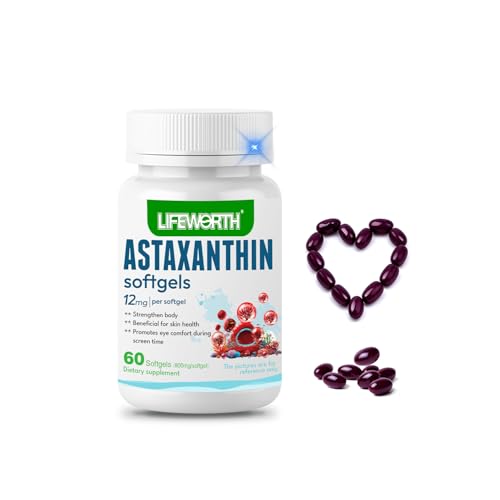
softgels, 12 mg per softgel, 90 count — Hawaiian-grown Haematococcus pluvialis, sold as the High Potency 90-softgel bottle - Pure Synergy SuperPure Astaxanthin Extract
capsules, 60 count — Sold as an astaxanthin extract in a capsule rather than a softgel; the listing does not state a mg per capsule, so check the label for the dose before comparing it with the 12 mg bottles here - Naturalis New Zealand Astaxanthin
softgels, 12 mg per softgel, 120 count — New Zealand-grown rather than Hawaiian, and the largest bottle on this list at 120 softgels - NOW Foods Astaxanthin
softgels, 4 mg per softgel — The entry-level 4 mg dose, built on the Zanthin astaxanthin ingredient; a lower starting point than the 12 mg bottles above
As an Amazon Associate we earn from qualifying purchases. Astaxanthin products vary mainly by dose and by source, with 4mg and 12mg the common strengths and most of them derived from Haematococcus pluvialis algae, so check the label for the astaxanthin content per serving and prefer products that publish third-party testing.

A Note on the Evidence
Human evidence on astaxanthin drug interactions is sparse—only one published case report exists [1]—so both the presence and absence of interactions with specific medications remains largely unestablished. This article is informational and does not constitute medical advice; anyone taking prescription medications, particularly anticoagulants or immunosuppressants, should consult a qualified healthcare provider before starting astaxanthin supplementation.
Frequently Asked Questions
Does astaxanthin interact with blood thinners?
The only published clinical evidence is a case report in which a patient on warfarin developed an elevated INR after adding astaxanthin, consistent with slowed warfarin metabolism [1]. No similar reports exist for newer anticoagulants such as apixaban or rivaroxaban, and those interactions have not been studied. Anyone on anticoagulant therapy should discuss astaxanthin with their prescribing physician before starting it.
Can I take astaxanthin with a statin?
No controlled human pharmacokinetic study has examined this combination. Astaxanthin affects lipid metabolism in some trials and could theoretically influence the liver enzymes that break down certain statins, but this has not been confirmed in humans. Adding astaxanthin to statin therapy is not established as dangerous at typical doses, but the evidence gap means your physician should know you are taking it.
Is astaxanthin safe during pregnancy?
Human evidence on astaxanthin during pregnancy or breastfeeding is insufficient to establish safety. Until adequate studies are available, supplementation is not recommended during pregnancy or lactation.
What happens if you take too much astaxanthin?
At doses above approximately 20 mg per day—above typical supplementation ranges—astaxanthin can cause carotenodermia, a harmless reversible orange-yellow tint to the skin from carotenoid pigment accumulation in subcutaneous fat. Human trials using up to 12 mg per day for 12 weeks found no serious adverse effects. The skin discoloration resolves when supplementation is reduced or stopped.
I have a shellfish allergy. Can I take astaxanthin?
Commercial astaxanthin is nearly always derived from Haematococcus pluvialis algae, not shellfish, and the proteins that cause shellfish allergy are not present in algae. Algae-derived astaxanthin is therefore not expected to trigger shellfish reactions. However, manufacturing contamination is theoretically possible, so reading product labels and consulting an allergist is advisable if your allergy is severe.
Should I tell my doctor I am taking astaxanthin?
Yes. Drug interaction research on astaxanthin is very limited, with only a single case report documenting a clinically significant interaction in humans [1]. Because additional unknown interactions may exist, disclosing astaxanthin use to any physician managing medications with narrow therapeutic windows—warfarin, immunosuppressants, antiarrhythmics—is the lowest-risk approach.
References
- Santiyanon N et al. Interaction between warfarin and astaxanthin: A case report. Journal of cardiology cases (2019). PMID 31073352
These statements have not been evaluated by the Food and Drug Administration. This information is not intended to diagnose, treat, cure, or prevent any disease. Content is for informational purposes only and is not medical advice; consult a qualified healthcare provider before starting any supplement. As an Amazon Associate we earn from qualifying purchases.
