Astaxanthin, a keto-carotenoid derived from the microalgae Haematococcus pluvialis, has attracted growing interest for its antioxidant properties and potential benefits for skin health, eye fatigue, exercise recovery, and inflammatory markers. As its popularity has grown, so has a natural question from expectant and new mothers: is astaxanthin safe to take during pregnancy or while breastfeeding?
The honest answer is that we do not know. No human clinical trials have examined astaxanthin supplementation specifically in pregnant or breastfeeding women. This article reviews what is known—and, critically, what is not—so that women and their healthcare providers can make genuinely informed decisions rather than rely on marketing claims.
Key Takeaways
- No human clinical trials have tested astaxanthin supplementation in pregnant or breastfeeding women—this is the central evidence gap.
- Astaxanthin is not a vitamin A precursor and does not carry the teratogenic risk associated with excess retinol, but the absence of one known hazard is not the same as a confirmed safety profile.
- A 2025 meta-analysis found favorable effects of astaxanthin on oxidative stress and reproductive markers in women with PCOS, but these findings cannot be extended to pregnant women [1].
- Cochrane reviews of antioxidant vitamin supplementation in pregnancy show that even well-studied nutrients produce complex and sometimes null results [2], reinforcing that astaxanthin needs its own pregnancy data.
- The current consensus is to avoid astaxanthin supplements during pregnancy and breastfeeding; naturally occurring astaxanthin in seafood at normal dietary amounts is not a known concern.
What Astaxanthin Is—and What Makes It Different from Other Carotenoids
Astaxanthin belongs to the xanthophyll class of carotenoids, giving wild salmon, shrimp, and flamingos their characteristic pink-red color. Its most important structural distinction for pregnancy discussions is that it has no pro-vitamin A activity—it does not convert to retinol in the body. This matters because excess preformed vitamin A (retinol) is a well-established teratogen, and concerns about high-dose carotenoid supplementation in pregnancy often trace back to that association. Astaxanthin does not share that specific biochemical pathway.
Astaxanthin’s unique molecular geometry allows it to span the full bilayer of cell membranes, simultaneously quenching singlet oxygen and free radicals on both the lipid and aqueous sides. This dual-phase antioxidant action is why researchers have explored it for conditions driven by oxidative stress, including certain aspects of female reproductive health. However, biological plausibility is not the same as demonstrated safety in pregnancy.
The Critical Gap: No Human Pregnancy Trials Exist
The most important fact for any pregnant person to understand is simple: no randomized controlled trials have evaluated astaxanthin supplementation in pregnant or breastfeeding humans. Without this foundational safety data, it is impossible to establish a safe dose during gestation, identify potential effects on fetal development, or determine whether astaxanthin transfers into breast milk at concentrations that could affect a nursing infant.

In healthy non-pregnant adults, natural astaxanthin from Haematococcus pluvialis has shown no serious adverse effects in trials using doses up to 12 mg per day for 12 weeks, and it holds GRAS (Generally Recognized As Safe) status in the United States for general use. At very high doses exceeding 20 mg per day, a reversible yellow-orange skin discoloration called carotenodermia has been reported. These findings, while reassuring for the general adult population, cannot be extrapolated to pregnancy. The physiological environment of pregnancy—altered hormone levels, increased blood volume, changes in hepatic metabolism, and the presence of a developing fetus—changes the safety calculus in ways that non-pregnancy data cannot address.
What Animal Research Suggests—and Why It Has Limits
Preclinical studies in rodents have generally not identified embryotoxic or teratogenic effects from astaxanthin at doses corresponding to typical human supplementation levels. Some animal research has suggested that astaxanthin’s antioxidant properties may reduce oxidative damage in reproductive tissues. However, animal models routinely fail to predict human pregnancy safety with precision, and regulatory bodies worldwide do not consider animal-only data sufficient to recommend a supplement for use during human gestation.
The gap between animal data and human data is precisely why astaxanthin manufacturers and nutrition researchers consistently note that supplementation during pregnancy and breastfeeding is not recommended until adequate human evidence exists. Absence of observed harm in rodents is not equivalent to confirmed safety in humans.
Astaxanthin and Female Reproductive Health: What PCOS Evidence Shows
The most directly relevant human research involves women with polycystic ovary syndrome (PCOS). A 2025 systematic review and single-arm meta-analysis of randomized clinical trials found that astaxanthin supplementation was associated with reductions in oxidative stress markers and measurable effects on certain reproductive outcomes in women with PCOS [1]. The analysis suggested favorable changes in antioxidant capacity and some inflammatory markers in this population.
These findings are encouraging for understanding astaxanthin’s biological activity in the female reproductive system, but they come with an important limitation: the trials enrolled non-pregnant women with a specific hormonal disorder. PCOS and pregnancy represent fundamentally different physiological states. Evidence of benefit in PCOS cannot be used to infer safety—let alone benefit—during pregnancy, where oxidative balance and cellular signaling are tightly regulated to support placentation and fetal development.
Lessons from Antioxidant Supplementation Research in Pregnancy
The broader literature on antioxidant and vitamin supplementation during pregnancy contains an important cautionary lesson: well-intentioned supplementation does not reliably translate into better outcomes and can produce null or complex results even with extensively studied nutrients. Multiple Cochrane systematic reviews examining vitamin supplementation for preventing miscarriage found little consistent evidence of benefit and highlighted that the effects of antioxidant micronutrients in pregnancy are not straightforwardly positive [2] [3] [4]. These reviews evaluated compounds such as vitamins C and E—nutrients with far more pregnancy-specific data than astaxanthin currently has.

Vitamin A provides another instructive carotenoid-class example. A systematic review of vitamin A supplementation in pregnant and postpartum women found that outcomes were highly dependent on baseline nutritional status and dose, with potential benefit in deficient populations but risk at high intakes [5]. As noted, astaxanthin does not convert to retinol and therefore does not carry the same teratogenic risk. Nevertheless, the broader principle stands: carotenoid-class compounds require pregnancy-specific human evidence before they can be recommended, because pregnancy alters how compounds are absorbed, distributed, and metabolized.
Breastfeeding: An Additional Layer of Uncertainty
For breastfeeding mothers, an additional unknown applies. Carotenoids are lipid-soluble compounds that naturally appear in human breast milk—carotenoid content in milk is a normal and biologically relevant source of antioxidants for newborns. Whether supplemental astaxanthin transfers into breast milk in significant concentrations, and whether those concentrations are safe for a nursing infant, has not been studied in humans.
Until pharmacokinetic data in lactating women is available, the precautionary position is to avoid astaxanthin supplementation while breastfeeding. Dietary astaxanthin from natural food sources—wild-caught salmon, shrimp, crab, and other seafood—is a different matter. These foods are consumed at culinary amounts that do not concentrate astaxanthin to pharmacological levels, and no evidence suggests that eating these foods during pregnancy or lactation requires restriction.
🛒 Where to Buy Astaxanthin
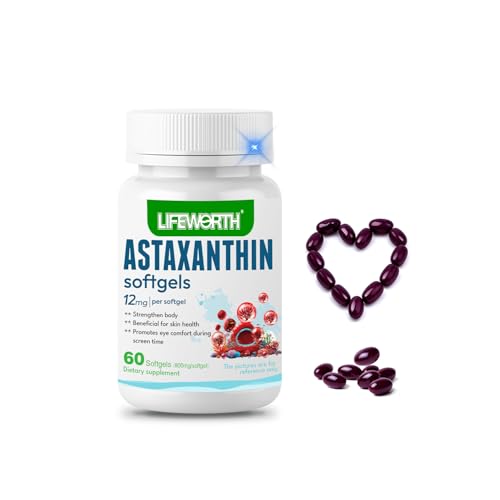
- Nutrex Hawaii BioAstin Hawaiian AstaxanthinLab-tested / studied
softgels, 12 mg per softgel, 90 count — Hawaiian-grown Haematococcus pluvialis, sold as the High Potency 90-softgel bottle - Pure Synergy SuperPure Astaxanthin Extract
capsules, 60 count — Sold as an astaxanthin extract in a capsule rather than a softgel; the listing does not state a mg per capsule, so check the label for the dose before comparing it with the 12 mg bottles here - Naturalis New Zealand Astaxanthin
softgels, 12 mg per softgel, 120 count — New Zealand-grown rather than Hawaiian, and the largest bottle on this list at 120 softgels - NOW Foods Astaxanthin
softgels, 4 mg per softgel — The entry-level 4 mg dose, built on the Zanthin astaxanthin ingredient; a lower starting point than the 12 mg bottles above
As an Amazon Associate we earn from qualifying purchases. Astaxanthin products vary mainly by dose and by source, with 4mg and 12mg the common strengths and most of them derived from Haematococcus pluvialis algae, so check the label for the astaxanthin content per serving and prefer products that publish third-party testing.
A Note on the Evidence
The human clinical trial evidence base for astaxanthin supplementation during pregnancy and breastfeeding is essentially absent, making it impossible to establish safety or recommend use during these periods. This article is informational only and does not constitute medical advice; anyone who is pregnant, planning to become pregnant, or breastfeeding should consult a qualified healthcare provider before taking any supplement.
Frequently Asked Questions
Is astaxanthin safe during pregnancy?
There are no human clinical trials evaluating astaxanthin supplementation during pregnancy, so safety cannot be confirmed. Most practitioners and researchers recommend avoiding astaxanthin supplements while pregnant on the basis of this evidence gap. Eating foods that naturally contain astaxanthin—such as salmon or shrimp—at normal dietary amounts is not associated with any known risk.
Does astaxanthin cause birth defects the way too much vitamin A can?
Astaxanthin does not convert to retinol in the body, so it does not share the teratogenic mechanism of preformed vitamin A. Research into vitamin A supplementation in pregnancy illustrates how dose-dependent carotenoid-related effects can be [5]. However, the absence of this particular hazard is not the same as a clean safety record in pregnancy—that record simply does not exist yet for astaxanthin.
Can astaxanthin help with fertility before trying to conceive?
Research in women with PCOS found that astaxanthin was associated with improvements in oxidative stress markers and certain reproductive outcomes [1]. This evidence applies specifically to non-pregnant women with a defined hormonal condition and does not support broad fertility claims. Anyone exploring astaxanthin for fertility should discuss it with their reproductive endocrinologist or gynecologist.
Will astaxanthin pass into breast milk?
Carotenoids are lipid-soluble and naturally present in breast milk, but whether supplemental astaxanthin transfers into breast milk at meaningful concentrations has not been studied in humans. Until pharmacokinetic data in lactating women is available, supplementation is not recommended during breastfeeding.
Why don't antioxidant supplements always help during pregnancy?
Pregnancy involves tightly regulated oxidative signaling that is essential for placentation and fetal development—it is not simply a state in which more antioxidant activity is always better. Multiple systematic reviews examining vitamin and antioxidant supplementation to prevent miscarriage found little consistent benefit from supplementation even with well-studied nutrients [2] [3] [4]. This complexity is one reason why pregnancy-specific trials are necessary before any supplement can be recommended.
What should I do if I was taking astaxanthin when I found out I was pregnant?
A brief prior exposure at typical supplement doses of 4–12 mg per day is unlikely to constitute a major acute risk based on what is currently known, but you should inform your obstetrician or midwife promptly and discontinue supplementation until you have discussed it with them. They can advise based on your individual health history and gestational stage.
References
- Rodrigues VD et al. Exploring the benefits of astaxanthin as a functional food ingredient: Its effects on oxidative stress and reproductive outcomes in women with PCOS – A systematic review and single-arm meta-analysis of randomized clinical trials. Naunyn-Schmiedeberg's archives of pharmacology (2025). PMID 39269488
- Balogun OO et al. Vitamin supplementation for preventing miscarriage. The Cochrane database of systematic reviews (2016). PMID 27150280
- Rumbold A et al. Vitamin supplementation for preventing miscarriage. The Cochrane database of systematic reviews (2011). PMID 21249660
- Rumbold A et al. Vitamin supplementation for preventing miscarriage. The Cochrane database of systematic reviews (2005). PMID 15846697
- Cruz S et al. Impact of Vitamin A Supplementation on Pregnant Women and on Women Who Have Just Given Birth: A Systematic Review. Journal of the American College of Nutrition (2018). PMID 29087239
These statements have not been evaluated by the Food and Drug Administration. This information is not intended to diagnose, treat, cure, or prevent any disease. Content is for informational purposes only and is not medical advice; consult a qualified healthcare provider before starting any supplement. As an Amazon Associate we earn from qualifying purchases.
