Astaxanthin is a red-orange keto-carotenoid produced primarily by the microalgae Haematococcus pluvialis. Unlike most antioxidants, its unusual molecular structure allows it to span the full lipid bilayer of cell membranes, anchoring at both surfaces while its polar ends interact with the aqueous environment on either side. This gives it unusual access to mitochondrial membranes, which are the site of nearly all aerobic energy production in the human body.
Research interest in astaxanthin has grown alongside broader interest in mitochondrial health as a target for reducing fatigue, exercise-induced damage, and age-related cellular decline. The studies available range from cell culture and animal models to small human trials, and while the evidence is promising, it remains early. What follows is an honest summary of what that research actually shows, with citations so you can evaluate the source material yourself.
Key Takeaways
- Astaxanthin’s membrane-spanning molecular structure allows it to protect mitochondrial membranes from oxidative damage at both their inner and outer surfaces, a structural advantage over antioxidants confined to the lipid core.
- Controlled studies show astaxanthin preserves mitochondrial integrity and reduces oxidative stress in skeletal muscle and liver tissue under stress conditions [1][2][3].
- Evidence from exercise studies suggests astaxanthin may promote mitochondrial biogenesis — the formation of new mitochondria — which is a key mechanism behind improved aerobic capacity [4][5].
- Anti-apoptotic effects in neural cells have been observed in laboratory settings, but clinical neurological outcomes in humans are not yet established [6].
- Most human trials are small and short-term; current findings are promising but should not be treated as definitive proof of clinically significant energy benefits.
How Mitochondria Produce Energy — and Why They Are Vulnerable to Oxidative Stress
Mitochondria generate ATP through a process called oxidative phosphorylation, in which electrons are passed along a series of protein complexes embedded in the inner mitochondrial membrane. This process is efficient but inherently generates reactive oxygen species (ROS) as a byproduct. When ROS production outpaces the cell’s antioxidant defenses, oxidative stress accumulates, damaging the very membranes and proteins that mitochondria depend on to function.
The inner mitochondrial membrane is rich in polyunsaturated fatty acids, making it particularly susceptible to lipid peroxidation. Damage here can impair the electrochemical gradient that drives ATP synthesis, reduce the efficiency of electron transport, and trigger apoptotic signaling. This is why compounds that can physically integrate into mitochondrial membranes and neutralize ROS at their source have attracted scientific attention.
Astaxanthin's Unique Position in the Mitochondrial Membrane
Most lipid-soluble antioxidants, such as beta-carotene, embed entirely within the hydrophobic core of the lipid bilayer. Astaxanthin’s keto and hydroxyl groups at each end of its molecule allow it to orient across the membrane, with its polar ends exposed at both the inner and outer surfaces. This orientation means it can intercept free radicals and quench singlet oxygen in multiple compartments simultaneously.
Early laboratory work demonstrated that astaxanthin preserves mitochondrial redox state and functional integrity under oxidative challenge [2]. In that study, astaxanthin maintained mitochondrial membrane potential and reduced markers of oxidative damage more effectively than several comparator antioxidants, supporting the idea that its membrane-spanning geometry provides a structural advantage over compounds confined to one phase.

Skeletal Muscle: Protecting Mitochondria During and After Exercise
Skeletal muscle is metabolically demanding and generates significant ROS during intense or prolonged exercise. Studies examining astaxanthin in this context have looked at both acute protection and longer-term adaptation. In one controlled study, astaxanthin preserved mitochondrial integrity and function and reduced heat-induced skeletal muscle injury, outperforming quercetin under the same experimental conditions [1].

A separate investigation found that astaxanthin alleviates oxidative stress and skeletal muscle damage by promoting mitochondrial biogenesis — the process by which cells make new mitochondria [5]. This is significant because mitochondrial biogenesis is one mechanism through which endurance exercise training improves aerobic capacity over time.
Research examining astaxanthin in the context of chronic high-intensity interval training found that supplementation promoted both mitochondrial biogenesis and antioxidant capacity in trained subjects [4]. These findings suggest a potential role for astaxanthin in supporting recovery and adaptation, though human trials in this area are still limited in sample size and duration.
Mitochondrial Protection in the Liver and Against Alcohol-Induced Injury
The liver is another organ with high mitochondrial density and substantial vulnerability to oxidative damage, particularly from alcohol metabolism. Ethanol metabolism produces acetaldehyde and ROS that directly disrupt mitochondrial redox balance and calcium signaling, which can trigger cell death pathways.
Studies in this area have shown that astaxanthin protects against alcoholic liver injury by regulating mitochondrial redox balance and calcium homeostasis [3]. Disrupted calcium homeostasis in mitochondria impairs ATP production and promotes apoptosis, so compounds that stabilize this system have meaningful functional consequences. Related work found that astaxanthin’s effects on alcohol-induced inflammation and oxidative stress involve regulation of sirtuin 1 and histone deacetylase 4, intracellular signaling proteins involved in metabolic control and mitochondrial function [7].
Neurological Tissue and Anti-Apoptotic Effects
Neurons have very high energy demands and limited regenerative capacity, making mitochondrial health especially critical in brain tissue. Mitochondrial dysfunction is a feature of several neurodegenerative conditions, and oxidative stress is a consistent upstream driver.
A review of carotenoids in neurodegeneration found that astaxanthin, among other carotenoids, shows anti-apoptotic effects in neural cells, with proposed mechanisms including preservation of mitochondrial membrane potential and reduction of pro-apoptotic protein activation [6]. It is important to note that much of this evidence comes from cell culture experiments, and translating these findings to clinical outcomes in humans requires considerably more research.

Mitochondrial Biogenesis: Building More Mitochondria, Not Just Protecting Existing Ones
An emerging area of astaxanthin research concerns not just the protection of existing mitochondria but the stimulation of mitochondrial biogenesis — the synthesis of new mitochondria. This process is regulated in part by PGC-1α, a transcriptional coactivator that responds to exercise, caloric restriction, and certain bioactive compounds.
Multiple studies cited above found that astaxanthin promotes mitochondrial biogenesis markers in muscle tissue [4][5]. If this effect is confirmed in well-powered human trials, it would represent a meaningful mechanism by which astaxanthin could support sustained energy production rather than only acute antioxidant protection. Current evidence remains largely from animal models and small human studies, so claims about this effect should be held proportionally to that evidence base.
For context on why mitochondrial complex function matters to energy levels more broadly, research on restoring cellular NAD(P)H levels through related pathways underscores that mitochondrial complex I — the entry point for electrons from NADH — is a critical bottleneck in cellular energy metabolism [8]. Astaxanthin’s ability to reduce oxidative damage at this complex may help preserve its efficiency, though this connection is mechanistically inferred rather than directly demonstrated in human studies.
🛒 Where to Buy Astaxanthin
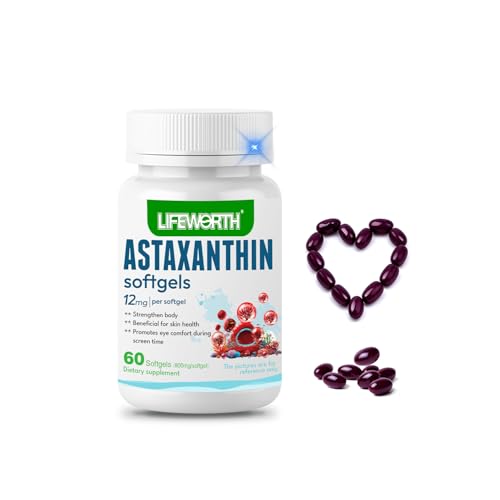
- Nutrex Hawaii BioAstin Hawaiian AstaxanthinLab-tested / studied
softgels, 12 mg per softgel, 90 count — Hawaiian-grown Haematococcus pluvialis, sold as the High Potency 90-softgel bottle - Pure Synergy SuperPure Astaxanthin Extract
capsules, 60 count — Sold as an astaxanthin extract in a capsule rather than a softgel; the listing does not state a mg per capsule, so check the label for the dose before comparing it with the 12 mg bottles here - Naturalis New Zealand Astaxanthin
softgels, 12 mg per softgel, 120 count — New Zealand-grown rather than Hawaiian, and the largest bottle on this list at 120 softgels - NOW Foods Astaxanthin
softgels, 4 mg per softgel — The entry-level 4 mg dose, built on the Zanthin astaxanthin ingredient; a lower starting point than the 12 mg bottles above
As an Amazon Associate we earn from qualifying purchases. Astaxanthin products vary mainly by dose and by source, with 4mg and 12mg the common strengths and most of them derived from Haematococcus pluvialis algae, so check the label for the astaxanthin content per serving and prefer products that publish third-party testing.
A Note on the Evidence
The majority of evidence on astaxanthin and mitochondrial function comes from cell culture studies and animal models, with only a small number of short-term human trials; results should not be interpreted as proof of clinical benefit. Astaxanthin is not a treatment for any disease, and individuals who are pregnant, breastfeeding, taking medications, or managing health conditions should consult a physician before use.
Frequently Asked Questions
How does astaxanthin actually get into mitochondria?
Astaxanthin is lipid-soluble, so it distributes into cell membranes throughout the body, including the inner and outer mitochondrial membranes. Its polar hydroxyl and keto groups allow it to anchor across the full bilayer rather than floating in the interior. Laboratory evidence confirms it reaches and integrates into mitochondrial membranes, where it can quench reactive oxygen species directly [2].
Does astaxanthin actually improve energy levels?
There is no direct clinical evidence that astaxanthin raises subjective energy levels in healthy people. What research does show is that it preserves mitochondrial function under oxidative stress and may promote mitochondrial biogenesis in exercise contexts [4][5]. Indirectly, better mitochondrial integrity could support energy metabolism, but this is mechanistic reasoning, not a demonstrated outcome in well-powered human trials.
Is astaxanthin better than other antioxidants for mitochondrial protection?
In at least one direct comparison, astaxanthin outperformed quercetin at preserving mitochondrial integrity and function under heat-induced stress conditions in skeletal muscle cells [1]. The proposed reason is its membrane-spanning geometry, which positions it closer to ROS generated during electron transport. Whether this translates to a clinically meaningful advantage over other antioxidants in humans is not yet established.
What dose of astaxanthin has been studied in trials?
Human trials have typically used doses ranging from 4 mg to 12 mg per day. Natural astaxanthin from Haematococcus pluvialis holds GRAS status and has not shown serious adverse effects at doses up to 12 mg/day for periods up to 12 weeks in available studies. At very high doses above 20 mg/day, reversible yellowing or orange tinting of the skin (carotenodermia) has been reported.

Can astaxanthin support mitochondrial health in the liver?
Research in animal and cell models suggests astaxanthin protects liver mitochondria by maintaining redox balance and stabilizing calcium homeostasis, both of which are disrupted by alcohol metabolism [3]. Signaling pathways involving sirtuin 1 appear to be involved in this protective effect [7]. Human liver data are not yet available from clinical trials.
Is astaxanthin safe to take long-term?
Available trials up to 12 weeks show no serious adverse effects at standard doses of up to 12 mg/day. The main side effect at very high doses is reversible skin discoloration from carotenoid accumulation. Evidence is insufficient in pregnant or breastfeeding individuals, so supplementation is not recommended during those periods without medical supervision. As with any supplement, consult a qualified healthcare provider before starting, particularly if you are on medications or managing a health condition.
References
- Yu T et al. Astaxanthin but not quercetin preserves mitochondrial integrity and function, ameliorates oxidative stress, and reduces heat-induced skeletal muscle injury. Journal of cellular physiology (2019). PMID 30609021
- Wolf AM et al. Astaxanthin protects mitochondrial redox state and functional integrity against oxidative stress. The Journal of nutritional biochemistry (2010). PMID 19423317
- Wang P et al. Astaxanthin Protects against Alcoholic Liver Injury via Regulating Mitochondrial Redox Balance and Calcium Homeostasis. Journal of agricultural and food chemistry (2023). PMID 38038704
- Wang Y et al. Astaxanthin promotes mitochondrial biogenesis and antioxidant capacity in chronic high-intensity interval training. European journal of nutrition (2023). PMID 36650315
- Li C et al. Astaxanthin alleviates oxidative stress and skeletal muscle damage by promoting mitochondrial biogenesis. Frontiers in veterinary science (2025). PMID 40963587
- Park HA et al. Anti-Apoptotic Effects of Carotenoids in Neurodegeneration. Molecules (Basel, Switzerland) (2020). PMID 32751250
- Kang H et al. Inhibition of alcohol-induced inflammation and oxidative stress by astaxanthin is mediated by its opposite actions in the regulation of sirtuin 1 and histone deacetylase 4 in macrophages. Biochimica et biophysica acta. Molecular and cell biology of lipids (2021). PMID 33065288
- Frambach SJCM et al. Restoring cellular NAD(P)H levels by PPARα and LXRα stimulation to improve mitochondrial complex I deficiency. Life sciences (2022). PMID 35469913
These statements have not been evaluated by the Food and Drug Administration. This information is not intended to diagnose, treat, cure, or prevent any disease. Content is for informational purposes only and is not medical advice; consult a qualified healthcare provider before starting any supplement. As an Amazon Associate we earn from qualifying purchases.
