You’ve likely heard the buzz around astaxanthin, the vibrant red carotenoid from microalgae like Haematococcus pluvialis. Perhaps you’re optimizing your longevity stack, fine-tuning your athletic recovery, or seeking natural ways to support skin and eye health. The question isn’t whether astaxanthin is beneficial, but rather, what’s the optimal astaxanthin dosage to truly unlock its potential, and how can you ensure you’re taking it safely and effectively in 2026?
Navigating the supplement landscape requires precision, especially when targeting specific physiological outcomes. This comprehensive guide will explore the evidence-based dosages for various astaxanthin benefits, discuss the optimal timing for intake, and provide critical safety considerations, equipping you with the knowledge to integrate this powerful marine antioxidant intelligently into your regimen.
As an Amazon Associate, AstaxanthinHub earns from qualifying purchases. This helps support our research and content creation.
Understanding Astaxanthin Bioavailability and Absorption
Before discussing specific dosages, it’s crucial to understand how astaxanthin is absorbed by the body. As a fat-soluble carotenoid, astaxanthin requires dietary fat for optimal absorption in the gastrointestinal tract.
Studies show that taking astaxanthin with a meal containing healthy fats significantly enhances its bioavailability[5]. This means a greater percentage of the ingested astaxanthin reaches systemic circulation to exert its antioxidant and anti-inflammatory effects.
The esterified form, found naturally in Haematococcus pluvialis, is considered more stable and bioavailable than synthetic, non-esterified forms. Look for supplements derived from natural algal sources for superior absorption and efficacy.
General Recommended Astaxanthin Dosage Range
For general health maintenance and antioxidant support, a common daily dosage range for astaxanthin falls between 4 mg and 12 mg. This range is supported by numerous human clinical trials demonstrating broad protective effects.
Many individuals start at the lower end of this spectrum and gradually increase if desired, observing individual responses. Consistency is key, as astaxanthin accumulates in tissues over time, providing sustained benefits.
Dosage for Specific Health Goals: Evidence-Based Recommendations
Tailoring your astaxanthin dosage to specific health objectives can optimize outcomes. Here, we outline evidence-backed ranges for common applications targeted by our audience.
For Eye Health and Reducing Eye Strain
Remote workers and gamers often experience digital eye strain, characterized by fatigue, dryness, and blurred vision. Astaxanthin has shown promise in mitigating these symptoms.
Research indicates that 6 mg to 12 mg per day can significantly improve visual accommodation and reduce eye fatigue. Studies have observed improvements in symptoms within 4 to 8 weeks of consistent supplementation.
The mechanism involves astaxanthin’s ability to cross the blood-retinal barrier and act as a potent antioxidant, protecting photoreceptor cells and reducing inflammation in the ciliary body.

For Skin Health and Photoprotection
Skin-conscious adults are increasingly interested in astaxanthin’s natural photoprotective properties. It offers internal sun protection by reducing oxidative stress caused by UV radiation.
A 2021 systematic review and meta-analysis of human trials found that oral astaxanthin significantly improved skin moisture content (SMD 0.53, 95% CI 0.05 to 1.01, p = 0.03) and elasticity (SMD 0.77, 95% CI 0.19 to 1.35, p = 0.009), but did not significantly reduce wrinkle depth (SMD -0.26, 95% CI -0.58 to 0.06, p = 0.11)[1]. Trials in that analysis generally used 4 mg to 12 mg daily over 6 to 12 weeks. Moisture and elasticity are the supported skin endpoints; wrinkle reduction is not established by the pooled data, whatever product marketing leads with.
Astaxanthin accumulates in the skin, forming a protective shield against free radical damage, thereby complementing topical sunscreens and promoting overall skin resilience.
For Exercise Performance and Recovery
Endurance athletes often seek astaxanthin to reduce exercise-induced muscle damage and improve recovery times. Its powerful antioxidant capacity helps to neutralize reactive oxygen species generated during intense physical activity.
Studies involving athletes frequently utilize dosages ranging from 8 mg to 12 mg per day. Some research has explored up to 20 mg daily for specific performance benefits, but 12 mg appears to be a well-supported effective dose.
Benefits observed include reduced lactate accumulation, improved fatigue resistance, and faster recovery of muscle strength. These effects are typically observed after several weeks of consistent intake.
For Cognitive Function and Brain Health
Emerging evidence suggests astaxanthin may support cognitive function and protect against age-related cognitive decline. Its ability to cross the blood-brain barrier is crucial for these benefits.
Clinical trials have investigated dosages from 6 mg to 12 mg daily for cognitive support. These studies often focus on memory, processing speed, and executive function.
The neuroprotective effects are attributed to astaxanthin’s potent antioxidant and anti-inflammatory properties within brain tissue. Further large-scale human trials are ongoing to solidify these findings.
When to Take Astaxanthin for Optimal Results
Given its fat-soluble nature, astaxanthin should always be taken with a meal containing dietary fat. This maximizes its absorption and ensures you are getting the most out of your supplement.
Many individuals prefer to take their daily astaxanthin dose with their largest meal, such as lunch or dinner, to ensure adequate fat intake. Splitting the dose throughout the day is generally not necessary given astaxanthin’s long half-life in the body.
For athletes, taking astaxanthin in the morning or early afternoon allows for sustained benefits throughout the day and into training sessions. Consistency every day, rather than precise timing to the minute, is the most important factor.

Astaxanthin Dosage & Cost Calculator
Based on the labeled dose options for Nutrex Hawaii BioAstin 12mg and the published 90-count bottle at $48.99.
Open the full dosage & cost calculator →
Estimate only – based on the current listed price of the 90-count Nutrex Hawaii BioAstin 12mg bottle. Actual Amazon price can change; check the live price before buying.
Why no height/weight input? Unlike per-kg supplements (creatine, protein), Astaxanthin has no published bodyweight-adjusted dosing in the research behind it. This calculator doesn't fabricate a per-kg formula that doesn't exist in the literature.
Get Nutrex Hawaii BioAstin 12mg on Amazon(paid link) As an Amazon Associate we earn from qualifying purchases.
Safety Profile and Potential Side Effects
Astaxanthin is widely regarded as safe for human consumption, even at higher doses, with a robust safety profile supported by numerous studies. It has received Generally Recognized As Safe (GRAS) status from the FDA.
The most commonly reported “side effect,” if it can be called that, is a harmless orange-red pigmentation of the skin. This occurs at very high doses (e.g., 40 mg or more daily for extended periods) and is reversible upon discontinuation or reduction of the dose.
Some individuals might experience mild gastrointestinal discomfort, such as stomach upset, especially when starting supplementation or taking it on an empty stomach. This is rare and usually resolves quickly.
There are no known serious drug interactions with astaxanthin. However, if you are on blood thinners or have a pre-existing medical condition, it is always prudent to consult with your healthcare provider before starting any new supplement.
Comparing Astaxanthin Sources and Formulations
The quality and source of astaxanthin can significantly impact its efficacy. Natural astaxanthin derived from Haematococcus pluvialis microalgae is superior to synthetic versions.
Natural astaxanthin is typically esterified, meaning it is bound to fatty acids, which enhances its stability and bioavailability. Synthetic astaxanthin, often produced chemically, lacks this esterification and may offer fewer benefits.
When selecting a supplement, prioritize brands that clearly state their astaxanthin is derived from Haematococcus pluvialis and ideally provide third-party testing for purity and potency.
| Feature | Natural Astaxanthin (from Haematococcus pluvialis) | Synthetic Astaxanthin |
|---|---|---|
| Source | Microalgae (e.g., Haematococcus pluvialis) | Petrochemicals |
| Form | Esterified (bound to fatty acids) | Non-esterified |
| Bioavailability | Higher, due to esterified form and natural matrix | Lower |
| Antioxidant Potency | Superior, with a broader spectrum of activity | Inferior, simpler molecular structure |
| Purity Concerns | Generally high, if from reputable growers | Potential for impurities from chemical synthesis |
| Primary Use | Human supplements, high-value animal feeds | Animal feed (e.g., salmon farming for color) |
Where to Find Quality Astaxanthin Supplements
When purchasing astaxanthin, prioritize transparency and quality. Look for brands that source their astaxanthin from reputable microalgae farms and provide third-party testing for purity and potency.
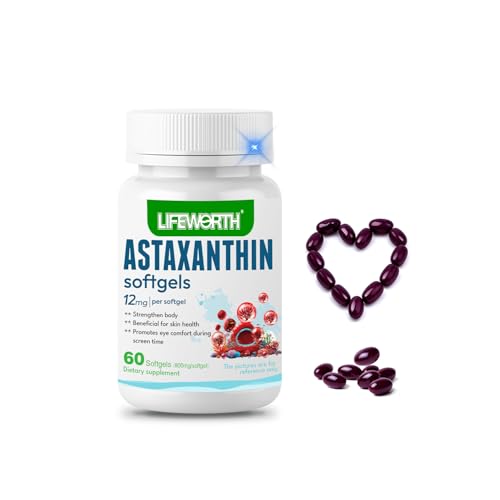
On platforms like Amazon, you can search for “natural astaxanthin 12mg” or “Haematococcus pluvialis astaxanthin” to find high-quality options. Consider products offering “astaxanthin softgels with olive oil” for enhanced absorption.
Always check customer reviews and look for certifications that indicate good manufacturing practices (GMP). Avoid products with excessive fillers or artificial ingredients.
Conclusion: Optimizing Your Astaxanthin Intake
Astaxanthin stands out as a powerful marine carotenoid with a broad spectrum of benefits, from enhancing athletic performance and recovery to supporting eye, skin, and cognitive health. Understanding the evidence-based dosage ranges, the importance of taking it with fat, and its excellent safety profile empowers you to integrate it effectively into your health regimen.
By choosing high-quality, natural astaxanthin from Haematococcus pluvialis and adhering to recommended dosages, you can confidently unlock the full potential of this exceptional antioxidant, contributing to your longevity and well-being in 2026 and beyond.
Frequently Asked Questions (FAQ)
Is 12mg of astaxanthin too much?
No. 12 mg daily is a commonly used dose in human trials for eye, skin and exercise-recovery endpoints. Higher doses have been studied: a randomised, placebo-controlled trial in functional dyspepsia gave 16 mg or 40 mg daily for four weeks[2], and a dose-ranging study in heavy smokers gave 5, 20 or 40 mg daily for three weeks[3]. Neither reported serious adverse events, but both were small and short and neither was designed as a safety study, which is not the same thing as 40 mg being established as safe. For context, the EFSA acceptable daily intake is 0.2 mg per kilogram of body weight per day, roughly 14 mg for a 70 kg adult[4].
How long does it take for astaxanthin to work?
Astaxanthin accumulates in the body over time. While some individuals may notice subtle effects within a few weeks, most benefits, such as improvements in skin elasticity, eye strain, or exercise recovery, typically become apparent after 4 to 12 weeks of consistent daily supplementation.
Can I take astaxanthin every day?
Yes, astaxanthin is safe for daily, long-term use. Consistent daily intake is crucial for maintaining optimal levels in the body and realizing its full range of benefits.
Does astaxanthin need to be taken with food?
Absolutely. As a fat-soluble compound, astaxanthin’s absorption is significantly enhanced when taken with a meal containing dietary fats. Taking it with your largest meal of the day is often recommended.
Are there any side effects of taking astaxanthin?
Astaxanthin has an excellent safety profile. The most common “side effect” at very high doses is a benign orange-red skin pigmentation, which is reversible. Mild gastrointestinal discomfort is rare. Always consult a healthcare professional if you have concerns.
What’s the difference between natural and synthetic astaxanthin?
Natural astaxanthin, derived from Haematococcus pluvialis algae, is typically esterified and has superior bioavailability and antioxidant potency. Synthetic astaxanthin, produced chemically, is non-esterified and generally less effective for human health applications.
These statements have not been evaluated by the FDA. This product is not intended to diagnose, treat, cure, or prevent any disease.
References
- Zhou X, Cao Q, Orfila C, Zhao J, Zhang L. Systematic Review and Meta-Analysis on the Effects of Astaxanthin on Human Skin Ageing. Nutrients. 2021;13(9):2917. PMID 34578794
- Kupcinskas L, Lafolie P, Lignell A, et al. Efficacy of the natural antioxidant astaxanthin in the treatment of functional dyspepsia in patients with or without Helicobacter pylori infection: a prospective, randomized, double blind, and placebo-controlled study. Phytomedicine. 2008;15(6-7):391-9. PMID 18467083
- Kim JH, Chang MJ, Choi HD, et al. Protective effects of Haematococcus astaxanthin on oxidative stress in healthy smokers. J Med Food. 2011;14(11):1469-75. PMID 21883001
- EFSA Panel on Additives and Products or Substances used in Animal Feed (FEEDAP). Safety and efficacy of astaxanthin-dimethyldisuccinate (Carophyll Stay-Pink 10%-CWS) for salmonids, crustaceans and other fish (establishes an acceptable daily intake of 0.2 mg astaxanthin/kg body weight per day). EFSA J. 2019;17(12):e05920. PMID 32626207
- Mercke Odeberg J, Lignell A, Pettersson A, Höglund P. Oral bioavailability of the antioxidant astaxanthin in humans is enhanced by incorporation of lipid based formulations. Eur J Pharm Sci. 2003;19(4):299-304. PMID 12885395
These statements have not been evaluated by the Food and Drug Administration. This information is not intended to diagnose, treat, cure, or prevent any disease. Content is for informational purposes only and is not medical advice; consult a qualified healthcare provider before starting any supplement. As an Amazon Associate we earn from qualifying purchases.
