Astaxanthin is a red-orange pigment found in salmon, shrimp, flamingos, and certain microalgae, yet for most of human history nobody knew it existed as a distinct molecule. Its story is one of incremental scientific curiosity: a color chemist’s side project in the 1930s that quietly grew into one of the most-studied carotenoids in nutrition science by the 2020s.
Understanding how astaxanthin went from a lobster-shell curiosity to a globally sold supplement requires tracing nearly a century of chemistry, aquaculture economics, and human clinical research. This article follows that arc honestly, noting where the science is robust and where it is still early.
Key Takeaways
- Astaxanthin was first isolated from lobster shells by chemists Kuhn and Sørensen in 1938 and named for its crustacean source.
- Commercial interest initially came from aquaculture, where the compound restores the natural color of farmed salmon raised without krill in their diet.
- Haematococcus pluvialis microalgae, identified as the richest natural source during the 1980s–1990s, enabled the nutraceutical market and distinguishes natural from synthetic forms.
- Human clinical trials beginning in the early 2000s established a reasonable short-term safety profile at doses up to 12 mg/day, with GRAS status granted in subsequent years.
- The evidence base is still growing; the strongest human data covers eye fatigue, skin aging markers, and exercise recovery, while many proposed benefits remain under investigation.
1938: Isolation and Naming
The molecule now called astaxanthin was first isolated and characterized in 1938 by the British chemist Richard Kuhn and Norwegian chemist N. A. Sørensen, working with boiled lobster shells. They extracted a vivid red pigment, confirmed it belonged to the carotenoid family, and gave it the name astaxanthin — derived from the Greek ‘astacos’ (lobster) and ‘xanthos’ (yellow). This naming convention was typical of the era: carotenoids were often named for the organism in which they were first found, such as beta-carotene from carrots or lycopene from tomatoes.
Early structural analysis confirmed astaxanthin as a keto-carotenoid, meaning it carries two keto groups on its terminal rings that distinguish it chemically from more familiar carotenoids like lutein and beta-carotene. Full elucidation of its three-dimensional structure came gradually over subsequent decades as analytical chemistry tools improved. For the next several decades after its discovery, astaxanthin remained largely a biochemical footnote of interest mainly to pigment chemists rather than health researchers.
1950s–1970s: Aquaculture Drives Early Commercial Interest
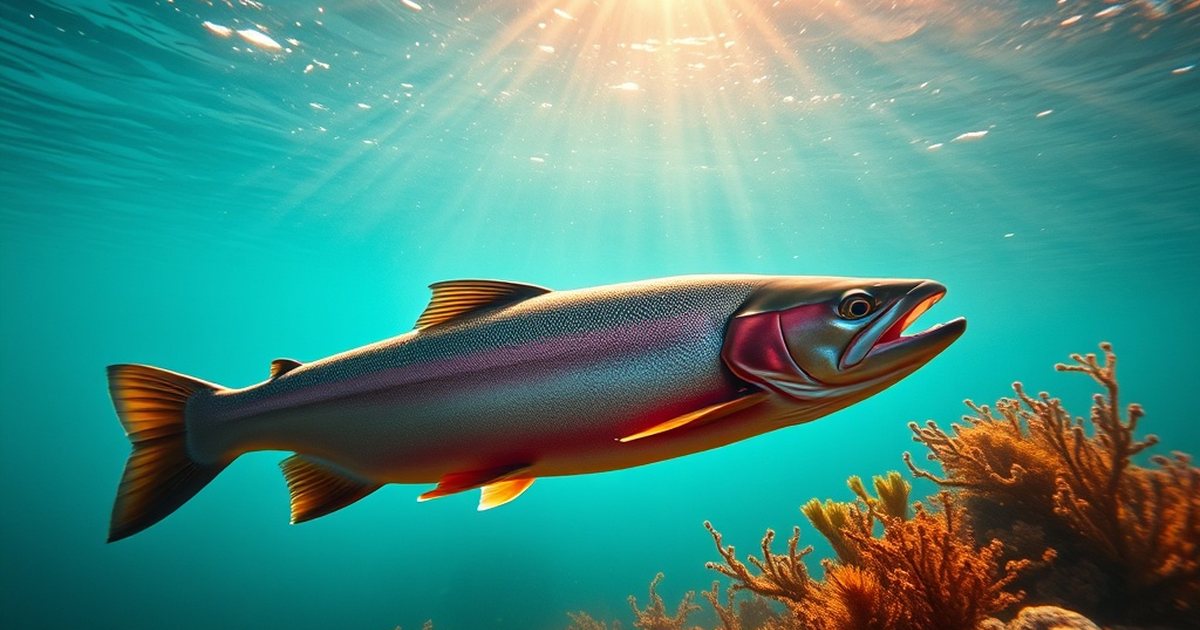
The first wave of practical interest in astaxanthin came not from medicine but from the salmon farming industry. Wild Atlantic and Pacific salmon accumulate astaxanthin by eating krill and other pink crustaceans, which is why their flesh is characteristically orange-pink. Farmed salmon raised on grain-based feeds lack this dietary source and produce pale, gray-white flesh that consumers consistently rejected at market.

By the 1960s and 1970s, aquaculture researchers were actively investigating how to restore the characteristic color of farmed salmon. This commercial pressure funded significant early research into carotenoid metabolism in fish, clarifying how salmon and other salmonids absorb, transport, and deposit astaxanthin into muscle tissue. Synthetic astaxanthin, derived from petrochemical precursors, was developed during this period and became widely used in salmon feed. Understanding the compound’s biology in fish laid groundwork that would later inform research on its behavior in mammalian tissues.
1980s–1990s: Haematococcus pluvialis and the Natural Source Question
A pivotal development in astaxanthin’s scientific history was the recognition that the freshwater microalga Haematococcus pluvialis accumulates extraordinarily high concentrations of the pigment under stress conditions such as intense light, nutrient deprivation, or high salinity. Earlier work had noted the reddening of H. pluvialis cultures, but it was research through the 1980s and into the 1990s that characterized the organism as the richest known natural source of astaxanthin — capable of accumulating the compound up to roughly 3–5 percent of its dry weight.
This discovery mattered commercially because synthetic astaxanthin, while effective for aquaculture coloring, was not approved for human dietary supplement use in most jurisdictions and was produced as a racemic mixture of stereoisomers. Natural astaxanthin from H. pluvialis, by contrast, exists predominantly as the 3S,3’S stereoisomer and could be positioned for the emerging nutraceutical market. By the late 1990s, companies in the United States, Japan, and Iceland were developing photobioreactor and open-pond cultivation systems to grow H. pluvialis at commercial scale.
Late 1990s–2000s: Antioxidant Characterization and Early Human Research
As natural astaxanthin became more available, researchers turned attention to its biochemistry. Laboratory studies — primarily in cell culture and animal models — began quantifying its antioxidant capacity. Comparative in vitro assays suggested astaxanthin was substantially more potent than vitamin E or beta-carotene at quenching singlet oxygen, though translating in vitro antioxidant numbers directly to in vivo human benefit remains scientifically contested. A mechanistically distinctive feature noted during this period was astaxanthin’s unique orientation within cell membranes: its polar end groups anchor to both the inner and outer membrane surfaces while the central polyene chain spans the hydrophobic interior, a configuration proposed to enable simultaneous protection of both membrane faces.
The first small human clinical trials appeared in the early-to-mid 2000s, investigating outcomes including exercise recovery, eye fatigue from prolonged visual display use, and skin parameters. These early trials were generally short, enrolled modest numbers of participants, and used varying dosages, which makes cross-study comparison difficult. Nevertheless, they established the basic safety profile that would support later regulatory decisions and attracted further academic and commercial investment in the compound.
2010s: Regulatory Milestones and Expanding Clinical Research
A significant regulatory milestone came when the United States Food and Drug Administration granted Generally Recognized as Safe (GRAS) status to natural astaxanthin from H. pluvialis, permitting its use in certain food and supplement categories. Similar approvals followed in the European Union and other markets. These decisions were grounded in accumulated toxicology data showing no serious adverse effects in human trials at doses up to 12[1] mg per day for periods up to 12 weeks, with the only consistently noted side effect at very high doses being reversible carotenodermia — an orange-yellow skin tint caused by carotenoid accumulation in subcutaneous fat.
Through the 2010s the clinical trial literature expanded meaningfully, with randomized controlled trials examining outcomes including UV-induced skin aging, inflammatory markers, eye fatigue in screen workers, and exercise-induced muscle damage. Trials were conducted across Japan, Sweden, the United States, and other countries, reflecting both academic and industry-funded interest. The Japanese market was particularly active, with H. pluvialis-derived astaxanthin achieving mainstream supplement status earlier than in Western markets. Methodological quality improved over the decade, though many trials remained small by pharmaceutical standards and used industry-supplied material.

Where the Science Stands Today
As of the mid-2020s, astaxanthin is among the best-characterized marine carotenoids in human nutrition research, with a growing but still developing evidence base. The areas with the most consistent human trial data include markers of oxidative stress, visual fatigue from prolonged screen use, skin elasticity and UV-related changes, and exercise-induced muscle soreness. Research into potential effects on metabolic health, immune function, and cognitive outcomes is ongoing but less mature.
Mechanistic understanding continues to develop. Proposed pathways include direct quenching of reactive oxygen species, modulation of inflammatory signaling cascades such as NF-kB, and potential interactions with mitochondrial energy metabolism. Animal studies have explored a wider range of applications, though extrapolating animal findings to human benefit always requires caution and further controlled human research.
The history of astaxanthin research illustrates a broader pattern in nutritional science: commercial pressures — first from aquaculture, later from the supplement industry — have sometimes driven research ahead of what the clinical evidence fully supports. Responsible interpretation means distinguishing between what well-designed human RCTs have shown and what remains speculative based on laboratory or animal data alone.
🛒 Where to Buy Astaxanthin
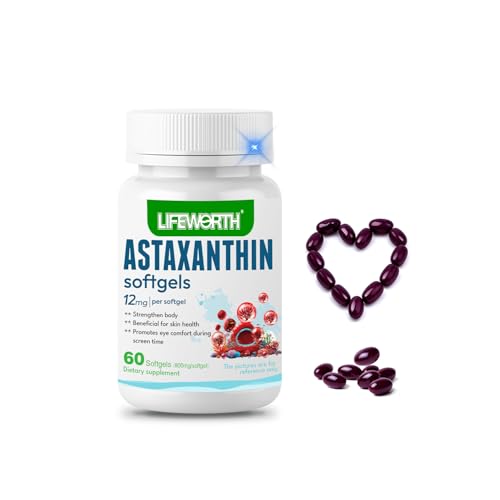
- Nutrex Hawaii BioAstin Hawaiian AstaxanthinLab-tested / studied
softgels, 12 mg per softgel, 90 count — Hawaiian-grown Haematococcus pluvialis, sold as the High Potency 90-softgel bottle - Pure Synergy SuperPure Astaxanthin Extract
capsules, 60 count — Sold as an astaxanthin extract in a capsule rather than a softgel; the listing does not state a mg per capsule, so check the label for the dose before comparing it with the 12 mg bottles here - Naturalis New Zealand Astaxanthin
softgels, 12 mg per softgel, 120 count — New Zealand-grown rather than Hawaiian, and the largest bottle on this list at 120 softgels - NOW Foods Astaxanthin
softgels, 4 mg per softgel — The entry-level 4 mg dose, built on the Zanthin astaxanthin ingredient; a lower starting point than the 12 mg bottles above
As an Amazon Associate we earn from qualifying purchases. Astaxanthin products vary mainly by dose and by source, with 4mg and 12mg the common strengths and most of them derived from Haematococcus pluvialis algae, so check the label for the astaxanthin content per serving and prefer products that publish third-party testing.
A Note on the Evidence
The human clinical trial evidence for astaxanthin is promising in several areas but remains limited in scale and duration; many proposed benefits rely on animal or cell-culture data that may not translate directly to humans. Individuals who are pregnant, breastfeeding, taking immunosuppressive medications, or managing chronic health conditions should consult a qualified healthcare provider before beginning any supplementation.
Frequently Asked Questions
Who first discovered astaxanthin?
Astaxanthin was first isolated and named in 1938 by Richard Kuhn and N. A. Sørensen while analyzing pigments from lobster shells. They identified it as a member of the carotenoid family and gave it a name derived from the Greek words for lobster and yellow.
Why is Haematococcus pluvialis considered the best natural source?
H. pluvialis is a freshwater microalga that can accumulate astaxanthin up to roughly 3–5 percent of its dry weight under stress conditions, a concentration far exceeding other natural sources such as salmon flesh or krill. This makes it the basis for virtually all commercial natural astaxanthin sold as a dietary supplement today.
How does natural astaxanthin differ from synthetic astaxanthin?
Synthetic astaxanthin is produced from petrochemical precursors and typically exists as a mixture of multiple stereoisomers. Natural astaxanthin from H. pluvialis is predominantly the 3S,3’S stereoisomeric form. The two are not directly interchangeable for regulatory purposes, and most human dietary supplement research has used the natural form.
Is astaxanthin safe for daily supplementation?
Human trials to date, generally using doses up to 12 mg per day for up to 12 weeks, have not identified serious adverse effects. The only consistently reported side effect at very high doses above 20 mg per day is carotenodermia, a reversible orange-yellow skin tint. Evidence in pregnant or breastfeeding individuals is insufficient, so supplementation is not recommended for those populations without medical guidance.
What areas of astaxanthin research are most developed?
Human randomized controlled trials have most consistently examined eye fatigue related to screen use, UV-induced changes in skin elasticity, exercise-induced muscle damage and recovery, and markers of oxidative stress. Research into metabolic, immune, and cognitive outcomes exists but is less mature and requires further large-scale trials.
Why did aquaculture drive early astaxanthin research?
Farmed salmon raised on grain-based diets without access to krill develop pale gray-white flesh that consumers rejected. Restoring the characteristic orange-pink color required adding carotenoids to feed, which created significant commercial incentive to study astaxanthin metabolism in fish. This industry pressure funded early biochemical research that later informed human health investigations.
References
- Astaxanthin: How much is too much? A safety review. Phytotherapy Research (2019). PMID 31788888
These statements have not been evaluated by the Food and Drug Administration. This information is not intended to diagnose, treat, cure, or prevent any disease. Content is for informational purposes only and is not medical advice; consult a qualified healthcare provider before starting any supplement. As an Amazon Associate we earn from qualifying purchases.
