In the evolving landscape of health optimization, the pursuit of superior bioactives is a constant. We’re no longer content with broad-spectrum antioxidants; the discerning individual seeks targeted compounds with demonstrated efficacy and unique mechanisms. As you navigate the complex world of longevity, performance, and well-being, a crucial question emerges: how does astaxanthin, the vibrant marine carotenoid, truly stand against its well-established and emerging alternatives?
This article aims to provide an evidence-based comparison, dissecting astaxanthin’s unique properties and stacking it against other popular supplements in key areas relevant to biohackers, athletes, and those focused on healthy aging. We will examine the science, acknowledge the nuances, and help you understand where astaxanthin truly shines.
As an Amazon Associate, AstaxanthinHub earns from qualifying purchases. This helps support our research and content creation.
The Astaxanthin Advantage: A Unique Molecular Profile
Astaxanthin, derived primarily from the microalga Haematococcus pluvialis, possesses a molecular structure that sets it apart. Unlike beta-carotene or lycopene, astaxanthin has hydroxyl and keto groups at each end of its polyene chain. This structural feature allows it to span the entire lipid bilayer of cell membranes, providing comprehensive protection against oxidative stress.
This amphiphilic nature contributes to its exceptional antioxidant capacity, often cited as significantly higher than other carotenoids and even vitamin E. Its ability to quench free radicals without becoming a pro-oxidant, even at high concentrations, is a critical distinction in the antioxidant-paradox debate.
Astaxanthin for Oxidative Stress and Inflammation: A Head-to-Head
Oxidative stress and chronic low-grade inflammation are fundamental drivers of aging and disease. Many supplements aim to mitigate these processes. How does astaxanthin compare to common contenders like CoQ10, Resveratrol, and Curcumin?
Astaxanthin vs. CoQ10
CoQ10 is vital for mitochondrial energy production and acts as a potent antioxidant within the mitochondrial membrane. While both are lipid-soluble antioxidants, astaxanthin’s membrane-spanning capability provides broader cellular protection, including the outer mitochondrial membrane. Emerging research suggests astaxanthin may also support mitochondrial function and biogenesis indirectly, complementing CoQ10’s direct role.
The pooled human evidence here is real but modest, and it is worth stating at that size rather than larger. A systematic review and meta-analysis of 12 randomized controlled trials covering 380 participants concluded that astaxanthin mildly reduced oxidative stress and inflammation biomarkers, the clearest signal being a drop in blood malondialdehyde (SMD -0.95, 95% CI -1.67 to -0.23), and that signal was strongest in people with type 2 diabetes rather than in healthy adults[1]. CoQ10 has similar antioxidant effects. Astaxanthin’s distinguishing feature is where it sits, spanning the membrane rather than resting inside it, which is a structural argument rather than a demonstrated clinical advantage. No head-to-head trial of astaxanthin against CoQ10 exists.
Astaxanthin vs. Resveratrol and Curcumin
Resveratrol and Curcumin are renowned for their anti-inflammatory and antioxidant properties, often working through modulating gene expression and signaling pathways. Astaxanthin primarily acts as a direct free radical scavenger and singlet oxygen quencher. However, human studies suggest astaxanthin can also influence inflammatory markers such as C-reactive protein (CRP) and TNF-alpha, indicating a broader biological impact.

The CRP evidence is narrower than this category usually claims. A meta-analysis of 14 randomized controlled trials found that astaxanthin lowered CRP only in the subgroup of trials running 12 weeks or longer, not across populations generally, and found no effect at all on fasting blood sugar, HbA1c, total cholesterol, LDL, triglycerides, BMI, body weight or blood pressure[2]. A published comment on that analysis argued its pooling method needed reworking, so even the subgroup finding is contested rather than settled. Resveratrol and curcumin have larger anti-inflammatory literatures via different pathways. Astaxanthin’s contribution is direct radical scavenging, which complements those pathways rather than outperforming them.
Cognitive and Ocular Health: Protecting the Most Sensitive Tissues
The brain and eyes are highly susceptible to oxidative damage due to their high metabolic rate and exposure to light. Astaxanthin’s ability to cross the blood-brain barrier and the blood-retinal barrier is a significant differentiator.
Astaxanthin vs. Lutein and Zeaxanthin for Eye Health
Lutein and Zeaxanthin are well-established for their role in macular health, filtering blue light and acting as antioxidants in the retina. While crucial, astaxanthin offers additional protective mechanisms. Its superior antioxidant capacity and anti-inflammatory properties may provide a more comprehensive defense against digital eye strain and age-related vision decline.
The screen-fatigue evidence is genuine but far more conditional than it is usually sold. In 60 healthy adults given 9 mg/day for six weeks, astaxanthin protected corrected visual acuity after screen work only in participants aged 40 and over. Under 40 there was no significant difference, and there was no difference in functional visual acuity or pupil constriction rate in either age group[3]. A separate placebo-controlled trial in 64 children aged 10 to 14 with computer vision syndrome did find that 4 mg/day for 84 days improved their symptom scores[4]. The accommodation and focusing results most often quoted for astaxanthin come from a trial of anthocyanin plus astaxanthin plus lutein, so that benefit cannot be assigned to astaxanthin on its own[5]. On blood flow, the actual finding is choroidal rather than retinal: 12 mg/day for four weeks significantly raised choroidal blood flow velocity in 20 healthy volunteers[6]. That is a small study, but it is a mechanism not typically attributed to lutein and zeaxanthin.
Astaxanthin for Cognitive Support
Compared to other cognitive enhancers like Omega-3s or Ginkgo Biloba, astaxanthin’s role is primarily neuroprotective. Its ability to mitigate oxidative stress and inflammation in the brain may preserve neuronal function. While Omega-3s are foundational for brain structure, astaxanthin offers a potent defense against daily cellular insults.
This is the weakest of astaxanthin’s commonly advertised benefits, and it is worth being blunt about that. The best-matched trial gave 8 mg/day for eight weeks to 54 adults aged 45 to 64 who reported memory decline, and found no significant difference between astaxanthin and placebo on word memory, verbal fluency or Stroop testing. Only a post-hoc subgroup aged under 55 showed movement on a single measure[7]. The positive memory result frequently quoted for astaxanthin comes from a trial of astaxanthin combined with tocotrienols, so it cannot be attributed to astaxanthin by itself. Astaxanthin does reach neural tissue, which is a plausible basis for a protective role, but plausible is where the human evidence currently stops. No astaxanthin-only trial has demonstrated improved processing speed in older adults.
Athletic Performance and Recovery: Beyond Basic Antioxidants
Endurance athletes face significant oxidative stress and muscle damage. While vitamin C and E are standard, astaxanthin offers a more targeted and potent solution for recovery and performance enhancement.
Astaxanthin vs. BCAAs and Creatine
BCAAs (Branched-Chain Amino Acids) focus on muscle protein synthesis and reducing muscle breakdown. Creatine enhances ATP regeneration for high-intensity power. Astaxanthin, conversely, supports endurance and recovery by improving mitochondrial function and reducing oxidative damage during exercise. It’s not a direct muscle builder but an enhancer of cellular resilience.
A trial in competitive cyclists randomized 21 riders to 4 mg/day or placebo for 28 days. Of the 14 who completed it, the astaxanthin group improved their 20 km time trial by 121 seconds (95% CI -185 to -53) and raised power output by 20 W, while the placebo group did not change meaningfully[8]. That is seven riders per arm, so it is suggestive rather than settled, and the same paper reported no treatment effect on fat or carbohydrate oxidation or on blood markers of fuel mobilization, stating outright that the mechanism remains obscure. It did not measure a reduction in muscle damage or inflammation, so that claim should not be attached to it. The wider picture is genuinely split: one trial found astaxanthin did not augment fat use or improve endurance performance[9], while 12 mg/day for seven days improved a 40 km time trial by 1.2% (p = 0.029, g = 0.21) in recreationally trained cyclists[10], a real but small effect.

Skin Health and Photoprotection: An Internal Sunscreen?
For skin-conscious individuals, the quest for natural photoprotection and anti-aging compounds is ongoing. Astaxanthin’s unique ability to accumulate in the skin layers positions it as a superior internal photoprotectant.
Astaxanthin vs. Topical SPF and Oral Antioxidants
Topical SPF remains the gold standard for external UV protection. However, astaxanthin offers an internal defense by quenching reactive oxygen species generated by UV exposure within the skin cells. While other oral antioxidants like vitamin C can offer some protection, astaxanthin’s superior singlet oxygen quenching ability makes it particularly effective against UV-induced damage.
The skin evidence is better described as protective than restorative, and that distinction matters to anyone deciding whether to buy it. In a 16-week trial in 65 healthy women taking 6 mg or 12 mg daily, wrinkle parameters and skin moisture significantly worsened in the placebo group across the autumn and winter period, while the astaxanthin groups showed no significant change[11]. That is prevention of seasonal deterioration, not improvement. The paper is titled for protection against skin deterioration, and reading it as “significant improvements” reverses what it actually found. A meta-analysis of the skin-ageing literature supports the same split: pooled astaxanthin significantly improved moisture (SMD 0.53) and elasticity (SMD 0.77) but did not significantly reduce wrinkle depth (SMD -0.26, p = 0.11)[12]. Claims that oral astaxanthin reduces wrinkle depth are not supported by the pooled data.
Comparison Table: Astaxanthin vs. Key Alternatives
| Supplement | Primary Mechanism | Key Benefits (Evidence-Based) | Unique Astaxanthin Advantage |
|---|---|---|---|
| Astaxanthin | Potent, membrane-spanning antioxidant; anti-inflammatory | Reduced oxidative stress, improved eye health, enhanced athletic recovery, skin photoprotection, cognitive support | Crosses blood-brain/retinal barriers, spans cell membranes, does not become pro-oxidant |
| CoQ10 | Mitochondrial electron transport; antioxidant | Cardiovascular health, energy production, antioxidant support | Astaxanthin provides broader cellular membrane protection, including outer mitochondrial membrane |
| Resveratrol | Sirtuin activation; anti-inflammatory; antioxidant | Longevity pathways, cardiovascular health, anti-inflammatory effects | Astaxanthin offers direct, superior free radical scavenging, complementing Resveratrol’s pathway modulation |
| Curcumin | NF-κB inhibition; anti-inflammatory; antioxidant | Joint health, anti-inflammatory effects, digestive support | Astaxanthin provides a direct, highly efficient antioxidant shield against cellular damage |
| Lutein/Zeaxanthin | Macular pigment; blue light filter; antioxidant | Macular health, reduced risk of AMD | Astaxanthin offers broader ocular protection, including reduced eye fatigue and increased choroidal blood flow velocity |
| Omega-3s (EPA/DHA) | Anti-inflammatory; structural component of cell membranes | Brain health, cardiovascular health, reduced inflammation | Astaxanthin provides potent neuroprotection against oxidative stress, complementing Omega-3s’ structural role |
Astaxanthin Dosage and Sourcing Considerations
The majority of human clinical trials demonstrating significant benefits have utilized daily dosages ranging from 4 mg to 12 mg. For specific applications like intense athletic recovery or significant photoprotection, some studies have explored doses up to 24 mg per day. It is always prudent to start with a lower dose and assess individual response.
When selecting an astaxanthin supplement, prioritize products derived from Haematococcus pluvialis. Look for third-party testing for purity and potency. Natural astaxanthin is generally considered superior to synthetic forms due to its stereoisomeric configuration and antioxidant efficacy.
Finding Your Astaxanthin Supplement
When searching for high-quality astaxanthin, consider the following product types to ensure you’re getting the most out of your investment.
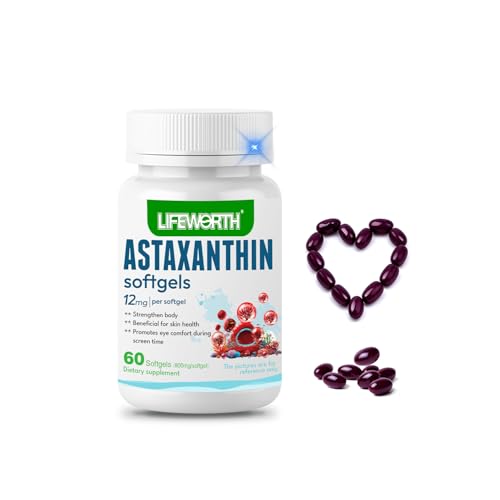
Look for natural astaxanthin softgels, which typically offer superior bioavailability compared to powdered forms. Many reputable brands offer astaxanthin 12mg supplements, a common and effective dosage for a wide range of benefits. For those seeking maximum potency or specific therapeutic applications, high potency astaxanthin options are also available, often in concentrations up to 24mg.
Conclusion: Astaxanthin’s Unique Niche
Astaxanthin is not merely another antioxidant; its unique molecular structure and amphiphilic properties grant it a distinct advantage in cellular protection. While other supplements excel in specific pathways or offer foundational support, astaxanthin provides a potent, targeted defense against oxidative stress and inflammation across multiple physiological systems.
For the biohacker optimizing cellular resilience, the athlete seeking faster recovery, or the individual prioritizing cognitive and skin health, astaxanthin stands out. It complements rather than replaces other beneficial compounds, establishing itself as a crucial component in a sophisticated supplement regimen. Its evidence-based benefits across diverse areas solidify its position as a top-tier marine carotenoid for holistic well-being.
Frequently Asked Questions (FAQ)
What is astaxanthin, and where does it come from?
Astaxanthin is a naturally occurring red pigment, a carotenoid, primarily found in the microalga Haematococcus pluvialis. It’s responsible for the pink-red color in salmon, shrimp, and flamingos, which consume the algae.
Is natural astaxanthin better than synthetic?
Yes, natural astaxanthin, typically derived from Haematococcus pluvialis, is generally considered superior. Its stereoisomeric configuration makes it more bioavailable and biologically active compared to synthetic astaxanthin.
What is the optimal astaxanthin dosage for general health?
Most human studies demonstrating benefits use daily dosages ranging from 4 mg to 12 mg. For specific therapeutic goals, higher doses up to 24 mg have been explored under supervision.
Can astaxanthin be taken with other supplements?
Astaxanthin is generally well-tolerated and can be taken alongside most other supplements. Its mechanisms often complement, rather than conflict with, compounds like Omega-3s, CoQ10, and vitamins.
How long does it take to see benefits from astaxanthin?
While individual responses vary, many studies report observable benefits for skin health, eye fatigue, and athletic recovery within 2-4 weeks of consistent daily supplementation. Cognitive benefits may take longer, often 8-12 weeks.
Are there any side effects of astaxanthin?
Astaxanthin is generally considered safe with no significant adverse effects reported in human trials at recommended dosages. Very high doses might cause a harmless reddish tint to the skin.
References
- Astaxanthin supplementation mildly reduced oxidative stress and inflammation biomarkers: a systematic review and meta-analysis of randomized controlled trials. Nutr Res (2022). PMID 35091276
- The effects of astaxanthin supplementation on obesity, blood pressure, CRP, glycemic biomarkers, and lipid profile: A meta-analysis of randomized controlled trials. Pharmacol Res (2020). PMID 32755613
- Effects of diet containing astaxanthin on visual function in healthy individuals: a randomized, double-blind, placebo-controlled, parallel study. J Clin Biochem Nutr (2023). PMID 36777084
- Astaxanthin (AstaReal) Improved Acute and Chronic Digital Eye Strain in Children: A Randomized Double-Blind Placebo-Controlled Trial. Adv Ther (2025). PMID 40014233
- Effects of anthocyanin, astaxanthin, and lutein on eye functions: a randomized, double-blind, placebo-controlled study. J Clin Biochem Nutr (2021). PMID 34376917
- Astaxanthin increases choroidal blood flow velocity. Graefes Arch Clin Exp Ophthalmol (2012). PMID 22072378
- Effect of astaxanthin-rich extract derived from Paracoccus carotinifaciens on cognitive function in middle-aged and older individuals. J Clin Biochem Nutr (2018). PMID 29610561
- Effect of astaxanthin on cycling time trial performance. Int J Sports Med (2011). PMID 21984399
- Astaxanthin supplementation does not augment fat use or improve endurance performance. Med Sci Sports Exerc (2013). PMID 23274592
- The effect of astaxanthin supplementation on performance and fat oxidation during a 40 km cycling time trial. J Sci Med Sport (2021). PMID 32660833
- Protective effects of astaxanthin on skin deterioration. J Clin Biochem Nutr (2017). PMID 28751807
- Systematic Review and Meta-Analysis on the Effects of Astaxanthin on Human Skin Ageing. Nutrients (2021). PMID 34578794
These statements have not been evaluated by the FDA. This product is not intended to diagnose, treat, cure, or prevent any disease.
These statements have not been evaluated by the Food and Drug Administration. This information is not intended to diagnose, treat, cure, or prevent any disease. Content is for informational purposes only and is not medical advice; consult a qualified healthcare provider before starting any supplement. As an Amazon Associate we earn from qualifying purchases.
