When shopping for astaxanthin supplements, you will encounter two ingredient brand names more than any other: BioAstin, produced by Cyanotech Corporation in Hawaii, and AstaReal, produced by Fuji Chemical Industry in Japan. Both supply natural astaxanthin derived from the microalgae Haematococcus pluvialis, the richest known natural source of this marine keto-carotenoid. Understanding what distinguishes them helps consumers make a more informed choice.
This comparison covers cultivation methods, standardization, research involvement, available forms, and dosing. No single brand is universally superior; the right choice depends on factors such as dose preference, formulation, and third-party testing standards you value. Neither brand nor astaxanthin itself is a treatment for any disease, and this article is informational only.
Key Takeaways
- BioAstin (Cyanotech, Hawaii) uses outdoor raceway pond cultivation; AstaReal (Fuji Chemical, Japan) uses closed photobioreactor systems — both yield natural esterified astaxanthin from H. pluvialis.
- Neither brand has been shown in published head-to-head trials to produce superior clinical outcomes; the general evidence base for natural H. pluvialis astaxanthin applies to both.
- Doses studied in human trials range from 4 to 12 mg per day; no serious adverse effects have been reported at these levels in trials lasting up to 12 weeks.[1]
- Taking astaxanthin with a fat-containing meal improves absorption regardless of which brand you choose.[2]
- Pregnant or breastfeeding individuals should avoid astaxanthin supplementation due to insufficient safety evidence.
Background: Who Makes BioAstin and AstaReal?
BioAstin is the branded astaxanthin ingredient from Cyanotech Corporation, a publicly traded company founded in 1983 and based in Kailua-Kona, Hawaii. Cyanotech is one of the oldest commercial microalgae producers in the United States and grows its Haematococcus pluvialis in outdoor raceway ponds under the natural Hawaiian sun. The finished consumer product line also carries the BioAstin name, so you may see it on both bulk ingredient certificates and retail bottles.
AstaReal is the branded ingredient from Fuji Chemical Industry Co., Ltd., a Japanese company that has been producing astaxanthin since the early 1990s. Fuji operates production facilities in Japan and Sweden and supplies AstaReal as a bulk ingredient to supplement brands worldwide. Unlike Cyanotech, Fuji Chemical does not sell a consumer-facing retail line under the AstaReal name; it is purely a business-to-business ingredient supplier whose name appears on the label of finished products manufactured by other companies.
Cultivation Methods: Outdoor Ponds vs. Closed Photobioreactors
The most meaningful technical difference between the two brands is how they grow their algae. Cyanotech uses open outdoor raceway ponds exposed to Hawaii’s natural sunlight and wind. Nutrient and light stress in these conditions triggers Haematococcus pluvialis to accumulate high concentrations of astaxanthin as a protective pigment. Open-pond cultivation is cost-effective and scalable but is more susceptible to environmental variability and potential contamination from other organisms.
AstaReal uses closed photobioreactor systems, specifically sealed glass tube reactors, to cultivate its algae under tightly controlled light, temperature, and nutrient conditions. Closed systems reduce the risk of microbial contamination and allow more precise control over astaxanthin accumulation, though they carry higher capital and operating costs. Neither approach has been shown to produce a biologically inferior product in head-to-head comparison; both yield all-trans natural astaxanthin esterified with fatty acids, which is the predominant form found in H. pluvialis.

One nuance worth noting: natural astaxanthin from H. pluvialis exists primarily in monoester and diester forms bound to fatty acids. This esterified form must be hydrolyzed in the gut to free astaxanthin before absorption. This is true of both BioAstin and AstaReal and is distinct from synthetic astaxanthin, which is in free (non-esterified) form. The esterified natural form is generally considered more stable during storage.

What Astaxanthin Does in the Body: The Proposed Mechanism
Astaxanthin is a xanthophyll carotenoid with a molecular structure that allows it to span the full lipid bilayer of cell membranes, anchoring at both the inner and outer surfaces. This dual-phase positioning distinguishes it from beta-carotene, which sits only in the lipid interior, and from vitamin C, which operates only in aqueous compartments. The result is broad-spectrum antioxidant activity that can quench singlet oxygen and neutralize reactive oxygen species across membrane boundaries.
In controlled human trials, astaxanthin at doses generally between 4 and 12 mg per day has shown measurable effects on markers of eye fatigue, UV-induced skin aging, exercise-induced muscle damage, and certain inflammatory biomarkers. The research base is growing but remains relatively modest in scale; most trials have fewer than 100 participants and short durations of 8 to 12 weeks. Claims beyond these studied endpoints are not well supported. Both BioAstin and AstaReal have been used as the astaxanthin source in published human studies, though neither company should be credited with those findings in a way that implies exclusivity.
Research Involvement and Clinical Evidence
Cyanotech has funded and published research on BioAstin specifically, and the ingredient has appeared in peer-reviewed studies examining exercise recovery, oxidative stress, and skin health. Because Cyanotech sells directly to consumers as well as to manufacturers, it has a strong commercial incentive to build a branded research portfolio. This is neither a credential nor a flaw; industry-funded research can still be methodologically sound, but it should be interpreted with awareness of that context.
AstaReal has also been involved in clinical research, particularly in Japan, where astaxanthin research has a longer commercial history. Several studies on cognitive function, eye fatigue, and skin aging conducted in Japanese populations have used AstaReal as the source ingredient. Because AstaReal is an ingredient supplier rather than a consumer brand, its research activity is less prominently marketed to end consumers, but the underlying evidence base is comparable in size and quality.
It is important to note that no published study we are aware of permits attribution of specific clinical outcomes to one brand over the other. The general mechanisms and effects of natural H. pluvialis astaxanthin appear applicable to both, absent a direct head-to-head clinical comparison, which has not been published to our knowledge.
Dosage, Forms, and How to Identify Each Brand
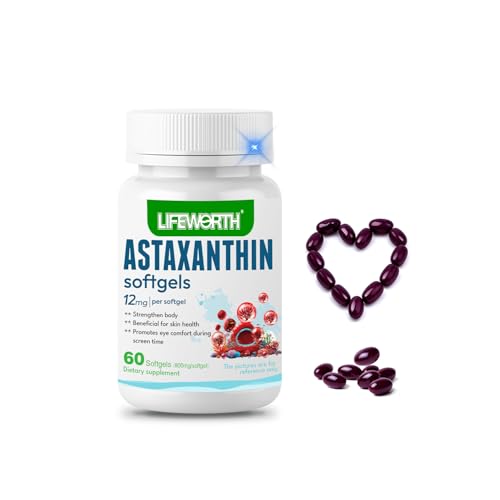
BioAstin is available in soft gel capsules and is standardized to deliver 4 mg or 12 mg of natural astaxanthin per serving, with the astaxanthin suspended in a lipid carrier (typically olive oil) to aid absorption, since astaxanthin is fat-soluble. Human trials showing measurable effects have generally used doses in the 4 to 12 mg per day range for 8 to 12 weeks. The 12 mg dose is at the higher end of what has been evaluated for safety in published research.
AstaReal is supplied to other brands as a bulk ingredient in oleoresin or powder form and then formulated into soft gels, capsules, or tablets by the purchasing manufacturer. Finished products containing AstaReal will typically identify it on the label under the ingredient list or Supplement Facts panel. Standardization varies by manufacturer, but AstaReal oleoresin is commonly specified at 5 to 10 percent astaxanthin by weight.

Because astaxanthin is fat-soluble, taking either product with a meal containing dietary fat improves absorption. There is no evidence that one delivery matrix—olive oil soft gel versus alternative lipid carriers—is meaningfully superior for most consumers, though those with particular fat metabolism concerns should consult a clinician.
Safety Profile and Who Should Be Cautious
Both BioAstin and AstaReal are derived from the same algae source and share the same general safety profile. Natural astaxanthin from H. pluvialis holds GRAS (Generally Recognized As Safe) status in the United States. Clinical trials using doses up to 12 mg per day for up to 12 weeks have not identified serious adverse effects in healthy adults.[2] At very high doses above 20 mg per day, the most consistently reported side effect is carotenodermia, a reversible yellow-orange discoloration of the skin caused by carotenoid accumulation in subcutaneous tissue.[1] This resolves upon discontinuation.
Evidence in pregnant and breastfeeding individuals is insufficient to establish safety, and supplementation during pregnancy or breastfeeding is not recommended by either manufacturer. Individuals taking blood-thinning medications or those with algae sensitivities should consult a physician before use. These precautions apply equally to both brands.
🛒 Where to Buy Astaxanthin
- Nutrex Hawaii BioAstin Hawaiian AstaxanthinLab-tested / studied
softgels, 12 mg per softgel, 90 count — Hawaiian-grown Haematococcus pluvialis, sold as the High Potency 90-softgel bottle - Pure Synergy SuperPure Astaxanthin Extract
capsules, 60 count — Sold as an astaxanthin extract in a capsule rather than a softgel; the listing does not state a mg per capsule, so check the label for the dose before comparing it with the 12 mg bottles here - Naturalis New Zealand Astaxanthin
softgels, 12 mg per softgel, 120 count — New Zealand-grown rather than Hawaiian, and the largest bottle on this list at 120 softgels - NOW Foods Astaxanthin
softgels, 4 mg per softgel — The entry-level 4 mg dose, built on the Zanthin astaxanthin ingredient; a lower starting point than the 12 mg bottles above
As an Amazon Associate we earn from qualifying purchases. Astaxanthin products vary mainly by dose and by source, with 4mg and 12mg the common strengths and most of them derived from Haematococcus pluvialis algae, so check the label for the astaxanthin content per serving and prefer products that publish third-party testing.
A Note on the Evidence
The research on astaxanthin, while promising, consists largely of small short-duration trials, and neither BioAstin nor AstaReal should be considered a treatment for any medical condition. Individuals who are pregnant, breastfeeding, taking anticoagulants, or managing a health condition should consult a qualified healthcare provider before adding any new supplement to their routine.
Frequently Asked Questions
Is BioAstin or AstaReal better for eye fatigue?
Both have been used in studies examining eye fatigue, and the findings reflect properties of natural astaxanthin generally rather than brand-specific effects. No published head-to-head trial has compared the two brands directly for this outcome. Choose based on dose, third-party testing, and product quality rather than brand name alone.
What does 'natural' astaxanthin mean compared to synthetic?
Natural astaxanthin from H. pluvialis is predominantly in esterified form (bound to fatty acids), whereas synthetic astaxanthin used in aquaculture is in free form. Both BioAstin and AstaReal are natural and esterified. Synthetic astaxanthin is not sold for human supplementation in the US.
Can I take 12 mg of astaxanthin daily long term?
Published human trials have evaluated 12 mg per day for up to 12 weeks without identifying serious adverse effects. Long-term safety data beyond 12 weeks is limited. If you plan to use higher doses or supplement for extended periods, it is reasonable to consult a clinician.
Will astaxanthin turn my skin orange?
Carotenodermia — a reversible yellow-orange skin tint — has been reported at doses above 20 mg per day. At the 4 to 12 mg range used in most studies, this effect is not a consistent finding. It resolves when supplementation is stopped.
How do I know if a product contains AstaReal or BioAstin?
Products containing BioAstin are often sold under the Cyanotech or BioAstin brand name directly. Products using AstaReal as an ingredient will typically display ‘AstaReal’ in the ingredient panel or on the label. If the label only says ‘astaxanthin from Haematococcus pluvialis’ without identifying an ingredient brand, the source is unspecified.
Is one brand more bioavailable than the other?
No published pharmacokinetic trial has directly compared the bioavailability of BioAstin and AstaReal in humans under equivalent conditions. Both use lipid-based delivery to support fat-soluble absorption. Taking either with a meal containing fat is the most evidence-consistent way to maximize uptake.
References
- Astaxanthin: How much is too much? A safety review. Phytotherapy Research (2019). PMID 31788888
- Astaxanthin: sources, extraction, stability, biological activities and its commercial applications – a review. Marine Drugs (2014). PMID 24402174
These statements have not been evaluated by the Food and Drug Administration. This information is not intended to diagnose, treat, cure, or prevent any disease. Content is for informational purposes only and is not medical advice; consult a qualified healthcare provider before starting any supplement. As an Amazon Associate we earn from qualifying purchases.
