Haematococcus pluvialis is a single-celled freshwater microalgae with an unusual survival strategy: when deprived of nutrients, exposed to intense UV light, or stressed by drought, it floods its own cells with a red pigment called astaxanthin. This pigment acts as a biological shield, protecting the algae’s DNA and internal machinery from oxidative damage until conditions improve. That same pigment is now sold as a dietary supplement and studied for its potential effects in humans.
Astaxanthin is classified as a keto-carotenoid, a subgroup of the carotenoid family that includes beta-carotene and lycopene, but with a distinct molecular structure that gives it unusual properties. Unlike most antioxidants, astaxanthin is capable of operating in both the fat-soluble and water-soluble environments inside a cell, which researchers believe allows it to interact with cell membranes in ways that some other antioxidants cannot. Here is an honest look at what Haematococcus pluvialis is, how it makes astaxanthin, and what the current evidence does and does not support.
Key Takeaways
- Haematococcus pluvialis is a freshwater microalgae and the primary commercial source of natural astaxanthin, which it produces as a stress response to protect its own cells.[1]
- Astaxanthin’s keto-carotenoid structure allows it to span both the lipid and aqueous layers of cell membranes, a property that distinguishes it from many other dietary antioxidants.
- Small human RCTs have shown early signals in areas including eye fatigue, UV-related skin changes, exercise-induced muscle damage, and inflammatory markers, but the evidence base remains preliminary.
- At studied doses up to 12 mg per day for 12 weeks, no serious adverse effects have been identified; carotenodermia (reversible skin tinting) is the main effect noted at very high doses above 20 mg per day.
- Natural astaxanthin from H. pluvialis is not the same as synthetic astaxanthin used in aquaculture; only the natural form holds GRAS status for use in human dietary supplements in major markets.
What Is Haematococcus Pluvialis?
Haematococcus pluvialis is a species of green microalgae found naturally in freshwater environments around the world, including bird baths, rock pools, and temporary puddles. Under normal growing conditions it is green, photosynthesizing like any other algae. Under stress — drought, high salinity, extreme light intensity, or nutrient starvation — it transitions into a dormant cyst stage and produces large quantities of astaxanthin as a protective measure. In this cyst form, the algae can survive desiccation for decades.
Commercially, H. pluvialis is cultivated in controlled outdoor raceways or closed photobioreactor systems. Growers deliberately stress the algae to trigger astaxanthin accumulation, then harvest, dry, and extract the pigment. The resulting product is the primary commercial source of natural astaxanthin. H. pluvialis-derived astaxanthin has received Generally Recognized as Safe (GRAS) status, meaning it has been evaluated and is considered safe for use as a dietary ingredient at studied doses.
The Chemistry: Why Astaxanthin Is Structurally Unusual
Astaxanthin belongs to the xanthophyll subclass of carotenoids, meaning it contains oxygen atoms in addition to the carbon and hydrogen backbone shared by all carotenoids. Specifically, it has ketone and hydroxyl groups at each end of its long conjugated chain. This molecular architecture is the basis for most of the properties researchers find interesting.
Most fat-soluble antioxidants, like vitamin E, sit within the inner lipid layer of a cell membrane. Most water-soluble antioxidants, like vitamin C, operate outside the membrane in the aqueous environment. Astaxanthin’s structure allows it to span the full thickness of a cell membrane — anchoring at both the inner and outer surfaces — while its conjugated chain runs through the lipid core. This positioning means it may be able to quench reactive oxygen species (singlet oxygen and free radicals) in multiple cellular compartments simultaneously. This proposed mechanism distinguishes it from many other dietary antioxidants, though it is worth noting that demonstrating antioxidant activity in a test tube or cell culture does not automatically translate to the same effects in a living human body.

Unlike beta-carotene, astaxanthin does not convert to vitamin A in the body, so it does not carry the risk of vitamin A toxicity at high intake levels.
What Early Human Research Suggests
A number of small randomized controlled trials have examined astaxanthin from H. pluvialis in human volunteers, with several areas showing early positive signals. Eye fatigue is one of the more studied endpoints: a handful of trials in adults who spend long hours at screens have reported reduced subjective eye strain and improved focusing speed with astaxanthin supplementation compared to placebo. These findings are preliminary and come from small study populations, but they are among the more replicated observations in the literature.
Skin health is another area of interest. Short-term trials in healthy adults suggest that astaxanthin supplementation may reduce markers of UV-induced skin damage and improve measures of skin elasticity and moisture, though effect sizes in these studies tend to be modest. Exercise physiology researchers have examined whether astaxanthin reduces exercise-induced muscle damage, with some trials reporting lower markers of oxidative stress and muscle soreness following supplementation in athletes, though results are not fully consistent across studies.
Inflammatory biomarkers such as C-reactive protein have also been measured in some trials, with a subset showing reductions compared to placebo. It is important to acknowledge that this body of research is still early: most individual trials enroll fewer than 100 participants, study durations rarely exceed 12 weeks, and independent replication of findings across different research groups is limited. Larger, longer trials are needed before firm conclusions can be drawn.
Natural vs. Synthetic Astaxanthin
Not all astaxanthin on the market comes from H. pluvialis. Synthetic astaxanthin, produced from petrochemical precursors, is widely used in aquaculture to give farmed salmon and shrimp their pink color.[3] Synthetic astaxanthin is a mixture of stereoisomers — different three-dimensional arrangements of the same molecule — whereas natural astaxanthin from H. pluvialis consists predominantly of the 3S,3’S stereoisomer.
Whether this difference in stereochemistry matters for human health is an open question. Some researchers argue that the specific isomer profile of natural astaxanthin may be relevant to its biological activity; others note that the evidence base comparing natural and synthetic forms in human trials is limited. What is clear is that regulatory bodies distinguish between the two: natural H. pluvialis-derived astaxanthin has achieved GRAS status for use as a dietary supplement ingredient, while synthetic astaxanthin is approved only as an animal feed additive in many jurisdictions, not as a human supplement. When evaluating a product, checking the source (H. pluvialis) on the label matters for both regulatory and quality reasons.
Safety Profile and Dosage
Based on completed human trials, natural astaxanthin from H. pluvialis has a favorable safety profile at commonly studied doses. Studies using up to 12 mg per day for periods up to 12 weeks have not identified serious adverse effects. The most consistently noted side effect at very high doses — generally above 20 mg per day — is carotenodermia, a reversible yellowing or orange tinting of the skin caused by carotenoid accumulation in adipose tissue.[2] This resolves when supplementation is stopped and is not considered harmful.

Doses used in human research have typically ranged from 4 mg to 12 mg per day, and most commercially available supplements fall within this range. There is no established optimal dose, and individual responses likely vary. People taking blood-thinning medications should consult a healthcare provider before adding astaxanthin, as some antioxidants can interact with anticoagulant therapy. Evidence in pregnancy and breastfeeding is insufficient to establish safety, so supplementation is not recommended during those periods.
How to Evaluate an Astaxanthin Supplement
Because the supplement market is largely self-regulated, product quality varies. When choosing a product, look for astaxanthin sourced specifically from Haematococcus pluvialis and a clear statement of astaxanthin content per serving rather than a proprietary blend that obscures dosing. Third-party testing verification from organizations such as NSF International or USP provides an additional layer of quality assurance by confirming that the product contains what the label claims and is free from common contaminants.
Astaxanthin is fat-soluble, so absorption is improved when taken with a meal that contains fat. Some manufacturers include lipid-based delivery systems for this reason. Storage matters too: carotenoids degrade with exposure to light and heat, so products should be kept in a cool, dark environment and used before the expiration date.
🛒 Where to Buy Astaxanthin
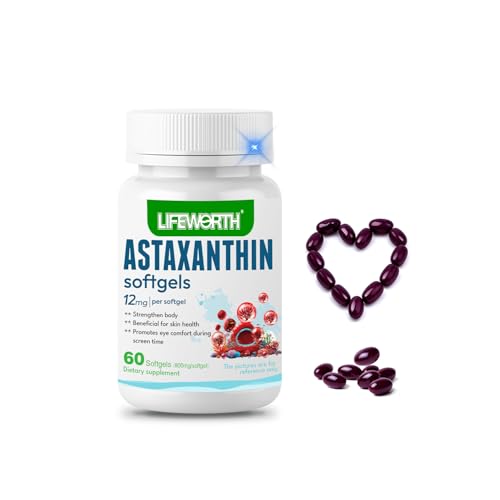
- Nutrex Hawaii BioAstin Hawaiian AstaxanthinLab-tested / studied
softgels, 12 mg per softgel, 90 count — Hawaiian-grown Haematococcus pluvialis, sold as the High Potency 90-softgel bottle - Pure Synergy SuperPure Astaxanthin Extract
capsules, 60 count — Sold as an astaxanthin extract in a capsule rather than a softgel; the listing does not state a mg per capsule, so check the label for the dose before comparing it with the 12 mg bottles here - Naturalis New Zealand Astaxanthin
softgels, 12 mg per softgel, 120 count — New Zealand-grown rather than Hawaiian, and the largest bottle on this list at 120 softgels - NOW Foods Astaxanthin
softgels, 4 mg per softgel — The entry-level 4 mg dose, built on the Zanthin astaxanthin ingredient; a lower starting point than the 12 mg bottles above
As an Amazon Associate we earn from qualifying purchases. Astaxanthin products vary mainly by dose and by source, with 4mg and 12mg the common strengths and most of them derived from Haematococcus pluvialis algae, so check the label for the astaxanthin content per serving and prefer products that publish third-party testing.
A Note on the Evidence
The human research on astaxanthin is promising but still early — most trials are small, short-term, and involve healthy adult volunteers, which limits how broadly the findings apply. This article is informational only and does not constitute medical advice; anyone with a health condition, anyone taking medications (particularly blood thinners), and anyone who is pregnant or breastfeeding should consult a qualified healthcare provider before adding astaxanthin or any new supplement to their routine.
Frequently Asked Questions
What is Haematococcus pluvialis and why does it make astaxanthin?
Haematococcus pluvialis is a single-celled freshwater microalgae that produces astaxanthin as a survival mechanism. When the algae experience stress — intense UV light, nutrient starvation, or drought — they accumulate large amounts of astaxanthin to protect their cellular structures and DNA from oxidative damage while they wait for conditions to improve.
Is astaxanthin from H. pluvialis safe to take?
Based on completed human trials, natural astaxanthin from H. pluvialis has not produced serious adverse effects at doses up to 12 mg per day for up to 12 weeks. The main side effect at very high doses above 20 mg per day is a reversible orange-yellow skin tint called carotenodermia. However, evidence is insufficient to recommend it during pregnancy or breastfeeding, and anyone on medications should consult a healthcare provider before supplementing.
What benefits does the research suggest for astaxanthin?
Early small human trials have examined astaxanthin in the context of eye fatigue, UV-induced skin aging, exercise-related muscle damage, and inflammatory biomarkers, with some positive findings. The evidence is preliminary — most trials are small and short-term — and should not be interpreted as proof of clinical benefit. Larger independent trials are needed to draw firm conclusions.
What is the difference between natural and synthetic astaxanthin?
Natural astaxanthin from H. pluvialis is predominantly the 3S,3’S stereoisomer and holds GRAS status for human dietary supplements. Synthetic astaxanthin is produced from petrochemicals, contains a mixed stereoisomer profile, and is approved as an animal feed additive in many regions but not as a human supplement ingredient. Most human research has been conducted using natural H. pluvialis-derived astaxanthin.
How should astaxanthin be taken for best absorption?
Astaxanthin is fat-soluble, meaning it is better absorbed when consumed alongside dietary fat. Taking it with a meal that contains fat — such as one that includes olive oil, avocado, or fatty fish — is generally recommended to optimize uptake. Some supplement formulations include lipid carriers to assist absorption.
What dose of astaxanthin has been used in research?
Human trials have typically used doses ranging from 4 mg to 12 mg per day. There is no established optimal dose, and commercially available supplements generally fall within this range. Doses above 20 mg per day have been associated with reversible skin tinting (carotenodermia) and are not commonly used in human research.
References
- Astaxanthin: sources, extraction, stability, biological activities and its commercial applications – a review. Marine Drugs (2014). PMID 24402174
- Astaxanthin: How much is too much? A safety review. Phytotherapy Research (2019). PMID 31788888
- Astaxanthin for the Food Industry. Molecules (2021). PMID 34063189
These statements have not been evaluated by the Food and Drug Administration. This information is not intended to diagnose, treat, cure, or prevent any disease. Content is for informational purposes only and is not medical advice; consult a qualified healthcare provider before starting any supplement. As an Amazon Associate we earn from qualifying purchases.
