Astaxanthin is a keto-carotenoid produced by the microalgae Haematococcus pluvialis, and unlike vitamin C or other water-soluble antioxidants, it lives primarily in the lipid environment of cell membranes. That fat-soluble nature means the practical details of how and when you take it — what you eat alongside it, whether you have fat in your stomach at that moment — have a measurable impact on how much actually reaches your tissues. Treating it like a multivitamin you swallow whenever convenient can significantly reduce what your body absorbs.
This article covers what the current evidence and well-established carotenoid biology suggest about meal timing, fat intake, time of day, and pairing astaxanthin with other supplements. Peer-reviewed findings are cited inline where applicable. Everything else is grounded in the understood absorption physiology of fat-soluble compounds. This is informational content only and is not a substitute for advice from a qualified healthcare professional.
Key Takeaways
- Always take astaxanthin with a fat-containing meal — dietary fat is required to activate the absorption pathway for this fat-soluble carotenoid.
- Time of day matters less than consistency; attach your dose to whichever meal you eat most reliably and that reliably contains fat.
- Black pepper (piperine) and dietary fat together may synergistically improve carotenoid bioavailability [1] — a low-cost optional enhancement.
- Omega-3 softgels and CoQ10 are practical stacking partners since all three are fat-soluble and taken with meals, and the oil in omega-3 capsules supports astaxanthin absorption.
- Stay within studied dose ranges (up to 12 mg/day in published trials); very high doses can cause reversible skin yellowing, and supplementation is not recommended during pregnancy or breastfeeding.
Why Astaxanthin's Chemistry Makes Timing Matter
Most dietary antioxidants are either water-soluble, like vitamin C, or fat-soluble, like vitamin E. Astaxanthin sits in both camps. Its polar keto and hydroxyl end groups anchor into the hydrophilic outer faces of cell membranes while its long polyene carbon chain spans the lipid interior, allowing it to quench free radicals and singlet oxygen across the full thickness of the membrane. This dual-phase positioning is thought to be central to its proposed biological activity.
Because the core of the molecule is fat-soluble, it must be emulsified and dissolved in dietary fat before it can be packaged into micelles and absorbed through the intestinal epithelium into the lymphatic system. Without fat present in the gut at the same time, astaxanthin passes through largely intact and unabsorbed. This is not unique to astaxanthin — it is the standard absorption pathway for all fat-soluble carotenoids, vitamins A, D, E, and K, and most oil-based supplements. What makes this worth emphasizing for astaxanthin is that many people take it as a standalone capsule between meals, exactly the scenario most likely to waste a significant portion of the dose.
The Most Important Rule: Take It With Fat
The single most evidence-supported timing principle for astaxanthin is to take it with a meal containing fat. Research on carotenoid bioavailability consistently shows that dietary fat is necessary for efficient carotenoid absorption, and that higher fat intake at the time of consumption correlates with higher plasma carotenoid concentrations. A large dietary study found that high fruit and vegetable consumption combined with moderate fat intake was associated with significantly higher circulating carotenoid levels in adults [2]. While that finding applies to dietary carotenoids generally, the underlying absorption mechanism is identical for supplemental astaxanthin.

The fat threshold needed is not large. As little as three to five grams of fat — roughly a teaspoon of olive oil drizzled over food, half a small avocado, a small handful of nuts, or the oil in a softgel omega-3 capsule taken at the same time — is sufficient to trigger bile acid release, which is what activates micelle formation and the fat-soluble absorption pathway. A full mixed meal with fifteen to twenty grams of fat will likely produce better absorption than a minimal fat addition, but the essential requirement is simply that fat is present. A completely fat-free breakfast of plain oatmeal, berries, and black coffee is not an appropriate context for taking astaxanthin.

Morning, Noon, or Night: Does the Clock Matter?
There is no published clinical evidence establishing that a specific time of day produces meaningfully superior outcomes for astaxanthin. The biology does not suggest a circadian window the way melatonin or cortisol-sensitive compounds do. What matters far more than clock time is consistency and co-ingestion with fat. Astaxanthin accumulates gradually in tissues over days to weeks; sporadic dosing or irregular timing disrupts that steady-state buildup far more than shifting the hour of dosing does.
The practical guidance is therefore to attach astaxanthin to whichever meal in your daily routine is most reliable and most likely to contain fat. For most people, that is their largest meal — typically lunch or dinner. Breakfast can work well if it includes eggs, full-fat yogurt, nut butter, avocado, smoked salmon, or any added fat. A continental breakfast of fruit juice and dry toast is not.
If you are taking astaxanthin partly for exercise recovery or muscle protection, there is a reasonable argument for taking it near your post-workout meal, which typically includes protein and some fat in any balanced recovery context. However, the direct connection between astaxanthin timing relative to exercise and efficacy outcomes has not been specifically studied in published trials, so this remains practical inference rather than established guidance.
How Black Pepper May Further Enhance Absorption
Piperine, the active alkaloid in black pepper, has attracted research interest as a bioavailability enhancer. It appears to slow intestinal transit, modulate intestinal permeability for lipophilic compounds, and inhibit certain enzymes that break down compounds before they reach circulation. A 2026 narrative review concluded that black pepper and dietary lipids act synergistically to enhance carotenoid bioavailability, with the combination producing greater improvements than either factor alone [1]. Given that astaxanthin is itself a carotenoid, this mechanism is directly relevant.

Adding a small amount of black pepper to the meal at which you take astaxanthin — or using a standardized piperine extract (typically 5 to 10 mg) — is a low-cost, low-risk optimization if you want to push absorption further. One practical caveat: piperine inhibits the CYP3A4 enzyme and P-glycoprotein, two pathways that help metabolize a wide range of prescription medications including some statins, anticoagulants, and immunosuppressants. If you take any prescription drugs, discuss piperine use with your clinician before adding it.
Stacking Astaxanthin With Other Supplements
Astaxanthin is frequently combined with other fat-soluble compounds, and there are logical reasons this is convenient. Omega-3 fatty acids in softgel form contain fat by definition, making them a natural companion: the oil in the fish oil or algae oil capsule creates the fat substrate that helps dissolve astaxanthin in the gut. Coenzyme Q10 is another common pairing — both are fat-soluble, both are typically taken with meals, and their proposed mechanisms are considered complementary: CoQ10 supports mitochondrial energy production while astaxanthin provides membrane-level antioxidant protection.
Vitamin E is another fat-soluble antioxidant sometimes included in astaxanthin stacks. One consideration worth noting is that at very high supplemental doses, vitamin E has shown mixed results in long-term trials, so combining multiple antioxidants is better done by keeping each within its individually studied dose range rather than by layering them to reach unusually high total antioxidant intakes. There are no published head-to-head trials comparing different astaxanthin stacking protocols, so pairing recommendations are based on mechanistic plausibility rather than direct clinical comparisons.

A diet-level consideration: other carotenoids consumed at the same meal appear to share absorption infrastructure rather than compete at typical dietary doses. Some evidence suggests that carotenoid-rich food choices elevate circulating carotenoid levels broadly — for example, a study found that carotenoid concentrations in older women increased measurably in response to carotenoid-rich food interventions [3] — though astaxanthin from food sources alone is limited to relatively small amounts found in salmon, shrimp, and krill, making supplementation the primary route for achieving studied dose ranges.
What to Avoid and Practical Dose Notes
The clearest thing to avoid is taking astaxanthin without fat. Beyond that, avoid assuming that a higher dose compensates for poor timing — if the absorption environment is not right, a larger capsule is still largely wasted. At doses exceeding 20 mg per day, some individuals develop carotenodermia, a reversible yellow-orange tint to the skin caused by carotenoid accumulation in subcutaneous fat. This is harmless but cosmetically undesirable. Human trials using doses up to 12 mg per day for twelve weeks have not identified serious adverse effects, and natural astaxanthin from Haematococcus pluvialis holds GRAS status. Staying within that studied range is the prudent approach for most adults.

Pregnancy and breastfeeding are important exceptions: there is insufficient evidence to establish safety during those periods, and supplementation is not recommended. Those with shellfish allergies should verify the source of their astaxanthin product, as some formulations contain shellfish-derived carriers even when the astaxanthin itself is algal in origin. Always read the label and, when in doubt, contact the manufacturer.
🛒 Where to Buy Astaxanthin
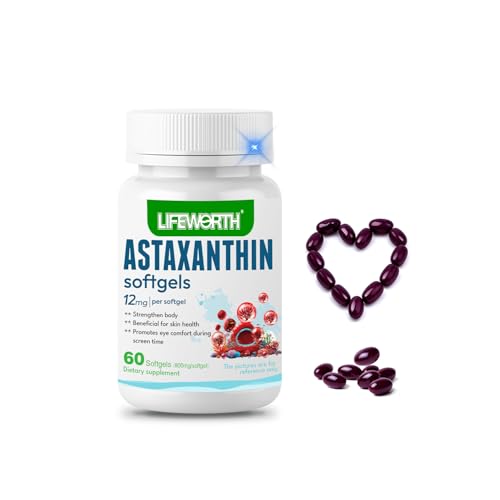
- Nutrex Hawaii BioAstin Hawaiian AstaxanthinLab-tested / studied
softgels, 12 mg per softgel, 90 count — Hawaiian-grown Haematococcus pluvialis, sold as the High Potency 90-softgel bottle - Pure Synergy SuperPure Astaxanthin Extract
capsules, 60 count — Sold as an astaxanthin extract in a capsule rather than a softgel; the listing does not state a mg per capsule, so check the label for the dose before comparing it with the 12 mg bottles here - Naturalis New Zealand Astaxanthin
softgels, 12 mg per softgel, 120 count — New Zealand-grown rather than Hawaiian, and the largest bottle on this list at 120 softgels - NOW Foods Astaxanthin
softgels, 4 mg per softgel — The entry-level 4 mg dose, built on the Zanthin astaxanthin ingredient; a lower starting point than the 12 mg bottles above
As an Amazon Associate we earn from qualifying purchases. Astaxanthin products vary mainly by dose and by source, with 4mg and 12mg the common strengths and most of them derived from Haematococcus pluvialis algae, so check the label for the astaxanthin content per serving and prefer products that publish third-party testing.
A Note on the Evidence
The timing recommendations in this article are largely extrapolated from carotenoid absorption research rather than astaxanthin-specific pharmacokinetic trials, and individual absorption varies based on gut health, diet composition, and other factors. Consult a qualified healthcare professional before supplementing, especially if you are pregnant, breastfeeding, taking prescription medications, or managing a health condition.
Frequently Asked Questions
Can I take astaxanthin on an empty stomach?
It is not advisable. Astaxanthin is fat-soluble and depends on dietary fat in the gut to trigger bile release, micelle formation, and absorption into the lymphatic system. Without fat present, the majority of the dose is likely to pass through unabsorbed. Always pair it with a meal or snack containing at least a few grams of fat.
Does the specific time of day — morning versus evening — make a difference?
Current evidence does not support one time of day over another for astaxanthin specifically. The more meaningful variable is whether you are taking it with fat. Pick the meal that is most consistent for you and reliably contains fat, and stick with it daily. Consistency of daily dosing matters more than clock timing because astaxanthin builds up in tissues over time.
How does black pepper affect absorption?
Piperine, the active compound in black pepper, has been shown in research to synergistically enhance carotenoid bioavailability when combined with dietary lipids [1]. Adding black pepper to your meal or using a standardized piperine supplement alongside astaxanthin is a plausible absorption enhancer. If you take prescription medications, check with your clinician first, as piperine can slow the breakdown of some drugs.
What are the best foods to eat alongside astaxanthin?
Any food that contains fat will support absorption. Practical options include eggs, avocado, nuts, olive oil, full-fat dairy, fatty fish, or nut butter. Diets combining vegetables with moderate fat intake have been associated with higher plasma carotenoid levels in observational research [2], suggesting a food-first foundation supports overall carotenoid status, on top of which supplemental astaxanthin can be added.
Can I take astaxanthin with omega-3s or CoQ10?
Yes, and both are commonly taken together for practical reasons. Omega-3 softgels contain fat that helps dissolve astaxanthin in the gut, making the pairing functionally convenient. CoQ10 is also fat-soluble and taken with meals, so a single meal-time dose covers all three. No published clinical trials have specifically examined these combinations, so recommendations are based on shared absorption biology and complementary proposed mechanisms rather than direct evidence.

Is it safe to take astaxanthin every day?
Published trials have used doses up to 12 mg per day for twelve weeks without identifying serious adverse effects, and natural astaxanthin from Haematococcus pluvialis holds GRAS status. Very high doses exceeding 20 mg per day can cause reversible yellowing or orange tinting of the skin (carotenodermia), which resolves when dosing stops or is reduced. Evidence in pregnancy and breastfeeding is insufficient, making supplementation inadvisable in those groups. For use beyond the durations studied in trials, consulting a healthcare professional is reasonable.
References
- Luo M et al. Black Pepper and Dietary Lipids Synergistically Enhance Carotenoid Bioavailability: A Narrative Review. Nutrition reviews (2026). PMID 42186282
- Marhuenda-Muñoz M et al. High Fruit and Vegetable Consumption and Moderate Fat Intake Are Associated with Higher Carotenoid Concentration in Human Plasma. Antioxidants (Basel, Switzerland) (2021). PMID 33802859
- Ellis AC et al. Watermelon Juice: a Novel Functional Food to Increase Circulating Lycopene in Older Adult Women. Plant foods for human nutrition (Dordrecht, Netherlands) (2019). PMID 30756297
These statements have not been evaluated by the Food and Drug Administration. This information is not intended to diagnose, treat, cure, or prevent any disease. Content is for informational purposes only and is not medical advice; consult a qualified healthcare provider before starting any supplement. As an Amazon Associate we earn from qualifying purchases.
