Two bottles can both say astaxanthin and contain chemically different molecules. Natural astaxanthin from Haematococcus pluvialis arrives mostly esterified, with fatty acids attached at one or both ends. Synthetic astaxanthin and astaxanthin from Phaffia yeast are largely free, or unesterified.
This is a genuinely different question from natural versus synthetic, which is about stereochemistry and source. This one is about what has to happen in your gut before any of it gets absorbed, and the research here has a result most summaries get backwards.
Key Takeaways
- Astaxanthin from H. pluvialis is roughly 95% esterified, as a mix of monoesters and diesters. Free astaxanthin has to be released by pancreatic enzymes before absorption.
- In a study of 14 different astaxanthin esters, diesters were more stable than monoesters and free astaxanthin by degradation rate at 60 degrees C, and long-chain saturated esters were the most stable of all [1].
- But monoesters were significantly more bioavailable than diesters, and short-chain esters absorbed better than long-chain ones [1]. Stability and absorption pull in opposite directions.
- A synthesized astaxanthin succinate diester showed both higher thermal stability and higher bioavailability than free astaxanthin, with serum AUC of 45.05 and liver AUC of 120.38 micrograms per hour per mL [2].
- Liposomal encapsulation increased astaxanthin bioaccessibility over free astaxanthin in a simulated digestion model [3].
- The practical label trap: milligrams of astaxanthin esters or oleoresin is not the same number as milligrams of astaxanthin.
What Esterification Actually Means Here
Astaxanthin has a hydroxyl group at each end of the molecule. Either one can bond to a fatty acid, forming an ester. Attach a fatty acid at one end and you have a monoester; attach at both and you have a diester.
The alga does this for a reason. Esterification makes the molecule more lipophilic and lets it pack into lipid droplets inside the cyst, where it survives the desiccation and intense light that trigger its production in the first place. Our article on the source organism covers that biology.
The consequence for you is that natural astaxanthin, roughly 95% esterified, cannot be absorbed as-is. Pancreatic lipases and carboxyl ester lipase have to cleave the fatty acids off in the small intestine, releasing free astaxanthin that then partitions into mixed micelles for uptake. Synthetic and yeast-derived astaxanthin skip that step because they arrive already free.
The Study That Tested Fourteen Forms
The most informative work here tested 14 astaxanthin esters with different molecular structures through both in vitro and in vivo digestion models [1]. It separated two questions that are usually collapsed into one.

On stability, measured by degradation rate constant at 60 degrees C:
- Esters with long-chain, saturated fatty acids were more stable than other types.
- Diesters were more stable than monoesters, which were more stable than free astaxanthin [1].
On absorption, measured by serum astaxanthin concentrations:
- Esters with short-chain fatty acids had higher bioavailability than long-chain ones.
- Esters with higher unsaturation absorbed better than those with lower unsaturation.
- Monoesters had significantly increased bioavailability compared with diesters [1].
Read those two lists next to each other. Every structural feature that improved stability worked against absorption. The most stable form, a long-chain saturated diester, is close to the least absorbable. That is an uncomfortable result for anyone wanting a simple answer about which form is best, and it is the honest state of the research.
The Engineered Exception
One study found a form that appears to do both. Researchers synthesized astaxanthin succinate diester by reacting free astaxanthin with succinic anhydride, achieving an 82.63% synthesis rate [2]. Succinate is a short-chain diacid, not a typical long fatty acid.
The result: better stability than free astaxanthin under acidic conditions, high retention across pH 5.0 to 7.0, and higher bioavailability, with serum area under the curve of 45.05 and liver area under the curve of 120.38 micrograms per hour per mL [2]. Long-term tissue accumulation was significantly higher than with free astaxanthin, concentrating in heart, muscle and spleen [2].
This is a laboratory synthesis, not something you can currently buy, and it was tested in animals. But it supports the mechanistic reading of the 14-ester study: chain length, not esterification itself, is doing most of the work.
Delivery Systems Are The Other Half Of The Question
Formulation can change the answer more than ester chemistry does. Encapsulating astaxanthin in liposomes made from soybean phospholipid produced an appreciable increase in bioaccessibility compared with free astaxanthin in a simulated digestion model [3]. The liposomes stayed stable through simulated gastric fluid at low pH and formed mixed micelles in simulated intestinal fluid, and more astaxanthin ended up solubilized in those micelles [3].
That study was in vitro, and the research group included an author employed by an astaxanthin manufacturer, which is disclosed in the paper. Both facts belong in any honest summary of it.
The broader point stands: whether astaxanthin is in an oil-filled softgel, a dry powder capsule, a liposomal preparation or an emulsion probably matters at least as much as whether it arrived as a monoester or a diester. Our softgels versus capsules comparison covers the consumer-format side of this.
The Label Problem
Here is the part that costs people money. Because natural astaxanthin is mostly esterified, the fatty acid portion contributes substantial molecular weight that is not astaxanthin. A label can legitimately report either number.

Watch for these phrasings:
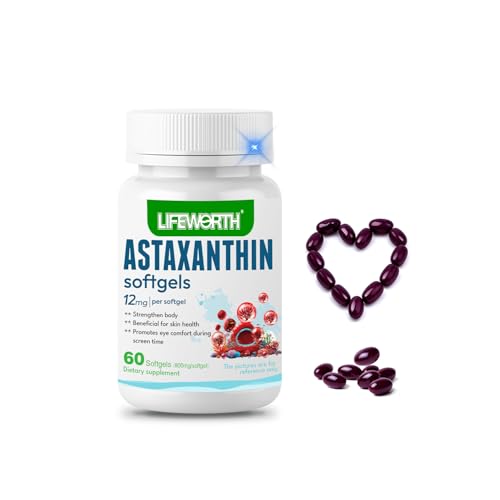
- “12 mg astaxanthin” should mean 12 mg of astaxanthin itself. This is what you want.
- “12 mg astaxanthin esters” or “astaxanthin complex” includes the attached fatty acids. The free astaxanthin equivalent is lower.
- “500 mg Haematococcus pluvialis extract” tells you about the extract, not the active. A 5% oleoresin at 500 mg is 25 mg of astaxanthin; a 1.5% preparation is 7.5 mg. Without the percentage the number is uninformative.
Reputable branded ingredients such as AstaReal and BioAstin state astaxanthin content directly, which is one practical reason to prefer a named ingredient. Our BioAstin versus AstaReal comparison and our third-party testing article go further into verifying what is actually in a bottle.
So Which Should You Buy?
On the current evidence, ester form is not a good reason to choose one natural astaxanthin product over another. The research shows real differences between ester structures, but consumer labels do not disclose the fatty acid profile of their esters, so you cannot act on those differences even if you wanted to.
What you can act on:
- Take it with a fat-containing meal. This matters for esterified astaxanthin specifically, because bile and pancreatic lipase secretion is what cleaves the esters. See our bioavailability article.
- Prefer a label that states milligrams of astaxanthin, not milligrams of extract.
- Store it properly, since esterification is one of the main things protecting the molecule from oxidation. Our storage guide covers heat, light and shelf life.
Natural versus synthetic remains the more consequential decision, and we cover it separately in natural vs synthetic astaxanthin.
Frequently Asked Questions
Is esterified or free astaxanthin better?
Neither is clearly better. Research on 14 astaxanthin esters found that diesters and long-chain saturated esters were the most stable, while monoesters and short-chain esters were the most bioavailable. Stability and absorption favor opposite structures, and consumer labels do not disclose which esters a product contains.
Is natural astaxanthin esterified?
Yes. Astaxanthin from Haematococcus pluvialis is roughly 95% esterified as a mix of monoesters and diesters. Synthetic astaxanthin and astaxanthin from Phaffia yeast are largely free, or unesterified.
Does esterified astaxanthin absorb worse?
Not necessarily, but it does require an extra step. Pancreatic lipases must cleave the fatty acids before astaxanthin can enter mixed micelles and be absorbed. This is part of why taking astaxanthin with dietary fat matters, since fat drives the bile and enzyme secretion that performs the cleavage.
What does milligrams of astaxanthin esters mean on a label?
It includes the weight of the attached fatty acids, so the actual astaxanthin content is lower than the stated number. A label reading milligrams of astaxanthin is the one you want. A label listing only milligrams of Haematococcus pluvialis extract is uninformative without the astaxanthin percentage.
Are liposomal astaxanthin products better absorbed?
An in vitro digestion study found liposomal encapsulation appreciably increased astaxanthin bioaccessibility over free astaxanthin. That was a simulated digestion model rather than a human trial, and one author of the study was employed by an astaxanthin manufacturer, which the paper discloses.
References
- Yang L, et al. Influence of molecular structure of astaxanthin esters on their stability and bioavailability. Food Chem. 2021;343:128497. PMID 33160771
- Qiao X, et al. Synthesis, stability and bioavailability of astaxanthin succinate diester. J Sci Food Agric. 2018;98(8):3182-3189. PMID 29230828
- Pan L, et al. Enhancement of Astaxanthin Bioaccessibility by Encapsulation in Liposomes: An In Vitro Study. Molecules. 2024;29(8):1687. PMID 38675507
These statements have not been evaluated by the Food and Drug Administration. This information is not intended to diagnose, treat, cure, or prevent any disease. Content is for informational purposes only and is not medical advice; consult a qualified healthcare provider before starting any supplement. As an Amazon Associate we earn from qualifying purchases.
