Astaxanthin is a deeply lipophilic keto-carotenoid — it dissolves in fat, not water. That single chemical fact makes the delivery format you swallow far more consequential than it would be for a water-soluble vitamin. Whether you reach for a softgel or a hard capsule can affect how much astaxanthin your body actually absorbs and puts to use.
This article walks through the real differences between these two common formats, explains the chemistry behind lipid-based absorption, and gives you the honest information you need to make a sensible choice.
Key Takeaways
- Astaxanthin is fat-soluble; it requires a lipid environment to be properly absorbed in the small intestine.
- Softgels pre-dissolve astaxanthin in oil, giving them a structural absorption advantage over plain powder-filled hard capsules.
- Hard capsules using advanced lipid-dispersion or self-emulsifying technologies can narrow the gap with softgels but are less common.
- Taking any astaxanthin supplement with a fat-containing meal meaningfully improves absorption regardless of format.
- Look for products that declare milligrams of astaxanthin (not just oleoresin), name the oil carrier, and specify Haematococcus pluvialis as the source.
Why Formulation Matters More for Astaxanthin Than for Most Supplements
Astaxanthin belongs to the xanthophyll family of carotenoids. Its long conjugated polyene chain makes it almost completely insoluble in water. For absorption to occur in the small intestine, the compound must first be incorporated into mixed micelles — tiny fat-and-bile aggregates that shuttle lipid-soluble molecules across the gut wall. Without dietary fat present, or without a lipid vehicle in the supplement itself, a meaningful fraction of the astaxanthin you swallow simply passes through unabsorbed.
This is not a theoretical concern. The same challenge applies to other fat-soluble nutrients such as vitamins D, E, K, and the carotenoid beta-carotene. Pharmaceutical and nutrition researchers have long recognized that presenting a lipophilic active ingredient already dissolved in an oil dramatically improves the conditions for micelle formation compared with presenting the ingredient as a dry powder. The delivery format — softgel versus hard capsule — is one of the main variables that determines whether astaxanthin arrives pre-dissolved in fat or not.
How Softgels Work and What They Offer
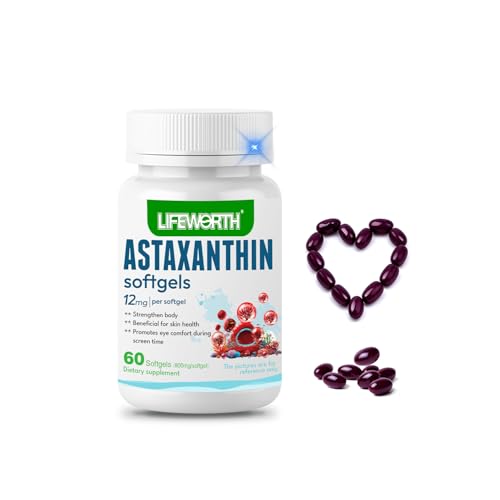
A softgel (soft gelatin or soft-shell capsule) is a one-piece, hermetically sealed shell — typically made from gelatin or a plant-based alternative like modified starch — that encases a liquid or semi-liquid fill. For astaxanthin, that fill is almost always the active ingredient already dissolved in a food-grade oil such as sunflower, safflower, or olive oil. The shell and the oil solution melt together in the stomach, releasing the astaxanthin in a lipid-rich environment.
This pre-dissolved state is the core advantage of a softgel. When astaxanthin arrives in the small intestine already integrated into an oil droplet, the conditions for micelle formation are immediately favorable. The digestive system encounters fewer dissolution steps compared with a scenario where it must first break down a powder and then incorporate that powder into a fatty phase. The result, in practical terms, is that softgel astaxanthin is generally considered the format most likely to deliver high and consistent bioavailability regardless of whether the user takes it with a fatty meal.


Softgels also protect the fill from oxygen exposure. Astaxanthin is susceptible to oxidative degradation; sealing it inside a gelatin shell with minimal headspace preserves potency from manufacture through digestion. Some softgels include antioxidant co-ingredients such as vitamin E (tocopherols) in the oil matrix specifically for this purpose.
Hard Capsules and Powder-Based Formats: Strengths and Limitations
A hard capsule — either gelatin or vegetarian (hypromellose) — consists of two fitted shells that snap together around a dry fill. For astaxanthin, that fill is typically a powder blend: the astaxanthin itself (often as an oleoresin or dried extract) combined with excipients such as maltodextrin, silicon dioxide, or microcrystalline cellulose. Some hard-capsule formulations include a small amount of oil as part of the powder blend to improve lipid contact, but the fill remains a solid or semi-solid rather than a true liquid.
The potential limitation with a plain powder fill is the dissolution step. Before astaxanthin can enter micelles, it must first be released from the powder matrix and then encounter enough lipid to begin dissolving. If the user takes the capsule fasted or with a low-fat meal, that lipid may be scarce, and absorption can fall significantly compared with a softgel or with the same capsule taken alongside dietary fat.
That said, not all hard-capsule astaxanthin products are equivalent. Some manufacturers use advanced powder technologies — lipid-dispersed microencapsulation, emulsification with lecithin, or self-emulsifying systems — that meaningfully narrow the absorption gap with softgels. A hard capsule containing a well-engineered lipid dispersion may outperform a low-quality softgel with a poor oil-to-astaxanthin ratio. Label transparency matters: look for products that specify the oil carrier, the astaxanthin source (ideally Haematococcus pluvialis oleoresin), and the milligram content of astaxanthin per serving rather than total oleoresin weight.
The Role of Co-Ingested Fat
Regardless of format, co-ingesting astaxanthin with a fat-containing meal is the single most reliable way to improve absorption. Dietary fat stimulates bile secretion and pancreatic lipase activity, creating the micellar environment that astaxanthin needs to cross the intestinal wall. A tablespoon of olive oil, a handful of nuts, or a meal containing fish or eggs is enough to make a meaningful difference.
Softgels are more forgiving because the oil in the fill partially compensates for a low-fat meal. Hard capsules with dry powder fills are more sensitive to co-ingested fat. If you rely on a powder-based hard capsule and frequently take it on an empty stomach or with a fat-free meal, you are likely absorbing less astaxanthin than the label dose suggests. The practical guidance is the same for either format — take with food — but the penalty for ignoring that advice is steeper with a dry hard capsule.

Choosing Between Formats: What to Actually Look For
For most people seeking consistent absorption with minimal dietary planning, a softgel containing astaxanthin dissolved in a food-grade oil is the more reliable choice. The pre-dissolved lipid environment gives softgels a structural advantage for a fat-soluble compound, and their sealed construction protects oxidation-sensitive astaxanthin during storage.

Hard capsules are not automatically inferior. If a hard-capsule product uses a self-emulsifying lipid system or a phospholipid-dispersed form of astaxanthin, it may perform comparably to a softgel for users who consistently take the supplement with a fatty meal. Vegans and vegetarians who avoid gelatin-based softgels may prefer hard-shell capsules made from hypromellose; plant-based softgel shells are available but less common, so verifying the shell material before purchasing is worthwhile.
Beyond format, check for these quality indicators on any astaxanthin product: a declared source of Haematococcus pluvialis, a clearly stated milligrams-of-astaxanthin figure (not just total oleoresin), a named oil carrier in softgels, third-party testing or a certificate of analysis, and a manufacture date or expiration date. Astaxanthin is relatively stable in sealed softgels but degrades faster in products with excessive headspace or inadequate antioxidant protection in the oil matrix.
Safety, Dosing, and Who Should Be Cautious
Natural astaxanthin from Haematococcus pluvialis holds Generally Recognized As Safe (GRAS) status in the United States and has been assessed as safe by regulatory agencies in the European Union and Japan. Human trials using doses up to 12 mg per day for periods of up to 12 weeks have not identified serious adverse effects in healthy adults[1][2]. At very high intakes above approximately 20 mg per day, some individuals develop a reversible yellow-orange tint to the skin (carotenodermia) — the same benign effect seen with large doses of beta-carotene — which resolves when intake is reduced.
People taking blood-thinning medications should note that astaxanthin has demonstrated mild antiplatelet activity in some preliminary research[3]; consulting a physician before use is appropriate in that context. Evidence in pregnancy and breastfeeding is insufficient to establish safety, so supplementation is not recommended during those periods. The informational content above does not constitute medical advice, and individuals with health conditions or who take medications should discuss any new supplement with a qualified healthcare provider.
🛒 Where to Buy Astaxanthin
- Nutrex Hawaii BioAstin Hawaiian AstaxanthinLab-tested / studied
softgels, 12 mg per softgel, 90 count — Hawaiian-grown Haematococcus pluvialis, sold as the High Potency 90-softgel bottle - Pure Synergy SuperPure Astaxanthin Extract
capsules, 60 count — Sold as an astaxanthin extract in a capsule rather than a softgel; the listing does not state a mg per capsule, so check the label for the dose before comparing it with the 12 mg bottles here - Naturalis New Zealand Astaxanthin
softgels, 12 mg per softgel, 120 count — New Zealand-grown rather than Hawaiian, and the largest bottle on this list at 120 softgels - NOW Foods Astaxanthin
softgels, 4 mg per softgel — The entry-level 4 mg dose, built on the Zanthin astaxanthin ingredient; a lower starting point than the 12 mg bottles above
As an Amazon Associate we earn from qualifying purchases. Astaxanthin products vary mainly by dose and by source, with 4mg and 12mg the common strengths and most of them derived from Haematococcus pluvialis algae, so check the label for the astaxanthin content per serving and prefer products that publish third-party testing.
A Note on the Evidence
The evidence base for astaxanthin in humans remains relatively limited in scale and duration; most trials are short-term and involve small sample sizes, so long-term effects are not fully characterized[4][5][6]. Supplementation is not recommended during pregnancy or breastfeeding due to insufficient safety data, and individuals taking anticoagulant medications or managing chronic health conditions should consult a healthcare provider before use.

Frequently Asked Questions
Are softgels always better than capsules for astaxanthin?
Softgels have a built-in absorption advantage because the astaxanthin is already dissolved in oil before you swallow it. However, hard capsules that use phospholipid dispersions or self-emulsifying lipid systems can perform comparably when taken with food. The quality of the formulation matters as much as the format itself.
Can I take astaxanthin capsules on an empty stomach?
It is not ideal, particularly with powder-filled hard capsules. Astaxanthin needs dietary fat to form the micelles required for absorption. Taking it fasted may reduce how much you actually absorb. Softgels are more forgiving because the oil fill partially substitutes for dietary fat, but taking either format with a meal is still the better practice.
What oil is best inside an astaxanthin softgel?
Any food-grade oil supports dissolution, including sunflower, safflower, and olive oil. More important than the specific oil type is the ratio of oil to astaxanthin — enough oil to fully dissolve the dose — and the presence of a stabilizing antioxidant such as mixed tocopherols to protect both the oil and the astaxanthin from oxidation during shelf life.
Is plant-based (vegan) astaxanthin softgel available?
Yes, but less commonly than gelatin softgels. Plant-based softgel shells made from modified starch or carrageenan exist and are offered by some manufacturers. Vegans should verify the shell material on the label or with the manufacturer, since standard softgels use bovine or porcine gelatin. Hypromellose hard capsules are a more widely available vegan alternative.
What dose of astaxanthin is considered reasonable?
Human trials examining eye fatigue, skin health, and exercise recovery have typically used doses between 4 mg and 12 mg per day. Natural astaxanthin from Haematococcus pluvialis has shown no serious adverse effects at up to 12 mg per day for 12 weeks in healthy adults. Higher doses above 20 mg per day have been associated with reversible skin discoloration (carotenodermia) in some individuals. This is informational, not a clinical recommendation.
How should astaxanthin supplements be stored to preserve potency?
Store in a cool, dry location away from direct sunlight. Astaxanthin is sensitive to oxidation and UV light; heat and light exposure accelerate degradation. Softgels in opaque, tightly sealed bottles with adequate tocopherol antioxidants in the oil matrix are well protected. Once opened, keep the bottle tightly closed and use within the period indicated on the label.
References
- Brendler T, Williamson EM. Astaxanthin: How much is too much? A safety review. Phytother Res. 2019;33(12):3090-3111. PMID 31788888
- Spiller GA, Dewell A. Safety of an astaxanthin-rich Haematococcus pluvialis algal extract: a randomized clinical trial. J Med Food. 2003;6(1):51-56. PMID 12804020
- Zhang L, et al. Astaxanthin suppresses thrombosis by inhibiting both platelet activation and blood coagulation. Br J Pharmacol. 2026;183(11):2890-2912. Preclinical (rats and mice in vivo; human platelets in vitro). PMID 41702374
- Ito N, Seki S, Ueda F. The protective role of astaxanthin for UV-induced skin deterioration in healthy people: a randomized, double-blind, placebo-controlled trial. Nutrients. 2018;10(7). 4 mg/day, n=23. PMID 29941810
- Sekikawa T, Kizawa Y, Li Y, Miura N. Effects of diet containing astaxanthin on visual function in healthy individuals: a randomized, double-blind, placebo-controlled, parallel study. J Clin Biochem Nutr. 2023;72(1):74-81. 9 mg/day, n=60. PMID 36777084
- Liu S, et al. The effects of astaxanthin supplementation on exercise recovery biomarkers and exercise performance: a systematic review and meta-analysis. Nutrients. 2026;18(10). 24 RCTs. PMID 42197030
These statements have not been evaluated by the Food and Drug Administration. This information is not intended to diagnose, treat, cure, or prevent any disease. Content is for informational purposes only and is not medical advice; consult a qualified healthcare provider before starting any supplement. As an Amazon Associate we earn from qualifying purchases.
