In the landscape of health optimization, where new supplements emerge with dizzying frequency, discerning genuine efficacy from marketing hype is paramount. For those meticulously curating their longevity stack, enhancing athletic recovery, or safeguarding their vision against digital strain, a critical question arises: can a single marine carotenoid truly offer a multifaceted advantage? As we navigate the complexities of cellular health and performance, understanding the precise, evidence-backed roles of compounds like astaxanthin becomes not just beneficial, but essential.
This article explores the current scientific understanding of astaxanthin, a vibrant red pigment derived primarily from the microalga Haematococcus pluvialis. We will dissect the human clinical trials, examine proposed mechanisms, and provide an honest appraisal of its potential benefits, helping you integrate this potent antioxidant into your regimen with informed confidence.
As an Amazon Associate, AstaxanthinHub earns from qualifying purchases. This helps support our research and content creation.
Astaxanthin’s Unique Antioxidant Profile and Mechanism
Astaxanthin sets itself apart from many common antioxidants due to its distinct molecular structure. Unlike beta-carotene or vitamin C, astaxanthin possesses both hydrophilic and lipophilic properties, allowing it to span the entire cell membrane. This unique characteristic enables it to neutralize free radicals both on the inner and outer surfaces of the cell membrane, offering comprehensive protection.
Research indicates astaxanthin’s antioxidant capacity is significantly greater than other carotenoids. Studies suggest it can be 6,000 times stronger than vitamin C, 800 times stronger than CoQ10, and 550 times stronger than green tea catechins in singlet oxygen quenching. Those ratios come from laboratory singlet-oxygen quenching assays in test tubes, not from measurements in people, and they should not be read as meaning astaxanthin is thousands of times more effective in the body.
Beyond direct free radical neutralization, astaxanthin also modulates gene expression related to oxidative stress and inflammation. It can upregulate endogenous antioxidant enzymes, such as superoxide dismutase (SOD) and catalase, further bolstering the body’s natural defense systems. This dual action provides a more robust protective effect than simple scavenging alone.
Enhancing Endurance and Recovery for Athletes
For endurance athletes and those pushing their physical limits, oxidative stress and inflammation are inevitable byproducts of intense exercise. Astaxanthin has garnered attention for its potential to improve athletic performance and accelerate recovery. The proposed mechanism involves reducing muscle damage and supporting mitochondrial function.
Several human clinical trials have investigated astaxanthin’s impact on exercise. A 2011 trial in the International Journal of Sports Medicine randomised 21 competitive cyclists to 4 mg/day of astaxanthin or placebo for 28 days; of the 14 who completed it, the astaxanthin group improved their 20 km time trial by 121 seconds (95% CI -185 to -53) while the placebo group did not change meaningfully (-19 seconds)[1]. That is a real but small trial – seven riders per arm – so it points to a possible modest ergogenic effect rather than establishing one.
Regarding recovery, a double-blind, placebo-controlled trial in 32 elite young male soccer players found that after 90 days of astaxanthin, post-exercise creatine kinase and AST were significantly lower than placebo[2], and a second trial in 40 trained male soccer players taking 4 mg/day for 90 days reported significantly reduced plasma muscle enzymes together with a blunted rise in neutrophil count and hs-CRP[3]. Both measured blood markers of muscle damage, not muscle soreness or how quickly athletes felt recovered, so the practical training benefit is still unproven. Larger and more diverse athletic populations are needed to solidify these findings.

Skin Health and Natural Photoprotection
The skin, our largest organ, is constantly exposed to environmental aggressors, particularly UV radiation, which induces oxidative stress and contributes to photodamage and premature aging. Astaxanthin’s powerful antioxidant and anti-inflammatory properties make it a compelling candidate for supporting skin health from within.
Human studies indicate astaxanthin can enhance the skin’s natural defenses against UV radiation. In a randomised, double-blind, placebo-controlled trial, 23 healthy participants took 4 mg/day of astaxanthin for nine weeks and showed an increased minimal erythema dose compared with placebo – meaning it took more UV exposure to redden the skin – along with less UV-induced loss of skin moisture in the irradiated area[4]. That is a genuine internal photoprotective signal from a small study, and it should never replace topical sunscreen.
Beyond photoprotection, astaxanthin may contribute to overall skin appearance. A 2012 paper reported two separate studies. The first was an open-label, uncontrolled 8-week study in 30 healthy women combining 6 mg/day orally with topical astaxanthin, which recorded improvements in crow’s-feet wrinkles, age spot size and elasticity. The second was a randomised, double-blind, placebo-controlled 6-week study in 36 healthy men taking 6 mg/day, which improved crow’s-feet wrinkles, elasticity and transepidermal water loss[5]. The stronger design is the men’s arm; the women’s results have no placebo comparison, so read them cautiously. The proposed explanation is astaxanthin’s anti-inflammatory activity and protection of collagen and elastin from oxidative degradation.
Mitigating Eye Strain and Supporting Visual Acuity
In our increasingly digital world, chronic eye strain, or asthenopia, is a common complaint among remote workers and gamers. Astaxanthin’s ability to cross the blood-retinal barrier, a unique feature among carotenoids, positions it as a potential aid for ocular health. It can reach the retina and ciliary body, where it can exert its protective effects.
Research suggests astaxanthin can alleviate symptoms associated with eye fatigue. The best-indexed astaxanthin-only trial randomised 60 healthy adults to 9 mg/day or placebo for six weeks and measured visual function around screen work. The benefit was age-dependent: participants aged 40 and over were significantly protected against the drop in corrected visual acuity that follows screen work, while under-40s showed no significant difference, and neither functional visual acuity nor pupil constriction rate differed overall[6]. The proposed mechanism involves reduced oxidative stress and the age-related loss of ciliary muscle strength. Note that several widely quoted eye-strain figures come from combination products or from journals not indexed in PubMed, so they are much harder to check than this one.
Further studies have explored its impact on visual acuity and depth perception. While the evidence for significant improvements in baseline visual acuity remains emerging, some studies indicate astaxanthin might support visual function under challenging conditions, such as prolonged screen time. The consistent theme is its protective role against oxidative stress in the delicate structures of the eye.
Cardiovascular Health Support
Oxidative stress and inflammation are central to the development and progression of cardiovascular diseases. Astaxanthin’s potent antioxidant and anti-inflammatory properties suggest a role in supporting heart health. Its ability to integrate into cell membranes, including those of vascular endothelial cells, is particularly relevant.
Human clinical trials have investigated astaxanthin’s effects on various cardiovascular markers. A 2010 trial in Atherosclerosis randomised 61 non-obese adults with fasting triglycerides of 120-200 mg/dl to 0, 6, 12 or 18 mg/day of astaxanthin for 12 weeks. Triglycerides fell and HDL-cholesterol rose, but not in a straightforward dose-dependent way: only the 12 and 18 mg doses significantly reduced triglycerides, and only the 6 and 12 mg doses significantly raised HDL. LDL-cholesterol and BMI were unchanged at every dose, and serum adiponectin rose at 12 and 18 mg[7].
Astaxanthin is often also credited with improving blood flow and arterial stiffness. We could not find a published human trial of astaxanthin on its own that establishes this – the endothelial-function research we could locate tests astaxanthin inside multi-ingredient formulas, which cannot show what astaxanthin contributed by itself. Treat the blood-flow claim as unproven in humans. Even the lipid findings above warrant larger, longer trials before astaxanthin is given any role in primary cardiovascular disease prevention.

Astaxanthin Dosage and Safety
The majority of human clinical trials demonstrating benefits have utilized dosages ranging from 4 mg to 12 mg per day. For general antioxidant support and initial benefits, 4-6 mg daily is a common starting point. For more targeted benefits, such as athletic performance, skin health, or eye strain, dosages of 8-12 mg per day have been frequently studied and shown efficacy.
Astaxanthin is considered very safe with minimal reported side effects. The most common “side effect” at higher doses is a harmless reddish-orange tint to the skin, similar to consuming large amounts of carrots, due to its pigment. This typically reverses upon discontinuation. Always consult with a healthcare professional before starting any new supplement, especially if you have underlying health conditions or are taking medications.
Choosing a Quality Astaxanthin Supplement
When selecting an astaxanthin supplement, several factors contribute to quality and efficacy. The source of astaxanthin is crucial; look for supplements derived from Haematococcus pluvialis, which is the most common and well-researched natural source. Synthetic astaxanthin exists but lacks the same research backing and bioavailability.
Bioavailability is also key. Astaxanthin is fat-soluble, so it is often formulated in softgel capsules with healthy oils, such as olive oil or sunflower oil, to enhance absorption. Check for third-party testing certifications to ensure purity and potency. These certifications verify that the product contains the stated amount of astaxanthin and is free from contaminants.
| Feature | Natural Astaxanthin (Haematococcus pluvialis) | Synthetic Astaxanthin |
|---|---|---|
| Source | Microalgae | Petrochemicals (often) |
| Molecular Structure | Primarily 3S, 3’S isomer | Mix of isomers (e.g., 3R, 3’S; 3R, 3’R) |
| Bioactivity | Higher, well-researched in humans | Lower, less human research |
| Purity/Contaminants | Generally high, if from reputable sources | Potential for residual solvents/impurities |
| Cost | Typically higher | Typically lower |
Where to Find Quality Astaxanthin
For those looking to integrate astaxanthin into their regimen, a variety of reputable brands offer high-quality supplements. When searching online, consider these product types:
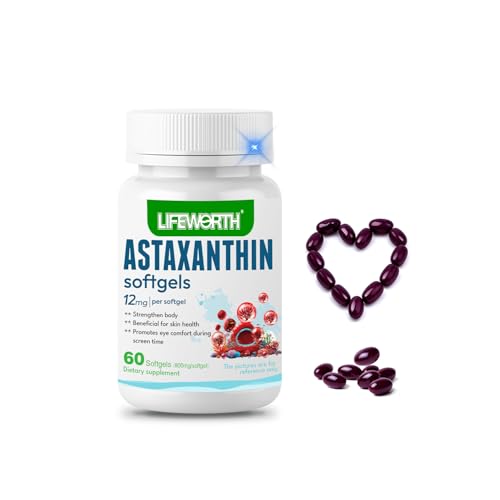
Look for astaxanthin softgels from haematococcus pluvialis for optimal absorption and natural sourcing.
Consider organic astaxanthin supplements vegan options if you adhere to a plant-based diet.
For higher doses, search for astaxanthin 12mg per serving to meet specific therapeutic needs.
Conclusion
Astaxanthin, derived primarily from Haematococcus pluvialis, is a marine carotenoid with a real but still early human evidence base. The strongest signals are in skin photoprotection and blood lipids, where randomised placebo-controlled trials exist; athletic recovery and screen-related visual strain have supportive trials that are small, short, or effective only in some age groups; and the blood-flow claims remain unproven for astaxanthin on its own. Nearly every trial cited on this page enrolled fewer than 70 people. It is not a panacea, and it is not settled science – but for a well-tolerated supplement, the published human research is better than it is for most of the shelf.
Frequently Asked Questions (FAQ)
What is astaxanthin and where does it come from?
Astaxanthin is a naturally occurring carotenoid pigment that gives salmon, shrimp, and flamingos their pinkish-red color. The primary commercial source is the microalga Haematococcus pluvialis, which produces astaxanthin when exposed to stress, such as intense sunlight or nutrient deficiency.
How long does it take to see benefits from astaxanthin?
The time frame for experiencing benefits can vary depending on the individual and the specific health goal. Some studies show noticeable improvements in areas like eye strain or skin elasticity within 2-4 weeks, while benefits for athletic performance or cardiovascular markers may take 4-12 weeks of consistent daily supplementation.
Can astaxanthin replace sunscreen?
No, astaxanthin cannot replace topical sunscreen. While it provides internal photoprotection by enhancing the skin’s natural defenses against UV radiation, it does not block UV rays in the same way a physical or chemical sunscreen does. It should be used as a complementary strategy to traditional sun protection methods.
Are there any side effects of taking astaxanthin?
Astaxanthin is generally well-tolerated with a strong safety profile. The most common “side effect,” particularly at higher doses, is a harmless reddish-orange tint to the skin, similar to what can occur from excessive carrot consumption. This effect is temporary and reversible upon discontinuation.
Is astaxanthin safe for long-term use?
Yes, numerous studies have investigated the long-term safety of astaxanthin, with consistent findings of no significant adverse effects even with prolonged use. It is considered safe for continuous daily supplementation within recommended dosages.
What is the optimal dosage of astaxanthin?
The optimal dosage can vary based on individual needs and desired benefits. Most human clinical trials showing efficacy use dosages between 4 mg and 12 mg per day. A common starting point for general health is 4-6 mg, while 8-12 mg may be used for more targeted benefits like athletic performance or significant eye strain. Always follow product label instructions or consult a healthcare professional.
References
- Effect of astaxanthin on cycling time trial performance. Int J Sports Med (2011). PMID 21984399
- Effect of astaxanthin supplementation on muscle damage and oxidative stress markers in elite young soccer players. J Sports Med Phys Fitness (2012). PMID 22828460
- Effect of Astaxanthin Supplementation on Salivary IgA, Oxidative Stress, and Inflammation in Young Soccer Players. Evid Based Complement Alternat Med (2015). PMID 26167194
- The Protective Role of Astaxanthin for UV-Induced Skin Deterioration in Healthy People – A Randomized, Double-Blind, Placebo-Controlled Trial. Nutrients (2018). PMID 29941810
- Cosmetic benefits of astaxanthin on humans subjects. Acta Biochim Pol (2012). PMID 22428137
- Effects of diet containing astaxanthin on visual function in healthy individuals: a randomized, double-blind, placebo-controlled, parallel study. J Clin Biochem Nutr (2023). PMID 36777084
- Administration of natural astaxanthin increases serum HDL-cholesterol and adiponectin in subjects with mild hyperlipidemia. Atherosclerosis (2010). PMID 19892350
These statements have not been evaluated by the FDA. This product is not intended to diagnose, treat, cure, or prevent any disease.
These statements have not been evaluated by the Food and Drug Administration. This information is not intended to diagnose, treat, cure, or prevent any disease. Content is for informational purposes only and is not medical advice; consult a qualified healthcare provider before starting any supplement. As an Amazon Associate we earn from qualifying purchases.
