Astaxanthin is a red-orange keto-carotenoid produced primarily by the microalgae Haematococcus pluvialis. Unlike most antioxidants, it is fat-soluble and uniquely able to span both the lipid and aqueous layers of cell membranes, which researchers believe allows it to quench free radicals and singlet oxygen in locations other antioxidants cannot easily reach. Early human trials have investigated its effects on eye fatigue, UV-related skin changes, exercise recovery, and inflammatory markers, though the overall body of evidence remains limited in scale and duration.
If you are shopping for an astaxanthin supplement in 2025, the market can be confusing. Labels promise dramatic outcomes, dosages vary widely, and the difference between natural and synthetic forms matters more here than with most nutrients. This guide explains what the research actually supports, what quality signals to look for on a label, and what honest caveats apply—so you can make an informed decision rather than a marketing-driven one.
Key Takeaways
- Always choose natural astaxanthin from Haematococcus pluvialis, not synthetic forms; look for named branded extracts with published specifications.
- The researched dose range is 4–12 mg per day; doses above 20 mg per day may cause reversible skin discoloration and are not supported by additional benefit data.
- Take astaxanthin as an oil-based softgel with a meal containing fat to support absorption.
- Seek products with third-party COAs or certifications (NSF, USP, Informed Sport) to verify label accuracy and purity.
- Human evidence is real but limited—astaxanthin is not a treatment for disease, and meaningful results from supplementation, if any, are typically subtle and long-term.
Natural vs. Synthetic Astaxanthin: Why the Source Matters
Not all astaxanthin is the same. Synthetic astaxanthin is manufactured petrochemically and is currently approved only for use in animal feed and aquaculture—it is not permitted as a human dietary supplement in most markets. Natural astaxanthin derived from Haematococcus pluvialis microalgae holds GRAS (Generally Recognized As Safe) status in the United States and is the form used in human clinical trials.
The distinction matters structurally as well. Natural astaxanthin from H. pluvialis exists predominantly in the 3S,3’S stereoisomeric configuration and is largely esterified, while synthetic versions contain a racemic mixture of stereoisomers. Some research suggests the natural esterified form may have superior bioavailability and antioxidant capacity compared to the free synthetic form, though direct head-to-head human bioavailability studies remain limited. When evaluating a supplement, the label should explicitly state ‘from Haematococcus pluvialis’ or reference a trademarked natural extract such as AstaReal or Zanthin—these are produced under controlled fermentation conditions with published quality data.
What the Research Actually Shows (and What It Does Not)
Human randomized controlled trials on astaxanthin are genuine but modest in scale. Studies have examined doses generally ranging from 4 mg to 12 mg per day over periods of 4 to 12 weeks.[3] Investigated outcomes include subjective eye fatigue in screen workers, markers of UV-induced skin photoaging, exercise-induced muscle damage and inflammation, and select inflammatory biomarkers. Some trials have shown statistically meaningful effects; others have shown trends that did not reach significance.
It is important to be direct: astaxanthin is not a treatment for any disease, and the existing evidence does not support strong conclusions about long-term health outcomes in humans. Most trials are small, short-term, and funded at least in part by supplement manufacturers—a legitimate source of potential bias. The antioxidant mechanism is well-described biochemically, but the translation from cell-culture and animal findings to clinically meaningful human outcomes is still being established. Any supplement that claims to ‘cure,’ ‘treat,’ or ‘prevent’ a condition is overstating the science.


Dosage and Safety: What the Evidence Supports
Natural astaxanthin from H. pluvialis has been studied in human trials at doses up to 12 mg per day for 12 weeks without serious adverse effects reported.[1][2] The most commonly studied effective dose range in research is 4 mg to 12 mg daily. Many commercially available products contain 4 mg or 6 mg per softgel, which falls within the researched range.
At very high doses—generally above 20 mg per day—a reversible yellowing or orange tinting of the skin known as carotenodermia has been reported. This is cosmetic and resolves when intake is reduced, but it underscores the principle that more is not automatically better. Evidence on safety during pregnancy and breastfeeding is insufficient, and supplementation is not recommended for these populations. People taking immunosuppressant medications or with hormone-sensitive conditions should consult a physician before use, as some in vitro research suggests possible immunomodulatory or hormonal interactions that have not been fully characterized in humans.
Bioavailability: Why Delivery Format Matters
Astaxanthin is highly fat-soluble. Like other carotenoids, it requires dietary fat for meaningful absorption in the gut.[4] This has practical implications for supplement format: softgels containing astaxanthin suspended in an oil base (commonly sunflower or safflower oil) are the standard delivery method in clinical research and are generally preferable to dry-powder capsules taken without food.
If you choose a softgel product, taking it with a meal that contains some fat—even a small amount—is likely to improve absorption. Dry capsule forms are not inherently useless, but published bioavailability data has primarily been generated using oil-based delivery.[4] Some manufacturers have developed phospholipid-based or nanoemulsion delivery systems claiming enhanced absorption, though independent comparative data on these formats in humans is limited. Sticking to an oil-suspended softgel with meals is the evidence-consistent approach.
Quality Markers to Look For on Any Astaxanthin Label
Because the supplement industry is not uniformly regulated, third-party quality verification is one of the most meaningful signals available to consumers. Look for products that carry certificates of analysis (COAs) from independent laboratories verifying the stated astaxanthin content. Third-party certifications from organizations such as NSF International, USP, or Informed Sport add an additional layer of assurance that the product contains what it claims and is free from common contaminants.
The label should clearly state: the source (Haematococcus pluvialis), the exact amount of astaxanthin per serving in milligrams, and whether that figure refers to the extract weight or the actual astaxanthin content—these can differ significantly if an extract is only a small percentage astaxanthin by weight. Proprietary branded extracts like AstaReal (from Fuji Chemical), Zanthin (from Valensa), or BioAstin (from Nutrex Hawaii) have published specifications and are produced under more auditable conditions than generic bulk material sourced without traceability.


Avoid products with vague language such as ‘proprietary blend’ that obscures the actual astaxanthin dose, or products where the only listed ingredient is a high-milligram ‘astaxanthin complex’ without specifying how much active astaxanthin is actually present. Price alone is not a reliable quality indicator in either direction.
Honest Expectations: Setting Realistic Goals
Astaxanthin is not a supplement with dramatic, fast-acting effects that most people will notice clearly. The outcomes studied in trials—modest reductions in eye strain scores, small improvements in skin elasticity measures[5], attenuated markers of post-exercise inflammation—are meaningful in aggregate but subtle in individual experience. If you begin taking astaxanthin expecting to feel a clear difference within days, you are likely to be disappointed.
The more reasonable framing is as a long-term, low-risk nutritional support strategy for people who eat little marine seafood (the primary dietary source of astaxanthin) and who are interested in the antioxidant and anti-inflammatory mechanisms the research describes. It is not a substitute for diet, exercise, sleep, or medical care. If you have a specific health concern—particularly involving eyes, skin, or exercise recovery—discuss supplementation with a healthcare provider who can contextualize it within your full health picture.
🛒 Where to Buy Astaxanthin
- Nutrex Hawaii BioAstin Hawaiian AstaxanthinLab-tested / studied
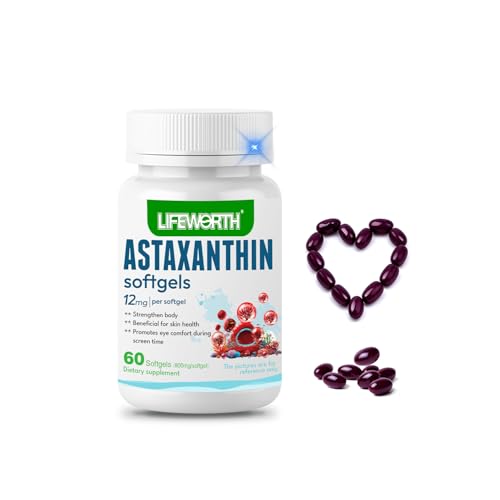
softgels, 12 mg per softgel, 90 count — Hawaiian-grown Haematococcus pluvialis, sold as the High Potency 90-softgel bottle - Pure Synergy SuperPure Astaxanthin Extract
capsules, 60 count — Sold as an astaxanthin extract in a capsule rather than a softgel; the listing does not state a mg per capsule, so check the label for the dose before comparing it with the 12 mg bottles here - Naturalis New Zealand Astaxanthin
softgels, 12 mg per softgel, 120 count — New Zealand-grown rather than Hawaiian, and the largest bottle on this list at 120 softgels - NOW Foods Astaxanthin
softgels, 4 mg per softgel — The entry-level 4 mg dose, built on the Zanthin astaxanthin ingredient; a lower starting point than the 12 mg bottles above
As an Amazon Associate we earn from qualifying purchases. Astaxanthin products vary mainly by dose and by source, with 4mg and 12mg the common strengths and most of them derived from Haematococcus pluvialis algae, so check the label for the astaxanthin content per serving and prefer products that publish third-party testing.
A Note on the Evidence
The human evidence base for astaxanthin is real but modest: most trials are small, short-term, and have potential for commercial bias. This article is informational and does not constitute medical advice. Individuals who are pregnant, breastfeeding, taking prescription medications, or managing a chronic health condition should consult a qualified healthcare provider before starting any new supplement.
Frequently Asked Questions
What is the best dose of astaxanthin for most adults?
Human clinical trials have generally used doses between 4 mg and 12 mg per day. Most research on eye fatigue, skin, and exercise outcomes falls within this range. There is no established evidence that doses higher than 12 mg provide greater benefit, and doses above 20 mg per day have been associated with reversible skin discoloration. Starting at 4–6 mg daily with a fatty meal is a reasonable approach consistent with the research.
Is natural astaxanthin better than synthetic?
For human supplementation, natural astaxanthin from Haematococcus pluvialis is the only form with GRAS status and the form used in human trials. Synthetic astaxanthin is approved only for animal feed in most markets. Structurally, natural astaxanthin has a predominantly single stereoisomeric configuration and is typically esterified, which may support better bioavailability compared to the racemic synthetic mixture, though direct comparative human data is limited.
Can I take astaxanthin if I am pregnant or breastfeeding?
No. Evidence on the safety of astaxanthin supplementation during pregnancy and breastfeeding is insufficient to support a recommendation. Until more data is available, supplementation is not advised for these populations. Dietary astaxanthin from seafood in normal food amounts is a different matter, but concentrated supplement doses should be avoided.
How long does it take for astaxanthin to work?
Trials investigating astaxanthin effects have generally run for 4 to 12 weeks before measuring outcomes. Any benefits, where observed, appear to develop gradually over weeks rather than days. This is consistent with how carotenoids accumulate in tissues over time. Expecting rapid or dramatic subjective changes is not supported by the available evidence.
Does the form of the supplement—softgel versus capsule—matter?
It can. Astaxanthin is fat-soluble, and absorption depends on the presence of dietary fat. Published clinical research has predominantly used oil-based softgel formulations. Dry powder capsules taken without food may absorb less efficiently. Taking any form of astaxanthin alongside a meal that contains fat is advisable regardless of delivery format.
Are there any drug interactions I should know about?
Formal drug interaction studies in humans are limited. Some preclinical research suggests possible immunomodulatory effects, which could theoretically interact with immunosuppressant medications. There is also limited in vitro research suggesting potential effects on hormone pathways. If you take prescription medications—particularly immunosuppressants, blood thinners, or hormone-related therapies—consult your physician before adding astaxanthin supplementation.
References
- Urakaze M, et al. The Beneficial Effects of Astaxanthin on Glucose Metabolism and Modified Low-Density Lipoprotein in Healthy Volunteers and Subjects with Prediabetes. Nutrients. 2021;13(12):4381. PMID 34959932
- Spiller GA, Dewell A. Safety of an astaxanthin-rich Haematococcus pluvialis algal extract: a randomized clinical trial. J Med Food. 2003;6(1):51-56. PMID 12804020
- Yoshida H, et al. Administration of natural astaxanthin increases serum HDL-cholesterol and adiponectin in subjects with mild hyperlipidemia. Atherosclerosis. 2010;209(2):520-523. PMID 19892350
- Mercke Odeberg J, et al. Oral bioavailability of the antioxidant astaxanthin in humans is enhanced by incorporation of lipid based formulations. Eur J Pharm Sci. 2003;19(4):299-304. PMID 12885395
- Zhou X, et al. Systematic Review and Meta-Analysis on the Effects of Astaxanthin on Human Skin Ageing. Nutrients. 2021;13(9):2917. PMID 34578794
These statements have not been evaluated by the Food and Drug Administration. This information is not intended to diagnose, treat, cure, or prevent any disease. Content is for informational purposes only and is not medical advice; consult a qualified healthcare provider before starting any supplement. As an Amazon Associate we earn from qualifying purchases.
