The standard advice for buying any supplement is “look for third-party testing.” It is good advice. It is also, for astaxanthin specifically, much harder to follow than the advice implies, because the two best-known American certification programs have almost no astaxanthin products in them.
That is not a reason to give up on quality. It is a reason to know which marks are real, which marks look official but certify something entirely different, and which independent organization has actually put astaxanthin softgels through a lab.
Key Takeaways
- NSF/ANSI 173 is the only American National Standard for dietary supplement content, and it checks label accuracy, toxicology and contaminants in NSF’s own accredited labs [1][2].
- USP Verified checks identity, potency, contaminants and whether the capsule actually breaks down in the body, plus a GMP facility audit [3]. But the USP Verified roster runs to roughly 160 formulas across 16 brands, and none of them is an astaxanthin brand [4].
- Searching the NSF Certified for Sport directory for astaxanthin returns only multi-ingredient greens powders, antioxidant blends and multivitamins — no standalone astaxanthin supplement [5].
- There is no standalone astaxanthin monograph in USP–NF. Astaxanthin appears there as an assayed component of the Krill Oil monograph, whose astaxanthin limit was lowered from NLT 0.01% to NLT 0.005% [6].
- ConsumerLab is the one organization that has actually tested standalone astaxanthin products. Its 2026 review found that every popular brand it selected contained its listed amount or more — but that cost per milligram varied by more than twofold with no clear justification [7].
- Watch for mark-swapping: an NSF Certified Gluten-Free logo verifies only that a product is under the FDA’s 20 ppm gluten limit [8]. It says nothing about how much astaxanthin is in the bottle.
What the Two Real Certification Programs Actually Check
Before asking whether astaxanthin products carry these marks, it helps to know what the marks mean, because they are not interchangeable and neither one means what most shoppers assume.
NSF/ANSI 173 is described by NSF as the only American National Standard establishing requirements for the ingredients in dietary and nutritional supplements [2]. Certification has three components: a label claim review to confirm what is on the label is in the bottle, a toxicology review of intentionally added ingredients, and a contaminant review for undeclared ingredients and unacceptable impurity levels [2].
The testing itself is more specific than the summary suggests. NSF evaluates supplement composition to verify the supplement facts panel reflects the product’s contents, and screens for aerobic microorganisms, yeast and molds, and Enterobacteriaceae, and specifically for Salmonella spp., Escherichia coli and Staphylococcus aureus. It analyzes for mycotoxins, and assesses products containing botanical materials for pesticides [1]. NSF also states that it conducts testing in its own accredited laboratories rather than simply evaluating manufacturer-submitted data, and that it performs annual audits and periodic retesting rather than a single one-time pass [2].
NSF Certified for Sport is a separate, additional layer on top of NSF/ANSI 173, intended for products used by athletes. It screens for 280 substances banned by major athletic organizations, plus undeclared stimulants, narcotics, steroids, diuretics, beta-2-agonists and masking agents, and is recognized by the NFL, MLB, PGA, LPGA and the Canadian Centre for Ethics in Sport [2]. It is a banned-substance program layered on a content program. It is not a claim that the ingredient works.
USP Verified covers overlapping but not identical ground. The USP Verified Mark indicates a product contains the ingredients listed on the label in the declared potency and amounts, does not contain harmful levels of specified contaminants such as lead, mercury, microbes or pesticides, and will break down and release into the body within a specified time [3]. That last item, dissolution and disintegration performance, is the one NSF/ANSI 173 does not emphasize, and it matters for a fat-soluble compound delivered in a softgel. USP verification also involves laboratory testing against USP–NF standards or appropriate manufacturer specifications, alongside Good Manufacturing Practice requirements [3].
Now the Awkward Part: Almost No Astaxanthin Product Carries Either Mark
Both programs are voluntary and manufacturer-funded. A brand applies, pays, and submits to auditing and retesting. Most astaxanthin brands have not.
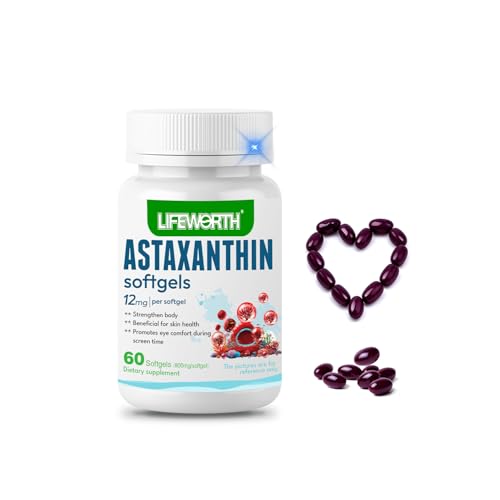
The USP Verified Products directory currently lists more than 160 dietary supplement formulas [4]. The brands represented are Culturelle, Estroven, Flomentum, Kirkland Signature, L’il Critters, Member’s Mark, Move Free, Natrol, Nature Made, Nature’s Bounty, Nature’s Lab, Pure Alaska Omega, Ritual, YouTheory, trunature and vitafusion [4]. That is a list of mass-market multivitamin, joint, omega-3 and probiotic brands. It contains no dedicated astaxanthin brand, and the directory returns no astaxanthin results.
The NSF Certified for Sport directory does return results for an astaxanthin keyword search, but every one of them is a multi-ingredient formula where astaxanthin is a minor component: greens and superfood powders, an antioxidant blend, a daily essentials formula, a multivitamin line, and a hair-support product [5]. There is no standalone astaxanthin softgel in the program. If you want a 12 mg astaxanthin capsule with the Certified for Sport mark on it, as of this writing it does not exist.

Why This Category Is Structurally Hard to Certify
Part of the answer is money: certification is expensive, and the astaxanthin market is dominated by mid-sized specialty brands rather than the mass-retail giants that dominate the USP roster. But part of it is technical, and it shows up in a revealing place.
USP–NF, the compendium of official quality standards USP verification tests against, has no standalone astaxanthin dietary supplement monograph. Where astaxanthin does appear is inside the Krill Oil monograph, as an assayed constituent. In a revision notice, USP’s Non-Botanical Dietary Supplements Expert Committee lowered the astaxanthin limit in both the Definition and the Astaxanthin content test from not less than 0.01% to not less than 0.005%, explicitly “to reflect the new data on the stability studies of astaxanthin” [6].
Read that reason again, because it is the most useful technical fact in this article. A pharmacopeial expert committee lowered a required astaxanthin content threshold because stability data showed the compound degrades. Astaxanthin is an oxidizable carotenoid; that is the same chemistry that makes it interesting as an antioxidant. A content specification written for a molecule that measurably declines on the shelf is harder to write, harder to hold, and harder to certify against than one for, say, a mineral.
This also quietly reframes the source-form debates covered in our piece on natural vs synthetic astaxanthin. Different source forms are not just marketing distinctions; they behave differently in an assay and on a shelf.
What Independent Testing Found in Actual Astaxanthin Products
The gap in the certification programs makes one organization disproportionately important here. ConsumerLab buys products off the shelf and tests them without manufacturer participation, which means a brand cannot opt out of being evaluated. It published an astaxanthin supplements review in 2026 [7].
The products tested included AX3, BulkSupplements.com, California Gold Nutrition (AstaLif), Double Wood (AstaReal), Nutrex Hawaii (BioAstin), Life Extension, NOW, Nutricost and Sports Research [7]. That is a reasonable cross-section of what people actually buy, and it includes both of the major ingredient brands compared in our BioAstin vs AstaReal breakdown.

Two findings matter. First, ConsumerLab notes that some products sold online have been reported to contain little of the astaxanthin promised on their labels — but that all of the popular brands it selected for testing contained their listed amounts, or more [7]. That is a genuinely reassuring result, and it is worth stating plainly rather than burying it under supplement-industry alarmism. The mainstream astaxanthin brands were not shorting the label.
Second, and more actionable: cost varied enormously. ConsumerLab found the same amount of astaxanthin could cost less than half as much from one brand versus another, with no clear reason to pay more [7]. In a category where the popular products all hit their label claim, price per milligram becomes the rational differentiator, not brand prestige.
Two smaller notes from the same review are worth carrying forward: astaxanthin is fat-soluble and should be taken with a meal containing fat or oil, and there is no established safe and effective dose, though 4 mg to 18 mg daily has shown benefits without reported side effects in clinical studies, with red stool coloration possible at 20 mg or more [7]. That aligns with the ranges discussed in our guide to choosing between 4 mg and 12 mg, and with the effects catalogued in astaxanthin side effects.
The Mark-Swap Trap
Because the real content certifications are largely absent from this category, some astaxanthin products display other official-looking marks in their place. This is the single most common way a shopper gets misled.
The clearest example is gluten-free certification. NSF runs a gluten-free program, and its own consumer materials describe it precisely: NSF gluten-free certification assures consumers that the product does not contain gluten over the FDA’s allowable limit of 20 parts per million [8]. That is the entire scope. It is a legitimate certification and useful to people with celiac disease. It is not a statement about astaxanthin content, purity, heavy metals or potency — and it comes from the same organization, with a similar-looking mark, as NSF/ANSI 173.
Real astaxanthin products on major retail sites carry exactly this framing, advertising an NSF Certified Gluten-Free status alongside vegan and non-GMO claims. None of those tell you whether the 12 mg on the label is the 12 mg in the capsule.
The same logic applies to other badges that get read as quality verification but are not: “GMP facility” (a manufacturing-practices claim about the plant, not a test of your bottle), “made in the USA,” “third-party tested” without naming the third party, and certificate-of-analysis images with no lot number tying them to the product you received.
What to Actually Look For Instead
Given the state of certification in this category, a realistic checklist looks like this.
Prefer a named ingredient brand over an anonymous one. AstaReal and BioAstin (Nutrex Hawaii) are the two ingredient supply chains with the most published documentation behind them, and both appeared in ConsumerLab’s tested set [7]. A label that says only “astaxanthin (from Haematococcus pluvialis)” with no named source tells you less.

Check that the label states the dose of astaxanthin, not the dose of algae extract. A “500 mg astaxanthin complex” delivering 12 mg of actual astaxanthin and a “12 mg astaxanthin” softgel can be the same product or wildly different ones. The number that matters is the carotenoid, not the carrier.
Ask for a lot-specific certificate of analysis. Brands that test seriously will provide one tied to the lot number printed on your bottle. This is the closest thing to per-purchase verification available in a category without formal certification, and a brand’s willingness to produce it is itself a signal.
Compare on cost per milligram, not on price. ConsumerLab’s twofold price spread for equivalent astaxanthin is the most immediately usable finding in its review [7]. Divide price by dose per serving multiplied by servings per container, and compare that number across the shortlist in our guide to choosing an astaxanthin supplement.
Respect the expiry date and storage. The USP stability finding is not an abstraction [6]. Buy quantities you will finish, keep softgels away from heat and light, and treat a deeply discounted near-expiry bulk purchase with suspicion.
The Honest Summary
Third-party certification in the astaxanthin category is thin, and the honest version of the standard advice is more specific than “look for third-party testing.” The two American programs that certify supplement content, NSF/ANSI 173 and USP Verified, are rigorous and worth trusting where they exist — and they essentially do not exist on standalone astaxanthin products. The NSF Certified for Sport hits are all blends. The USP roster contains no astaxanthin brand.
What partially fills the gap is independent, non-participatory testing, and there the news is better than the category’s reputation suggests: the mainstream astaxanthin brands tested in 2026 met or exceeded their label claims [7]. The real risk in this category is not that the popular brands are shorting you on astaxanthin. It is that you pay double for the same milligram, or that you read a gluten-free logo as a purity certification.
None of these marks, present or absent, speak to whether astaxanthin does anything for you. That question is separate, and it is answered study by study rather than by any seal on a bottle.
Frequently Asked Questions
Are any astaxanthin supplements NSF certified or USP verified?
Essentially none as standalone products. The USP Verified Products directory lists roughly 160 formulas across 16 brands, none of which is an astaxanthin brand. Searching the NSF Certified for Sport directory for astaxanthin returns only multi-ingredient formulas such as greens powders, antioxidant blends and multivitamins, not standalone astaxanthin softgels. Both programs are voluntary and manufacturer-funded, and astaxanthin brands have largely not enrolled.
What is the difference between NSF/ANSI 173 and NSF Certified Gluten-Free?
They are completely different certifications from the same organization. NSF/ANSI 173 is the American National Standard for dietary supplement content: label claim review, toxicology review and contaminant review, including microbial, mycotoxin and pesticide testing. NSF gluten-free certification only verifies that a product contains gluten below the FDA’s allowable limit of 20 parts per million. A gluten-free mark tells you nothing about how much astaxanthin is in the capsule.
Do astaxanthin supplements actually contain what their labels claim?
In ConsumerLab’s 2026 astaxanthin review, all of the popular brands selected for testing contained their listed amounts or more. The brands tested included AX3, BulkSupplements.com, California Gold Nutrition (AstaLif), Double Wood (AstaReal), Nutrex Hawaii (BioAstin), Life Extension, NOW, Nutricost and Sports Research. ConsumerLab does note that some products sold online have been reported to contain little of the astaxanthin promised, so the risk sits with obscure sellers rather than mainstream brands.
Why is there no USP monograph for astaxanthin?
USP-NF has no standalone astaxanthin dietary supplement monograph. Astaxanthin appears in USP-NF as an assayed component of the Krill Oil monograph, where the required astaxanthin content limit was lowered from not less than 0.01% to not less than 0.005% specifically to reflect stability study data. Astaxanthin is an oxidizable carotenoid that degrades measurably over time, which makes writing and holding a fixed content specification harder than for a stable nutrient.
What should I look for when buying astaxanthin if certifications are unavailable?
Prefer a named ingredient brand such as AstaReal or BioAstin over an unnamed source, confirm the label states milligrams of astaxanthin rather than milligrams of algae extract, request a certificate of analysis tied to your bottle’s lot number, and compare cost per milligram rather than sticker price. ConsumerLab found the same amount of astaxanthin can cost less than half as much from one brand versus another with no clear reason for the difference.
References
- NSF. Product and Ingredient Certification: NSF/ANSI 173 Certification. nsf.org
- NSF. Supplement and Vitamin Certification (consumer resources). nsf.org
- U.S. Pharmacopeia. USP Verified Mark. usp.org
- U.S. Pharmacopeia / Quality Supplements. USP Verified Products directory. quality-supplements.org
- NSF Certified for Sport®. Certified Products Search, keyword “astaxanthin”. nsfsport.com
- USP–NF. Notice to Revise the Krill Oil Monograph, Non-Botanical Dietary Supplements Expert Committee (astaxanthin content limit lowered from NLT 0.01% to NLT 0.005%). uspnf.com
- ConsumerLab.com. Astaxanthin Supplements Review, 2026. consumerlab.com
- NSF. Gluten-Free certification (consumer resources). nsf.org
These statements have not been evaluated by the Food and Drug Administration. This information is not intended to diagnose, treat, cure, or prevent any disease. Content is for informational purposes only and is not medical advice; consult a qualified healthcare provider before starting any supplement. As an Amazon Associate we earn from qualifying purchases.