Astaxanthin is one of the more heavily marketed antioxidant supplements for adults, and parents increasingly ask whether it is appropriate for a child — usually in the context of screen time and eye strain, or as a general “antioxidant support” addition. Unlike most supplement questions about children, this one actually has a published randomized controlled trial behind it, plus a formal European safety assessment that sets an explicit intake ceiling by age.
Those two documents say different things about dose, and the gap between them is the single most useful thing for a parent to understand. This article walks through what the pediatric trial found, who funded it, what the safety limits say, and where the evidence runs out.
Key Takeaways
- One randomized, double-blind, placebo-controlled trial has tested astaxanthin in children: 64 kids aged 10–14 with heavy screen use took 4 mg/day for 84 days and showed a significant improvement in computer vision syndrome scores versus placebo [1].
- That trial was designed and co-authored by employees of the company that makes the branded astaxanthin used in it, which limits how much independent weight it can carry [1].
- EFSA concluded that a common 8 mg/day adult supplement dose, combined with normal dietary intake, exceeds the acceptable daily intake by about 28% in children aged 10 to under 14 — and by up to 524% in infants [2]. Adult dosing is not appropriate for a child.
- A 2025 systematic review of supplements for childhood myopia found carotenoids including astaxanthin produced modest visual-function benefits but no consistent, clinically meaningful slowing of myopia progression [3].
- Outside of eye strain, there is essentially no pediatric clinical evidence for astaxanthin. Any use in a child should be a conversation with a pediatrician, not a self-directed decision.
The One Randomized Astaxanthin Trial in Children
Most astaxanthin research has been done in adults, so the 2025 trial published in Advances in Therapy is genuinely notable: it is a randomized, double-blind, placebo-controlled study conducted specifically in school-aged children [1]. Researchers enrolled 64 children aged 10 to 14 (mean age about 11.5 years, 35 boys and 29 girls) who spent at least four hours a day on screens and had mild-to-moderate computer vision syndrome symptoms, measured by a validated questionnaire. Participants took a single 4 mg astaxanthin soft capsule daily for 84 days.
The results favored astaxanthin on the primary endpoint. Computer vision syndrome questionnaire scores fell by 4.00 points in the astaxanthin group versus 1.72 points in the placebo group, a roughly 20% between-group difference that reached statistical significance [1]. A separate visual fatigue scale showed a 27% improvement over placebo. Several secondary measures also moved: stereopsis improved after acute visual load at both 28 and 84 days, pupillary light reflex improved at 84 days, and tear production increased at multiple timepoints.
Taken at face value, that is a coherent set of findings pointing the same direction, and it broadly matches what has been reported in adult astaxanthin eye health and eye fatigue research. The trial also reported no significant safety concerns over the 84-day period at 4 mg/day.


Who Funded It, and Why That Matters Here
The trial deserves a disclosure that is easy to miss in supplement marketing that cites it. The study used a specific branded astaxanthin ingredient, and the author list includes employees of that ingredient manufacturer and its regional subsidiaries, several of whom are listed as lead contributors [1]. The corresponding author is at the ingredient company.
This does not make the results wrong. Industry sponsorship of nutrition trials is common, and a double-blind placebo-controlled design does real work to control bias regardless of who paid for it. But it does mean the finding sits in the “single manufacturer-run trial, not yet independently replicated” category rather than the “established pediatric evidence” category. For a supplement being considered for a child, that distinction is worth holding onto. One 64-person trial run by the ingredient maker is a starting point for further research, not a settled conclusion.

The Dose Ceiling: What EFSA Actually Concluded
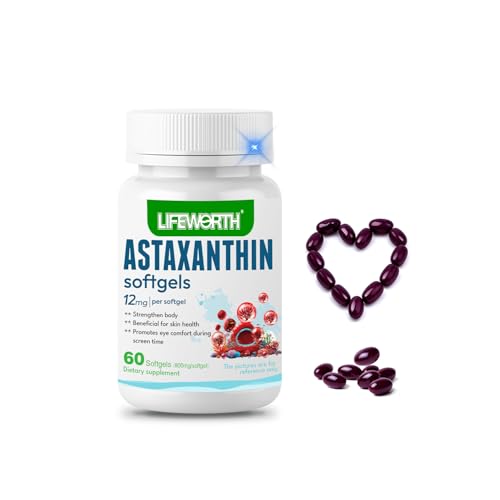
This is the part most likely to matter in practice, because it cuts against the way astaxanthin is usually bought. Adult astaxanthin supplements are commonly sold at 4, 8, or 12 mg per capsule, and 8–12 mg is a routine adult dose.
The European Food Safety Authority evaluated astaxanthin as a novel food in supplements and worked from an acceptable daily intake of 0.2 mg per kilogram of body weight [2]. It then asked what happens when 8 mg/day from a supplement is added on top of ordinary dietary astaxanthin from fish and crustaceans. The conclusion, broken out by age:
- Adults: the combined exposure is safe.
- Adolescents aged 14 to under 18: combined exposure reaches the acceptable daily intake — at the limit, with no margin.
- Children aged 10 to under 14: the acceptable daily intake is exceeded by about 28%.
- Infants aged 4–6 months: exceeded by up to 524%.
Note the overlap: the 10-to-under-14 band that exceeds the limit at an 8 mg supplement dose is exactly the age band enrolled in the pediatric trial — which used 4 mg, half that amount. The two documents are not in conflict once you line up the doses. Together they indicate that a child-appropriate amount is roughly half a typical adult capsule, and that handing a 10-year-old a standard adult 8 mg or 12 mg softgel pushes past the intake ceiling regulators set.
Because the limit is weight-based, it also scales with the child. At 0.2 mg/kg, a 30 kg child has a ceiling around 6 mg/day from all sources combined, while a 60 kg teenager has roughly double that. This is the same logic behind our broader astaxanthin dosage guide, applied to a much smaller body.
What About Myopia and Screen-Related Eye Changes?
Eye strain and myopia progression are different questions, and they often get conflated. A 2025 systematic review in Nutrients looked specifically at randomized controlled trials of nutritional supplementation for myopia prevention and control, covering carotenoids (including astaxanthin, lutein, zeaxanthin, and crocetin), anthocyanins, polyunsaturated fatty acids, and combination formulas [3].
Across nine included RCTs, the reviewers found carotenoids produced modest benefits: improved macular pigment optical density, reduced visual fatigue, and in one pediatric trial slightly less axial elongation. But the overall conclusion was explicitly negative on the bigger question — no consistent, clinically meaningful reduction in myopia progression was observed, and the trials were generally small, heterogeneous, and short [3]. The reviewers concluded that larger, longer trials are needed before supplementation can be recommended for routine myopia management.
So the honest summary for a parent is narrow: there is some evidence that astaxanthin may reduce subjective eye-strain symptoms in kids who are on screens a lot. There is not good evidence that it changes whether or how fast a child becomes nearsighted. Those are not the same benefit, and supplement marketing tends to blur them.
Everything Else Is Animal Data or Adult Data
Beyond the eye-strain trial, pediatric astaxanthin research is very thin. Searches of the published literature turn up neonatal and juvenile animal models — astaxanthin in rat models of necrotizing enterocolitis, neuroprotection in newborn rats after prenatal maternal seizures, testicular torsion models, and ADHD-like behavior in rat strains. These are legitimate preclinical studies, but they are exactly that: animal models, mostly in rodents, at doses and delivery routes that do not translate directly to a child taking a capsule.
There is no published randomized trial of astaxanthin in children for immune function, attention, inflammation, athletic recovery, or any of the other uses adults commonly buy it for. Anyone claiming a pediatric benefit in those areas is extrapolating from adult trials or animal work, not citing pediatric evidence.
The related question of use during pregnancy and breastfeeding has its own distinct evidence gaps, covered separately in our astaxanthin pregnancy and breastfeeding safety review.
Practical Takeaways for Parents
Pulling the threads together:
- Adult capsules are the wrong size. The standard 8–12 mg adult dose exceeds the regulator-set intake ceiling for children under 14 once dietary sources are counted [2]. The only dose ever tested in a pediatric trial was 4 mg [1].
- The strongest use case is narrow. Digital eye strain in heavy-screen-use kids aged 10–14 is the one indication with a randomized trial behind it — and that trial was run by the ingredient manufacturer.
- It will not fix myopia. The systematic review evidence does not support supplementation for slowing nearsightedness [3].
- Non-supplement steps come first. Screen breaks, viewing distance, outdoor time, and an actual eye exam address the same complaints without any dosing question at all.
- Talk to the pediatrician. This is a supplement with a defined weight-based intake ceiling and almost no pediatric safety data outside one 84-day study. That makes it a reasonable thing to ask a doctor about, and not a reasonable thing to decide from a product label.
For adults weighing the same product for themselves, the safety picture is considerably better established — see our full astaxanthin safety and toxicology review for the adult evidence, which includes long-term human trial data and GRAS status that simply does not exist for children.
Frequently Asked Questions
Is astaxanthin safe for children?
One randomized controlled trial gave 4 mg/day of astaxanthin to 64 children aged 10-14 for 84 days and reported no significant safety concerns. However, EFSA concluded that a typical adult 8 mg/day supplement dose, combined with dietary intake, exceeds the acceptable daily intake by about 28% in children aged 10 to under 14. Adult dosing is not appropriate for a child, and any use should be discussed with a pediatrician.
What dose of astaxanthin has been tested in children?
The only published pediatric randomized controlled trial used 4 mg per day for 84 days in children aged 10 to 14. That is roughly half a common adult capsule. The acceptable daily intake used by EFSA is 0.2 mg per kilogram of body weight, so the ceiling scales with the child’s weight.
Does astaxanthin help children with screen-related eye strain?
A 2025 randomized double-blind placebo-controlled trial in 64 children aged 10-14 with at least four hours of daily screen time found that 4 mg/day of astaxanthin significantly improved computer vision syndrome questionnaire scores versus placebo, about a 20% between-group difference, along with improvements in visual fatigue, stereopsis and tear production. The trial was co-authored by employees of the ingredient manufacturer and has not been independently replicated.
Can astaxanthin slow myopia progression in kids?
A 2025 systematic review of nine randomized controlled trials found that carotenoids including astaxanthin produced modest visual-function benefits such as improved macular pigment optical density and reduced visual fatigue, but no consistent clinically meaningful reduction in myopia progression. The reviewers concluded that larger, longer trials are needed before recommending supplementation for routine myopia management.
References
- Hecht KA, Marwah M, Wood V, et al. Astaxanthin (AstaReal®) Improved Acute and Chronic Digital Eye Strain in Children: A Randomized Double-Blind Placebo-Controlled Trial. Adv Ther (2025);42(4):1811-1833. PMID 40014233
- EFSA Panel on Nutrition, Novel Foods and Food Allergens (NDA). Safety of astaxanthin for its use as a novel food in food supplements. EFSA J (2020);18(2):e05993. PMID 32874213
- Martinez-Perez C, Oliveira AP. Nutritional Supplementation for Myopia Prevention and Control: A Systematic Review of Randomized Controlled Trials. Nutrients (2025);18(1):4. PMID 41515122
These statements have not been evaluated by the Food and Drug Administration. This information is not intended to diagnose, treat, cure, or prevent any disease. Content is for informational purposes only and is not medical advice; consult a qualified healthcare provider before starting any supplement. As an Amazon Associate we earn from qualifying purchases.