Astaxanthin is a red-orange keto-carotenoid produced primarily by the microalgae Haematococcus pluvialis. Unlike most antioxidants, it spans both the lipid and aqueous phases of cell membranes, allowing it to quench free radicals and singlet oxygen across different biological compartments. Clinical trials have examined its effects on skin aging, eye circulation, joint comfort, and cardiovascular markers, making it one of the more studied marine carotenoids in the supplement space.
Natural astaxanthin from Haematococcus pluvialis holds GRAS (Generally Recognized As Safe) status in the United States, and trials using doses up to 12 mg per day for 12 weeks have not reported serious adverse events. That said, the complete picture of its side effects, including who should exercise caution and why, is worth understanding before you decide to supplement.
Key Takeaways
- Astaxanthin at doses up to 12 mg per day for 12 weeks has shown no serious adverse events in clinical trials [1] [2].
- The most notable side effect at high doses above 20 mg per day is carotenodermia, a reversible harmless orange-yellow skin tint that resolves when intake is reduced.
- Mild gastrointestinal discomfort is occasionally reported; taking astaxanthin with a fat-containing meal may help with both absorption and tolerability [3].
- Astaxanthin is not recommended during pregnancy or breastfeeding due to insufficient safety data in those populations.
- People taking blood pressure medications, statins, or immunosuppressants should consult a doctor before adding astaxanthin to their routine, given its measurable effects on cardiovascular markers [4].
Overall Safety Profile in Clinical Trials
Across published randomized controlled trials, astaxanthin has demonstrated a consistently favorable tolerability profile at typical supplemental doses. A systematic review of clinical studies examining astaxanthin’s effects on skin health found no serious adverse events reported across the included trials [1]. Participants generally completed these studies without significant safety complaints, which is a meaningful baseline signal.
A multicenter randomized double-blinded placebo-controlled trial evaluating a combination of krill oil, astaxanthin, and oral hyaluronic acid in adults with mild osteoarthritis also concluded that the intervention was safe and well-tolerated, with no serious adverse events attributed to the supplement over the study period [2]. A separate randomized trial in individuals with prediabetes and dyslipidaemia that examined astaxanthin’s effects on cholesterol and cardiovascular risk markers likewise found no clinically significant safety concerns among participants [4].
It is honest to note that many trials involve relatively small sample sizes and short durations, typically 8 to 12 weeks. Long-term safety data beyond a few months is limited, and that gap is something careful consumers should weigh.
Carotenodermia: The Yellow-Orange Skin Tint
The most discussed side effect of astaxanthin at higher doses is carotenodermia, a reversible yellowing or orange tinting of the skin. Because astaxanthin is fat-soluble, it accumulates in subcutaneous fat tissue, which can alter how the skin appears from the outside. The same phenomenon occurs with excessive beta-carotene intake.

Carotenodermia has been observed primarily at doses above 20 mg per day, well beyond the 4 to 12 mg per day range used in most clinical trials and available in most commercial supplements. The discoloration is harmless and fully reversible when intake is reduced or stopped. Critically, it is not the same as jaundice: in carotenodermia the whites of the eyes remain clear, whereas jaundice involves yellowing of the sclera and indicates liver involvement. If you notice unexpected skin color change while supplementing, reducing your dose is a reasonable first step and mentioning it to a doctor is wise.

Gastrointestinal Effects
Some individuals report mild gastrointestinal discomfort when taking astaxanthin, including transient stomach upset, looser stools, or a slight reddish color change in stool due to the pigment passing through the digestive tract. These effects are generally mild, temporary, and not reported as serious in clinical trials.
A safety and tolerability study using a krill powder product in overweight subjects with moderately elevated blood pressure found the supplement was generally well-tolerated, though mild gastrointestinal symptoms were noted by some participants [3]. Since astaxanthin is fat-soluble, absorption is enhanced when it is taken alongside a meal containing dietary fat, and doing so may also ease any initial digestive discomfort.
Cardiovascular Markers and Medication Interactions
Astaxanthin has shown measurable effects on cardiovascular risk markers in clinical trials. A randomized trial found that it lowered cholesterol and associated cardiovascular risk markers in individuals with prediabetes and dyslipidaemia [4]. A study examining a nutraceutical combination in individuals with mild to moderate dyslipidemia also explored cholesterol-related outcomes, though this involved a multi-ingredient formula rather than astaxanthin alone [5].
These cardiovascular effects are generally framed as potential benefits, but they carry a practical implication for people already on prescription medications. If you take blood pressure medications, statins, fibrates, or other lipid-lowering drugs, there is a theoretical possibility of additive effects on blood pressure or lipid levels. Robust clinical evidence for a harmful drug interaction is currently lacking, but the appropriate stance is caution rather than assumption of safety. Discussing astaxanthin with your prescribing physician before combining it with these medications is a sensible step.
Pregnancy, Breastfeeding, and Vulnerable Populations
The evidence base for astaxanthin supplementation during pregnancy or breastfeeding is insufficient to establish safety. No adequately powered human trials have assessed outcomes in pregnant women or nursing mothers. Until that data exists, supplementation during pregnancy or breastfeeding is not recommended. This is a precautionary stance based on an evidence gap, not a confirmed signal of harm.
Children represent another group where caution is warranted simply due to the absence of pediatric safety data. People with autoimmune conditions or those taking immunosuppressant therapy should also consult a healthcare provider before supplementing. Astaxanthin has theoretical immune-modulating properties based on its antioxidant and anti-inflammatory mechanisms, and interactions with immunosuppressant drugs have not been studied in human trials.

Individuals with hormone-sensitive conditions should also raise astaxanthin with their specialist before starting, given some preclinical interest in how carotenoids may influence related biochemical pathways. No clinical trial we are aware of directly addresses this, so the guidance is precautionary.

Eye Circulation and the Limits of Current Evidence
One area where astaxanthin’s effects show up in clinical data involves ocular circulation. A clinical study found that astaxanthin increased choroidal blood flow velocity, a measure of circulation in the tissue layer behind the retina [6]. This is generally considered a potential benefit given the relevance of choroidal circulation to retinal health, and no adverse ocular effects were reported in that study.
More broadly, it is worth being realistic about the current evidence. Most human trials are short, conducted in adults with specific health conditions, and use astaxanthin sometimes in combination with other compounds such as krill oil or hyaluronic acid [2]. Isolating the effects of astaxanthin alone, including its side effects, from combination-formula studies requires some interpretive care. The absence of serious reported adverse events across this body of evidence is encouraging, but it does not mean risk is zero across all populations and durations.
🛒 Where to Buy Astaxanthin
- Nutrex Hawaii BioAstin Hawaiian AstaxanthinLab-tested / studied
softgels, 12 mg per softgel, 90 count — Hawaiian-grown Haematococcus pluvialis, sold as the High Potency 90-softgel bottle - Pure Synergy SuperPure Astaxanthin Extract
capsules, 60 count — Sold as an astaxanthin extract in a capsule rather than a softgel; the listing does not state a mg per capsule, so check the label for the dose before comparing it with the 12 mg bottles here - Naturalis New Zealand Astaxanthin
softgels, 12 mg per softgel, 120 count — New Zealand-grown rather than Hawaiian, and the largest bottle on this list at 120 softgels - NOW Foods Astaxanthin
softgels, 4 mg per softgel — The entry-level 4 mg dose, built on the Zanthin astaxanthin ingredient; a lower starting point than the 12 mg bottles above
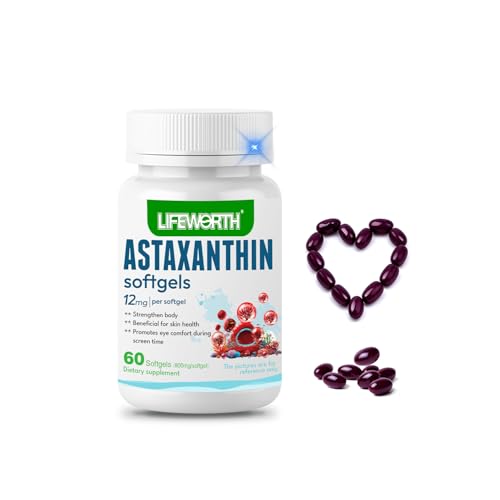
As an Amazon Associate we earn from qualifying purchases. Astaxanthin products vary mainly by dose and by source, with 4mg and 12mg the common strengths and most of them derived from Haematococcus pluvialis algae, so check the label for the astaxanthin content per serving and prefer products that publish third-party testing.
A Note on the Evidence
The clinical trial database for astaxanthin in humans remains relatively small, with most studies lasting 8 to 12 weeks and enrolling healthy or mildly affected adults; long-term and large-population safety data are still limited. People who are pregnant, breastfeeding, taking prescription medications, or managing chronic health conditions should consult a qualified healthcare provider before starting astaxanthin supplementation, and nothing in this article constitutes medical advice.
Frequently Asked Questions
Is astaxanthin safe to take every day?
Clinical trials have found astaxanthin to be well-tolerated at doses up to 12 mg per day over periods of 8 to 12 weeks, with no serious adverse events reported [1] [2]. Long-term daily use beyond several months has not been as thoroughly studied in humans, so periodic reassessment with a healthcare provider is a reasonable practice.
Can astaxanthin really turn your skin orange?
Yes, at doses well above the typical supplemental range, specifically above 20 mg per day, carotenodermia can occur. This is a reversible orange-yellow tint caused by carotenoid accumulation in subcutaneous fat, not a sign of liver disease. At the doses used in most clinical trials (4 to 12 mg per day), this effect is unlikely and was not reported as a significant problem [1].
Does astaxanthin interact with cholesterol or blood pressure medications?
Astaxanthin has been shown to lower cholesterol and cardiovascular risk markers in clinical trials [4], which raises the theoretical possibility of additive effects when combined with lipid-lowering or blood pressure drugs. No serious interactions have been confirmed in clinical trials, but anyone on these medications should discuss supplementation with their prescribing doctor before starting.

Are there any known effects of astaxanthin on the eyes?
A clinical study found that astaxanthin increased choroidal blood flow velocity, a measure of circulation behind the retina [6]. This is generally considered a potential benefit. No adverse effects on eye health have been reported in the published clinical trial literature covered here.
Is it safe to take astaxanthin during pregnancy?
There is insufficient clinical evidence to establish the safety of astaxanthin supplementation during pregnancy or breastfeeding. The precautionary recommendation is to avoid supplementation during these periods until adequate human data exists. This is not a confirmed signal of harm but an honest acknowledgment of what is not yet known.
What is the safest dose of astaxanthin?
Human clinical trials have most commonly used doses in the range of 4 to 12 mg per day, and this range has not produced serious adverse events in the studies reviewed [1] [2] [4]. Doses above 20 mg per day increase the likelihood of carotenodermia. There is no established universal safe upper limit for all populations, and individual factors including age, health status, and medications matter.
References
- Ng QX et al. Effects of Astaxanthin Supplementation on Skin Health: A Systematic Review of Clinical Studies. Journal of dietary supplements (2021). PMID 32202443
- Hill WS et al. A Multicenter, Randomized, Double-Blinded, Placebo-Controlled Clinical Trial to Evaluate the Efficacy and Safety of a Krill Oil, Astaxanthin, and Oral Hyaluronic Acid Complex on Joint Health in People with Mild Osteoarthritis. Nutrients (2023). PMID 37686801
- Sarkkinen ES et al. Prospective, randomized, double-blinded, placebo-controlled study on safety and tolerability of the krill powder product in overweight subjects with moderately elevated blood pressure. Lipids in health and disease (2018). PMID 30572894
- Ciaraldi TP et al. Astaxanthin, a natural antioxidant, lowers cholesterol and markers of cardiovascular risk in individuals with prediabetes and dyslipidaemia. Diabetes, obesity & metabolism (2023). PMID 36999233
- Barrios V et al. A nutraceutical approach (Armolipid Plus) to reduce total and LDL cholesterol in individuals with mild to moderate dyslipidemia: Review of the clinical evidence. Atherosclerosis. Supplements (2017). PMID 27998714
- Saito M et al. Astaxanthin increases choroidal blood flow velocity. Graefe's archive for clinical and experimental ophthalmology = Albrecht von Graefes Archiv fur klinische und experimentelle Ophthalmologie (2012). PMID 22072378
These statements have not been evaluated by the Food and Drug Administration. This information is not intended to diagnose, treat, cure, or prevent any disease. Content is for informational purposes only and is not medical advice; consult a qualified healthcare provider before starting any supplement. As an Amazon Associate we earn from qualifying purchases.
