Astaxanthin is a deep-red marine carotenoid produced naturally by the microalgae Haematococcus pluvialis. Unlike most antioxidants, its molecular structure allows it to span the full thickness of cell membranes—anchoring at the aqueous surface while its carbon chain threads through the lipid interior. This positions it to intercept free radicals and quench singlet oxygen in both compartments simultaneously, a capability most single-phase antioxidants do not share.
Biological aging is driven in large part by the accumulation of oxidative damage, chronic low-grade inflammation, and progressive loss of cellular repair capacity. Researchers have begun exploring whether astaxanthin’s antioxidant and cell-signaling properties might slow some of these processes. Most of this work is currently in cell cultures and animal models; human trials are limited and short-term. What follows describes what the evidence shows—not what it proves—and is informational rather than medical advice.
Key Takeaways
- Astaxanthin spans both the lipid and aqueous phases of cell membranes, giving it a structural advantage over single-phase antioxidants—and activates cellular defense pathways including Nrf2/HO-1 and SOD2 [1][2].
- Animal studies identify longevity-relevant molecular targets—Ins/IGF-1, DAF-16/FOXO, SIRT1/PGC-1α, and mTOR pathways—but translating these findings to human longevity is highly uncertain [3][4][5].
- Preclinical work suggests astaxanthin can attenuate cellular senescence and SASP signaling, key mechanisms in biological aging, in bone and immune tissue models [6][5].
- The most directly applicable human evidence shows reduced oxidative stress markers in overweight adults [7]; broader anti-aging effects in humans remain unproven.
- Natural astaxanthin appears safe at 4–12 mg/day in short-term trials; supplementation is not recommended during pregnancy or breastfeeding due to insufficient safety data.
How Astaxanthin Works Inside Cell Membranes
Astaxanthin’s polar end groups anchor at the charged surface of lipid bilayers while its polyene chain threads through the hydrophobic membrane core, effectively pinning it across the full width of the membrane. This geometry gives it access to oxidative threats at both the lipid and aqueous interfaces—a structural advantage over carotenoids such as beta-carotene, which remain confined to the membrane interior [1].
Beyond direct radical scavenging, astaxanthin activates the Nrf2/HO-1 pathway—a master cellular defense system that upregulates the cell’s own antioxidant enzymes rather than merely buffering incoming oxidants. Laboratory work in renal tubular epithelial cells found that Nrf2/HO-1 activation via astaxanthin attenuated oxidative stress and DNA damage [2]. Separately, an in vitro study using vascular smooth muscle cells identified early upregulation of superoxide dismutase 2 (SOD2), a mitochondrial antioxidant enzyme, as a key early response to astaxanthin exposure [8]. These mechanisms form the mechanistic backbone of most aging-related hypotheses about the compound.
Longevity Pathways: Lessons from Model Organisms
The most direct lifespan experiments have used Caenorhabditis elegans, a roundworm whose short lifespan and well-mapped genome make it a standard research model for aging. One study found that astaxanthin extended mean lifespan in C. elegans by acting through the insulin/IGF-1 signaling (IIS) pathway [3]—a nutrient-sensing cascade conserved across species that regulates biological aging rate. Reduced IIS activity is one of the most replicated pro-longevity interventions across organisms from yeast to mammals.

A separate C. elegans study focused on UV-induced aging found that astaxanthin activated the JNK-1/DAF-16 signaling axis [9]. DAF-16, the worm homolog of the FOXO transcription factor family found in humans, upregulates stress-resistance and longevity genes when activated. These findings identify plausible molecular targets, but it is important to state clearly: lifespan extension in a one-millimeter roundworm does not establish the same effect in humans, and considerable translation uncertainty exists.
Brain Aging and Cognitive Protection
Two complementary lines of preclinical research address astaxanthin and brain aging. The d-galactose aging model—in which animals receive chronic high-dose d-galactose to accelerate oxidative damage and cognitive decline—has been used to evaluate astaxanthin’s protective capacity. One rat study found that astaxanthin ameliorated oxidative stress, mitochondrial dysfunction, and metabolic dysregulation in brain tissue under this model [10], suggesting it can attenuate at least some biochemical features of accelerated brain aging.
Separately, in Alzheimer’s disease model systems, astaxanthin reduced oxidative burden and attenuated cognitive deficits through the SIRT1/PGC-1α signaling pathway [4]. SIRT1 is a NAD+-dependent deacetylase studied extensively in aging biology for its role in mitochondrial biogenesis, DNA repair coordination, and metabolic regulation; PGC-1α is its downstream effector governing mitochondrial renewal. Activation of this axis is associated with improved energy metabolism in neurons. Neither of these findings has yet been replicated in human cognitive aging trials, and they should be interpreted accordingly.
Skin Aging: UV Damage and Cellular Stress
Skin is one of the most studied targets for astaxanthin’s anti-aging effects, partly because UV radiation is a well-characterized driver of premature skin aging and because topical and oral delivery are both feasible. A study in UV-irradiated C. elegans found that astaxanthin attenuated photoaging markers by activating JNK-1 and DAF-16 signaling [9], reinforcing overlapping mechanisms with systemic longevity pathways.
In a more clinically relevant model, researchers examined high-glucose-treated human skin fibroblasts—a way of simulating metabolic aging stress on skin cells—and found that astaxanthin attenuated several markers of cellular aging in that context [11]. Human skin fibroblast research is one step closer to clinical reality than animal studies, but in vitro findings still do not confirm visible anti-aging outcomes in living people. Well-controlled clinical trials measuring standardized skin aging endpoints remain limited.
Cellular Senescence: Targeting a Core Hallmark of Aging
Cellular senescence—the state in which damaged cells halt division but persist and secrete a pro-inflammatory mixture of cytokines and proteases known as the senescence-associated secretory phenotype (SASP)—is now recognized as a key driver of tissue dysfunction in aging. Compounds that reduce SASP signaling without clearing senescent cells outright are called senomorphics. A study in irradiated mice found that astaxanthin inhibited osteocyte senescence and suppressed SASP markers in bone tissue, with associated attenuation of bone loss [6].

A study in irradiated rat spleen described astaxanthin’s effects as senomorphic, with involvement of the STING, TLR4, and mTOR signaling pathways [5]. mTOR (mechanistic target of rapamycin) is among the most intensively studied aging regulators; its inhibition is one of the most consistently reproduced pro-longevity interventions in model organisms. Whether astaxanthin modulates mTOR activity at doses achievable in humans has not been established in clinical research, and this remains an open question.
Human Evidence and Practical Considerations
Human clinical research on astaxanthin for aging-related outcomes is still modest. A randomized trial in overweight and obese adults—populations with elevated baseline oxidative stress—found that astaxanthin supplementation reduced several oxidative stress biomarkers compared to placebo [7]. This is one of the few human studies measuring the antioxidant effects the preclinical literature predicts; the result is encouraging but does not establish downstream effects on aging, disease incidence, or longevity.
Natural astaxanthin from Haematococcus pluvialis has GRAS (Generally Recognized As Safe) status in the United States. Trials at doses up to 12 mg/day for periods up to 12 weeks have not identified serious adverse effects. The only consistently reported side effect at very high doses (above 20 mg/day) is a reversible orange-yellow skin discoloration (carotenodermia) caused by carotenoid accumulation in subcutaneous tissue. Evidence in pregnancy is insufficient to support supplementation, and it is not recommended for pregnant or breastfeeding individuals.
🛒 Where to Buy Astaxanthin
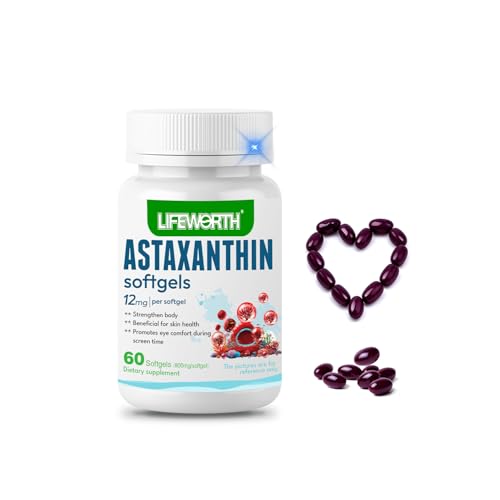
- Nutrex Hawaii BioAstin Hawaiian AstaxanthinLab-tested / studied
softgels, 12 mg per softgel, 90 count — Hawaiian-grown Haematococcus pluvialis, sold as the High Potency 90-softgel bottle - Pure Synergy SuperPure Astaxanthin Extract
capsules, 60 count — Sold as an astaxanthin extract in a capsule rather than a softgel; the listing does not state a mg per capsule, so check the label for the dose before comparing it with the 12 mg bottles here - Naturalis New Zealand Astaxanthin
softgels, 12 mg per softgel, 120 count — New Zealand-grown rather than Hawaiian, and the largest bottle on this list at 120 softgels - NOW Foods Astaxanthin
softgels, 4 mg per softgel — The entry-level 4 mg dose, built on the Zanthin astaxanthin ingredient; a lower starting point than the 12 mg bottles above
As an Amazon Associate we earn from qualifying purchases. Astaxanthin products vary mainly by dose and by source, with 4mg and 12mg the common strengths and most of them derived from Haematococcus pluvialis algae, so check the label for the astaxanthin content per serving and prefer products that publish third-party testing.
A Note on the Evidence
The large majority of evidence discussed here comes from cell cultures and animal models; human clinical trials on aging-related outcomes are few, short-term, and do not yet support conclusions about longevity or disease prevention. No supplement replaces evidence-based lifestyle practices—diet, physical activity, and sleep—and individuals with health conditions, those taking medications, or anyone who is pregnant or breastfeeding should consult a qualified healthcare provider before starting any new supplement regimen.
Frequently Asked Questions
What is astaxanthin and where does it come from?
Astaxanthin is a keto-carotenoid produced by the microalgae Haematococcus pluvialis, which synthesizes it under environmental stress. It accumulates up the food chain into salmon, shrimp, krill, and flamingos, giving them their characteristic pink-red coloring. Supplement-grade astaxanthin is typically extracted from cultivated H. pluvialis and is distinct from synthetic versions used in aquaculture.
How does astaxanthin differ from other antioxidants like vitamin C or vitamin E?
Vitamin C is water-soluble and works in aqueous cellular compartments; vitamin E is fat-soluble and works within lipid membranes. Astaxanthin’s molecular architecture allows it to span both phases of the cell membrane simultaneously, offering protection at both the surface and interior [1]. It also upregulates the cell’s own antioxidant enzyme production via Nrf2/HO-1 signaling, rather than only acting as a direct radical scavenger [2].
Has astaxanthin been shown to extend human lifespan?
No human lifespan studies exist. Lifespan extension has been documented in C. elegans roundworms through insulin/IGF-1 signaling pathway modulation [3], but this is a very distant model from human aging. Human research has focused on biomarkers such as oxidative stress measures rather than longevity outcomes, and no supplement has demonstrated lifespan extension in humans in controlled research.
What does the research say about astaxanthin and brain aging?
Preclinical work is promising but early. In a rat model of accelerated brain aging, astaxanthin attenuated oxidative stress, mitochondrial dysfunction, and metabolic disruption in brain tissue [10]. In Alzheimer’s disease models, it reduced oxidative burden and cognitive deficits via the SIRT1/PGC-1α pathway [4]. There are currently no published human trials examining astaxanthin’s effects on cognitive aging outcomes.
Is astaxanthin safe, and what is a reasonable dose?
Clinical trials using natural astaxanthin from Haematococcus pluvialis at doses up to 12 mg/day for up to 12 weeks have not identified serious adverse effects, and the compound holds GRAS status in the United States. At very high doses above 20 mg/day, a reversible orange-yellow skin tint (carotenodermia) can occur as carotenoids accumulate in subcutaneous fat. Supplementation during pregnancy or breastfeeding is not recommended due to insufficient evidence.
Can astaxanthin slow skin aging?
Research in UV-irradiated C. elegans identified activation of JNK-1 and DAF-16 stress-resistance pathways as a mechanism by which astaxanthin attenuates photoaging markers [9]. A study in high-glucose-stressed human skin fibroblasts found that astaxanthin attenuated cellular aging markers in that model [11]. These findings are suggestive, but well-powered human clinical trials measuring validated skin aging endpoints are still limited; stronger evidence is needed before definitive conclusions can be drawn.
References
- Kidd P et al. Astaxanthin, cell membrane nutrient with diverse clinical benefits and anti-aging potential. Alternative medicine review : a journal of clinical therapeutic (2011). PMID 22214255
- Qian X et al. Astaxanthin activates the Nrf2/HO-1 pathway to attenuate indoxyl sulfate-induced oxidative stress and DNA damage in renal tubular epithelial cells. Frontiers in pharmacology (2025). PMID 41560720
- Yazaki K et al. Supplemental cellular protection by a carotenoid extends lifespan via Ins/IGF-1 signaling in Caenorhabditis elegans. Oxidative medicine and cellular longevity (2011). PMID 22013497
- Liu N et al. Astaxanthin attenuates cognitive deficits in Alzheimer's disease models by reducing oxidative stress via the SIRT1/PGC-1α signaling pathway. Cell & bioscience (2023). PMID 37710272
- Aziz MM et al. The senomorphic impact of astaxanthin on irradiated rat spleen: STING, TLR4 and mTOR contributed pathway. International journal of immunopathology and pharmacology (2024). PMID 39475763
- Geng Q et al. Astaxanthin attenuates irradiation-induced osteoporosis in mice by inhibiting oxidative stress, osteocyte senescence, and SASP. Food & function (2022). PMID 36285709
- Choi HD et al. Effects of astaxanthin on oxidative stress in overweight and obese adults. Phytotherapy research : PTR (2011). PMID 21480416
- Chao CT et al. Astaxanthin Counteracts Vascular Calcification In Vitro Through an Early Up-Regulation of SOD2 Based on a Transcriptomic Approach. International journal of molecular sciences (2020). PMID 33198315
- Lin X et al. Astaxanthin attenuates UV-irradiation aging process via activating JNK-1/DAF-16 in Caenorhabditis elegans. Photochemistry and photobiology (2025). PMID 38695248
- Liu H et al. Astaxanthin attenuates d-galactose-induced brain aging in rats by ameliorating oxidative stress, mitochondrial dysfunction, and regulating metabolic markers. Food & function (2020). PMID 32343758
- Tang LJ et al. [Effect and mechanism of astaxanthin on the aging of high glucose-treated human skin fibroblasts]. Zhonghua shao shang yu chuang mian xiu fu za zhi (2025). PMID 41326036
These statements have not been evaluated by the Food and Drug Administration. This information is not intended to diagnose, treat, cure, or prevent any disease. Content is for informational purposes only and is not medical advice; consult a qualified healthcare provider before starting any supplement. As an Amazon Associate we earn from qualifying purchases.
