In a world increasingly focused on optimizing human potential and extending healthspan, many of us are constantly seeking the next evidence-backed compound to add to our regimen. Perhaps you’ve graduated from generic vitamin C and E, or maybe you’re already familiar with the broad strokes of antioxidant science but are now looking for something more targeted, more potent, and with a unique mechanistic profile. You’ve likely heard the term “astaxanthin” whispered in biohacking circles, seen it pop up in discussions about elite athletic recovery, or noticed it in new formulations for skin and eye health.
But what exactly is this vibrant red molecule, often dubbed “the king of carotenoids,” and does it live up to the hype? This comprehensive guide will explore the science behind astaxanthin, its purported benefits, optimal dosages, and safety, providing a nuanced perspective for those serious about their health and longevity.
AstaxanthinHub is supported by its readers. When you buy through links on our site, we may earn an affiliate commission.
What Exactly Is Astaxanthin? The Marine Carotenoid Explained
Astaxanthin is a naturally occurring carotenoid pigment, belonging to a larger class of phytochemicals known for their antioxidant properties. Unlike its more common carotenoid cousins like beta-carotene or lutein, astaxanthin possesses a unique molecular structure that grants it exceptional antioxidant power and membrane-protective capabilities.
Its primary natural source is the microalga Haematococcus pluvialis. When this algae is exposed to environmental stressors like intense sunlight or nutrient deprivation, it produces astaxanthin as a protective mechanism, turning a vivid red. This pigment is then consumed by various marine organisms, including salmon, shrimp, and krill, giving them their characteristic pinkish-red hue.
The Unique Antioxidant Power of Astaxanthin
Astaxanthin’s distinct molecular architecture sets it apart from other antioxidants. Its polar end groups and non-polar central chain allow it to span the entire lipid bilayer of cell membranes, providing comprehensive protection against oxidative stress both inside and outside the cell. This contrasts with antioxidants like vitamin C, which are water-soluble and act in aqueous environments, or vitamin E, which is fat-soluble and primarily localizes within the membrane.
Astaxanthin is frequently described as being up to 6,000 times stronger than vitamin C, 800 times stronger than CoQ10, and 550 times stronger than green tea catechins. Those figures come from laboratory singlet oxygen quenching assays in test tubes, and they describe one specific chemical reaction under one set of conditions. They are not measurements of how much more effective astaxanthin is in the human body, and they should not be read that way. What the assays do support is that astaxanthin is an unusually efficient quencher of that particular reactive species.
Astaxanthin Benefits: Emerging Research and Mechanisms
The interest in astaxanthin stems from a growing body of scientific literature, including human randomized controlled trials (RCTs), exploring its potential therapeutic applications. Its anti-inflammatory and antioxidant properties are believed to underpin many of its observed effects.
Enhancing Athletic Performance and Recovery
For endurance athletes and those pushing their physical limits, astaxanthin offers intriguing possibilities. Strenuous exercise inevitably generates oxidative stress and inflammation, contributing to muscle damage and delayed recovery. Astaxanthin’s ability to permeate muscle cell membranes and mitigate ROS production is a key mechanism here.

Several human trials have investigated its impact, and they do not all point the same way. A 2011 trial randomised 21 competitive cyclists to 4 mg/day of astaxanthin or placebo for 28 days; of the 14 who finished, the astaxanthin group improved their 20 km time trial by 121 seconds (95% CI -185 to -53) and raised power output, while placebo did not[1]. Importantly, the same paper found no treatment effect on carbohydrate or fat oxidation or on blood markers of fuel mobilisation, and the authors state plainly that the mechanism behind the improvement “remains obscure” — so this trial is not evidence that astaxanthin reduced oxidative stress or muscle damage.
The picture gets more complicated from there. A larger, better-powered trial gave 32 well-trained cyclists and triathletes 20 mg/day for four weeks and found no increase in plasma antioxidant capacity, no increase in fat oxidation during submaximal exercise, and no time trial improvement[2]. A later crossover study did find a benefit — 12 recreationally trained cyclists taking 12 mg/day for seven days completed a 40 km time trial about 1.2% faster (roughly 51 seconds, p = 0.029, small effect size) with higher fat oxidation in the final kilometre[3]. Read together: the ergogenic effect is plausible but small, inconsistent between trials, and the sample sizes are in the low dozens. Anyone promising you a reliable performance gain is over-reading this literature.
Skin Health and Natural Photoprotection
The skin, constantly exposed to environmental aggressors like UV radiation, benefits significantly from antioxidant defense. Astaxanthin’s unique ability to integrate into cell membranes, including those of skin cells, provides an internal “sunscreen” effect, though it should never replace topical sun protection.
The best available summary is a 2021 systematic review and meta-analysis of eleven human studies. Pooling the randomised trials, oral astaxanthin significantly improved skin moisture content (SMD 0.53, 95% CI 0.05 to 1.01) and elasticity (SMD 0.77, 95% CI 0.19 to 1.35), but did not significantly reduce wrinkle depth (SMD -0.26, 95% CI -0.58 to 0.06, p = 0.11)[4]. That distinction matters, because wrinkle reduction is the claim most often used to sell it.
It is worth knowing how the most-quoted skin study was actually run. A 2012 paper reported two separate experiments: an open-label, uncontrolled 8-week study in 30 women that combined 6 mg/day orally with topical application — so it cannot separate the supplement from the cream, and it had no placebo group — and a genuinely randomised, double-blind, placebo-controlled 6-week study in 36 men taking 6 mg/day, which did improve crow’s-feet wrinkles and elasticity[5]. The women’s results are the ones usually cited, and they are the weaker of the two.
The photoprotection claim is on firmer ground. In a randomised, double-blind, placebo-controlled trial, 23 healthy participants taking 4 mg/day for nine weeks showed an increased minimal erythema dose — it took more UV exposure to redden the skin — and less UV-induced moisture loss in the irradiated area than placebo[6]. That is a real internal photoprotective signal from a small study, and it is still no substitute for topical sunscreen.
Combating Eye Strain and Supporting Visual Acuity
In our screen-dominated world, chronic eye strain (asthenopia) is a pervasive issue. The eyes are particularly susceptible to oxidative damage due to their high metabolic rate and constant light exposure. Astaxanthin’s ability to cross the blood-retinal barrier and localize in the eye tissues makes it a prime candidate for ocular health support.
The clearest astaxanthin-only trial randomised 60 healthy adults to 9 mg/day or placebo for six weeks and measured visual function before and after screen work. The result was age-dependent: participants aged 40 and over were significantly protected against the drop in corrected visual acuity that follows screen work, while participants under 40 showed no significant difference, and neither functional visual acuity nor pupil constriction rate differed overall[7]. The authors attribute the age split to the age-related loss of ciliary muscle strength.
Be careful with the rest of this literature. Several widely quoted eye-strain figures come from combination products rather than astaxanthin alone — for example, a 2021 randomised, double-blind, placebo-controlled study in 44 Japanese adults with screen-related eye fatigue tested anthocyanin, astaxanthin and lutein together[8], so any benefit it found cannot be assigned to astaxanthin. Others appear only in journals that are not indexed in PubMed, which makes them much harder to check. If you are a remote worker or a gamer over 40, the astaxanthin-only evidence is genuinely suggestive; under 40, it is not.
Brain Health and Cognitive Support
The brain, a highly metabolically active organ, is vulnerable to oxidative stress and inflammation, factors implicated in cognitive decline. Astaxanthin’s capacity to cross the blood-brain barrier is a significant advantage, allowing it to exert its protective effects directly within neural tissues.
Preclinical studies suggest astaxanthin may protect neurons from oxidative damage and reduce neuroinflammation. The human evidence is thinner than it is usually made to sound. The most-cited trial randomised 96 healthy middle-aged and older adults who complained of age-related forgetfulness to 6 mg/day, 12 mg/day or placebo for 12 weeks. CogHealth battery scores improved in the 12 mg group and Groton Maze Learning Test scores improved earlier in both astaxanthin groups than in placebo — but the authors explicitly state that the sample size was too small to show a significant difference between the astaxanthin and placebo groups[9]. In other words, this is a suggestive underpowered study, not a demonstrated cognitive benefit, and it should not be described as one. Larger trials are needed before anyone takes astaxanthin for cognition on the strength of the evidence.
Astaxanthin Dosage: Finding Your Optimal Intake
The typical astaxanthin dosage used in human clinical trials for various benefits ranges from 4 mg to 12 mg per day. It’s important to note that astaxanthin is fat-soluble, meaning it’s best absorbed when taken with a meal containing dietary fats.
| Benefit Area | Common Dosage Range (mg/day) | Comments |
|---|---|---|
| Skin Health & Photoprotection | 4-6 mg | Often requires consistent use for several weeks to observe effects. |
| Eye Health & Strain | 4-8 mg | Some studies show benefits at lower doses for digital eye strain. |
| Athletic Performance & Recovery | 8-12 mg | Higher doses sometimes used for intense training or competitive periods. |
| Cognitive Function | 6-12 mg | Research in this area often uses higher end of the range. |
For general health and antioxidant support, many individuals start with 4-6 mg daily and may increase to 8-12 mg for more targeted benefits or during periods of increased oxidative stress. Consistency is key, as astaxanthin accumulates in tissues over time to exert its full protective effects.

Safety and Potential Side Effects
Astaxanthin has a good safety record in human trials, which have generally run for weeks to a few months at 4-12 mg/day without serious adverse effects. Higher intakes have been used in short studies, but there is no long-term human safety dataset at those doses, so “safe at 48 mg/day indefinitely” is not a claim the evidence supports.
It is worth knowing where regulators landed. EFSA assessed astaxanthin as a novel food in supplements at a maximum of 8 mg/day and works from an acceptable daily intake of 0.2 mg per kg of body weight — about 14 mg/day for a 70 kg adult. Combined with normal dietary intake from fish and shellfish, EFSA concluded 8 mg/day is safe for adults, that 14-to-under-18-year-olds reach the ADI, and that the ADI is exceeded by 28% in children aged 10 to under 14[10]. So the common 12 mg capsule is close to the adult ADI once diet is counted, and adult-sized doses are not appropriate for children.
Some people notice a slight orange or reddish tint to the skin at high doses, a harmless effect known as carotenodermia, which fades when the dose is reduced.
As with any supplement, it’s always advisable to consult with a healthcare professional before starting astaxanthin, especially if you are pregnant, nursing, have a pre-existing medical condition, or are taking other medications. No well-documented clinically significant drug interaction has been established for astaxanthin — but that reflects how little interaction research has been done, not a demonstrated absence of risk, and it is not the same thing as “proven safe with your medication.”
Choosing Your Astaxanthin Supplement
When selecting an astaxanthin supplement, quality and source matter significantly. Look for products derived from Haematococcus pluvialis, as this is the natural source with the most robust research backing.
Consider the following types of products:
Natural Astaxanthin Softgels: These are the most common and often preferred form, as the astaxanthin is typically suspended in an oil (like olive oil or safflower oil) for optimal absorption. Look for brands that specify the astaxanthin concentration per softgel, usually 4 mg, 6 mg, or 12 mg.
Astaxanthin with Bioavailability Enhancers: Some formulations combine astaxanthin with ingredients like phospholipids or piperine (black pepper extract) to further enhance absorption. While research on these specific combinations is still developing, the principle of improved bioavailability is sound.
Vegan Astaxanthin Capsules: For those following a plant-based diet, ensure the softgel capsule itself is made from plant-derived materials rather than gelatin.
Conclusion: The King of Carotenoids for Optimized Health
Astaxanthin stands out in the crowded supplement landscape because of its genuinely unusual molecular structure, which lets it span the whole cell membrane rather than sitting on one side of it. The human evidence behind the individual claims is uneven, and it is worth being honest about which is which: skin moisture and elasticity are supported by pooled trial data, wrinkle depth is not; UV photoprotection has a real placebo-controlled signal from a small study; the eye benefit is credible but appears to be limited to people over 40; the endurance evidence is split between positive and null trials; and the cognitive evidence rests on a study its own authors describe as underpowered.
For biohackers, longevity enthusiasts and athletes, astaxanthin is a reasonable, well-tolerated, low-risk addition at 4-12 mg/day — taken with a fat-containing meal, and with realistic expectations about which of the marketed benefits actually have trial support behind them. As larger studies appear, its role in resilience against oxidative stress should get clearer. Until then, the honest summary is a promising carotenoid with a handful of small positive trials, not a proven multi-system intervention.
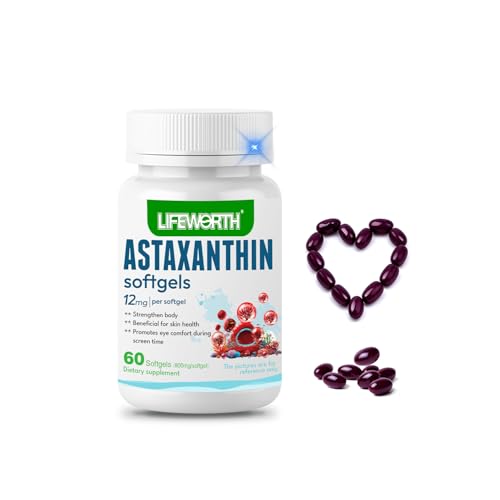
These statements have not been evaluated by the FDA. This product is not intended to diagnose, treat, cure, or prevent any disease.
Frequently Asked Questions About Astaxanthin
When is the best time to take astaxanthin?
Since astaxanthin is fat-soluble, it’s best absorbed when taken with a meal that contains some dietary fat. Many people prefer to take it with their largest meal of the day, such as lunch or dinner, to optimize absorption.
How long does it take to see results from astaxanthin?
The timeframe varies by individual and by outcome. Skin trials that found effects generally ran 6-16 weeks; the UV photoprotection trial measured its result at 9 weeks. The eye trial that found a benefit ran 6 weeks, and its effect was limited to participants aged 40 and over. Endurance trials ranged from 7 days to 4 weeks and did not agree with each other. Cognitive effects have not been demonstrated at any duration in an adequately powered trial.
Can I get enough astaxanthin from food?
While salmon, shrimp, and krill contain astaxanthin, the amounts are relatively small compared to supplemental doses. To achieve the therapeutic dosages used in research (e.g., 4-12 mg/day), supplementation is generally necessary.
Is synthetic astaxanthin as effective as natural astaxanthin?
Most human clinical research on astaxanthin’s health benefits has used natural astaxanthin derived from Haematococcus pluvialis, and that is what the trials cited on this page tested. Synthetic astaxanthin exists and is widely used in aquaculture feed, but it has not been studied in humans to anything like the same extent, so there is no head-to-head human evidence to say whether the two perform equivalently.
Are there any contraindications for astaxanthin?
Astaxanthin is generally very safe. However, individuals with allergies to astaxanthin’s source (e.g., shellfish, algae), or those with certain medical conditions like autoimmune disorders, should consult a healthcare provider before use. Pregnant or breastfeeding women should also seek medical advice.
Can astaxanthin be taken with other antioxidants?
Yes, astaxanthin can generally be taken alongside other antioxidants. Its unique position within the cell membrane means it complements the actions of water-soluble (like vitamin C) and other fat-soluble (like vitamin E) antioxidants, contributing to a broader spectrum of protection against oxidative stress.
References
- Effect of astaxanthin on cycling time trial performance. Int J Sports Med (2011). PMID 21984399
- Astaxanthin supplementation does not augment fat use or improve endurance performance. Med Sci Sports Exerc (2013). PMID 23274592
- The effect of astaxanthin supplementation on performance and fat oxidation during a 40 km cycling time trial. J Sci Med Sport (2021). PMID 32660833
- Systematic Review and Meta-Analysis on the Effects of Astaxanthin on Human Skin Ageing. Nutrients (2021). PMID 34578794
- Cosmetic benefits of astaxanthin on humans subjects. Acta Biochim Pol (2012). PMID 22428137
- The Protective Role of Astaxanthin for UV-Induced Skin Deterioration in Healthy People – A Randomized, Double-Blind, Placebo-Controlled Trial. Nutrients (2018). PMID 29941810
- Effects of diet containing astaxanthin on visual function in healthy individuals: a randomized, double-blind, placebo-controlled, parallel study. J Clin Biochem Nutr (2023). PMID 36777084
- Effects of anthocyanin, astaxanthin, and lutein on eye functions: a randomized, double-blind, placebo-controlled study. J Clin Biochem Nutr (2021). PMID 34376917
- Effects of astaxanthin-rich Haematococcus pluvialis extract on cognitive function: a randomised, double-blind, placebo-controlled study. J Clin Biochem Nutr (2012). PMID 22962526
- Safety of astaxanthin for its use as a novel food in food supplements. EFSA J (2020). PMID 32874213
These statements have not been evaluated by the Food and Drug Administration. This information is not intended to diagnose, treat, cure, or prevent any disease. Content is for informational purposes only and is not medical advice; consult a qualified healthcare provider before starting any supplement. As an Amazon Associate we earn from qualifying purchases.
