Astaxanthin is a red-orange keto-carotenoid produced naturally by the microalgae Haematococcus pluvialis. Unlike most antioxidants, it has an unusual molecular structure that allows it to span the full width of cell membranes, anchoring at both the outer and inner leaflets. This positioning lets it quench singlet oxygen and neutralise free radicals in both the lipid and aqueous compartments of a cell — something that water-soluble antioxidants like vitamin C and fat-soluble ones like beta-carotene cannot do alone.
For athletes and people engaged in endurance sports, this matters because strenuous exercise generates significant oxidative stress and localised inflammation in muscle tissue. Researchers have explored whether astaxanthin supplementation can blunt some of that damage, support faster recovery, and reduce exercise-induced fatigue. The early human trial data are genuinely encouraging in places, though most studies are small and short-term, and the field is still maturing. This article summarises what is currently known, what remains uncertain, and what to look for when choosing a product.
Key Takeaways
- Natural astaxanthin from Haematococcus pluvialis has a unique membrane-spanning antioxidant mechanism that makes it biologically distinct from most other antioxidant supplements.
- Early RCT data suggest modest benefits for reducing exercise-induced muscle damage and oxidative stress markers, with a reasonable safety profile at 4–12 mg per day.
- Evidence for direct endurance performance enhancement in humans is promising but not definitive — results across studies are mixed.
- Always take astaxanthin with a fat-containing meal to maximise absorption, and choose products that disclose exact astaxanthin content with third-party testing.
- Synthetic astaxanthin has a different stereochemical profile from natural Haematococcus-derived astaxanthin; the two are not interchangeable.
How Astaxanthin May Benefit Athletic Performance
The proposed performance-relevant mechanisms of astaxanthin centre on three areas: mitochondrial protection, reduction of exercise-induced oxidative stress, and modulation of the acute inflammatory response. Mitochondria are especially vulnerable to reactive oxygen species (ROS) during high-intensity exercise because they are the primary site of oxygen metabolism. Astaxanthin’s ability to integrate into mitochondrial membranes positions it to intercept ROS before they can damage mitochondrial DNA or impair electron transport chain efficiency.
Beyond direct antioxidant action, astaxanthin appears to influence lipid metabolism during endurance activity. Some animal and preliminary human data suggest it may shift substrate utilisation toward fat oxidation, potentially sparing glycogen during prolonged exercise. If confirmed robustly in larger trials, this would be a meaningful ergogenic property for endurance athletes. At this stage the evidence in humans is limited, and athletes should interpret these findings cautiously rather than as established fact.
Astaxanthin also appears to reduce markers of muscle damage such as creatine kinase (CK) and lactic acid dehydrogenase (LDH) after eccentric or exhaustive exercise, and to lower circulating inflammatory cytokines including interleukin-6 and tumour necrosis factor-alpha. These effects may translate to less perceived soreness and faster readiness to train again, though individual responses vary.
Muscle Damage, Recovery, and Oxidative Stress
One of the most studied applications in athletes is attenuation of exercise-induced muscle damage (EIMD). Hard training, particularly sessions involving eccentric contractions such as downhill running, resistance training, or plyometrics, ruptures sarcomere architecture and triggers a cascade of ROS production and inflammatory signalling. Early small randomised controlled trials in healthy adults and trained athletes have measured lower post-exercise CK levels and reduced oxidative stress biomarkers — including malondialdehyde (MDA) and 8-hydroxy-2-deoxyguanosine (8-OHdG) — in groups supplementing with astaxanthin compared to placebo.
Reduced muscle damage markers do not automatically translate to better performance outcomes, but they are associated with shorter recovery windows, which matters for athletes who train frequently. Several researchers have also noted improvements in perceived muscle soreness and fatigue scores in supplemented groups, though subjective measures are inherently noisy. No serious adverse events have been reported in these trials at doses of 4–12 mg per day taken for four to twelve weeks, which aligns with the general safety profile established for natural astaxanthin.[1]

Endurance Performance: Fat Oxidation and Time to Exhaustion
Animal studies — particularly in rodent models — showed substantial improvements in endurance capacity and fat utilisation with astaxanthin supplementation, generating interest in translating these findings to human athletes. Human trials have produced mixed but modestly positive signals. Some studies using cycling time-to-exhaustion protocols or fixed-intensity ride tests have found improvements in time to fatigue or power output at threshold in supplemented athletes, while others found no statistically significant difference.
The heterogeneity in results likely reflects differences in training status of participants, supplementation duration, dose, and the specific performance tests used. Highly trained athletes with already optimised antioxidant capacity may see smaller effects than recreational athletes. This is a common limitation in antioxidant-exercise research generally: very high-volume antioxidant supplementation can blunt some of the adaptive signalling that makes training effective, though astaxanthin at typical doses does not appear to suppress adaptation in the way that very high-dose vitamin C and E supplementation sometimes does in the literature.
At present, the most honest summary is that astaxanthin may offer a modest benefit for endurance athletes focused on recovery and reducing oxidative burden, with less certain evidence for acute performance enhancement.
Dosing, Timing, and Bioavailability
Natural astaxanthin from Haematococcus pluvialis holds GRAS (Generally Recognised As Safe) status in the United States and has been evaluated in human trials predominantly at doses of 4 mg to 12 mg per day.[2] Most trials run for four to twelve weeks. There is no established optimal dose for athletic use, though the 6–12 mg range per day appears most common in published exercise trials.
Astaxanthin is highly lipophilic, meaning it is absorbed much better when taken with a meal containing dietary fat. Taking it alongside a fat-containing meal or a fish oil capsule can substantially improve bioavailability compared to taking it fasted. Some commercial formulations use lipid-based delivery systems or emulsification technology to address this, which may improve consistency of absorption.
Synthetic astaxanthin exists but is not the same compound — it is predominantly a different stereoisomeric form and lacks the esterified structure found in natural Haematococcus-derived astaxanthin. For this reason, most sports nutrition researchers and product reviewers recommend choosing supplements that specify natural astaxanthin from Haematococcus pluvialis with a standardised astaxanthin content per serving, verified by third-party testing.
What to Look for in an Astaxanthin Supplement
Quality control matters significantly in this category. Look for products that clearly state the source of astaxanthin as Haematococcus pluvialis algae and provide the actual astaxanthin content per serving in milligrams, not just the weight of the algae extract. A label that lists ‘500 mg algae extract’ without specifying how much of that is astaxanthin tells you very little.

Third-party testing certification from organisations such as NSF International, Informed Sport, or USP provides some assurance that the product contains what it claims and has been screened for substances prohibited in competition. This is particularly relevant for competitive athletes subject to anti-doping rules. Astaxanthin itself is not a prohibited substance, but contamination in unaudited supplement manufacturing lines is a documented risk across the industry.
Avoid products that blend astaxanthin with large numbers of other ingredients at undisclosed doses in proprietary blends — this makes it impossible to assess whether the astaxanthin content is meaningful. A straightforward product with a disclosed astaxanthin dose and clean excipients is easier to evaluate and adjust.
Skin, Eye Health, and Inflammation: Adjacent Benefits
Though not the primary reason athletes reach for astaxanthin, the compound has also been studied in the context of UV-induced skin damage and eye fatigue. Athletes who train outdoors for extended periods experience substantial cumulative UV exposure, and early RCT data suggest that astaxanthin supplementation may reduce markers of UV-induced skin oxidation and improve skin elasticity over several weeks of use. These findings are preliminary and should not be treated as equivalent to sun protection from physical or chemical sunscreens.
Eye fatigue is another area where small positive signals have appeared in RCTs, potentially relevant to sports involving sustained visual tracking such as cycling, tennis, or ball sports. The proposed mechanism involves astaxanthin’s concentration in the macula and its ability to reduce oxidative burden in retinal tissue. Again, trial sizes are small and findings require replication in larger, more diverse populations before firm conclusions can be drawn.
🛒 Where to Buy Astaxanthin
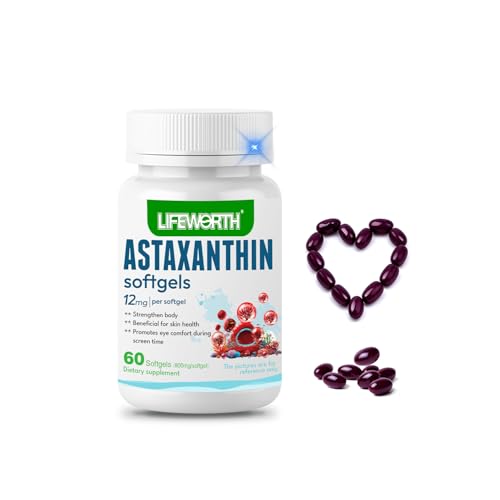
- Nutrex Hawaii BioAstin Hawaiian AstaxanthinLab-tested / studied
softgels, 12 mg per softgel, 90 count — Hawaiian-grown Haematococcus pluvialis, sold as the High Potency 90-softgel bottle - Pure Synergy SuperPure Astaxanthin Extract
capsules, 60 count — Sold as an astaxanthin extract in a capsule rather than a softgel; the listing does not state a mg per capsule, so check the label for the dose before comparing it with the 12 mg bottles here - Naturalis New Zealand Astaxanthin
softgels, 12 mg per softgel, 120 count — New Zealand-grown rather than Hawaiian, and the largest bottle on this list at 120 softgels - NOW Foods Astaxanthin
softgels, 4 mg per softgel — The entry-level 4 mg dose, built on the Zanthin astaxanthin ingredient; a lower starting point than the 12 mg bottles above
As an Amazon Associate we earn from qualifying purchases. Astaxanthin products vary mainly by dose and by source, with 4mg and 12mg the common strengths and most of them derived from Haematococcus pluvialis algae, so check the label for the astaxanthin content per serving and prefer products that publish third-party testing.
A Note on the Evidence
The human trial evidence for astaxanthin in athletes is generally promising but limited by small sample sizes, short durations, and variable methodology — it is premature to treat any benefit as established. Anyone with existing medical conditions, those taking medications (particularly blood thinners or immunosuppressants), and pregnant or breastfeeding individuals should consult a qualified healthcare provider before beginning supplementation. This article is informational only and does not constitute medical or dietary advice.
Frequently Asked Questions
How long does it take for astaxanthin to produce noticeable effects in athletes?
Most human trials run for four to twelve weeks, and beneficial effects on oxidative stress and muscle damage markers tend to appear after at least four weeks of consistent daily supplementation. Acute single-dose effects are unlikely to be substantial given astaxanthin’s mechanism, which involves tissue saturation over time rather than immediate pharmacological action.
Can astaxanthin replace other recovery strategies like sleep, protein intake, and cold therapy?
No. Astaxanthin at best complements an established recovery framework — it is not a substitute for adequate sleep, sufficient dietary protein, progressive training load management, or other evidence-based recovery practices. The absolute effect sizes seen in trials are modest, and no single supplement overrides the fundamentals of athlete recovery.
Is astaxanthin safe for long-term use?
Natural astaxanthin from Haematococcus pluvialis holds GRAS status and has shown no serious adverse effects in trials at doses up to 12 mg per day for up to twelve weeks. At very high doses above approximately 20 mg per day, some individuals develop a reversible yellow-orange skin discolouration called carotenodermia, which resolves on stopping supplementation. Long-term safety data beyond three months in athletes are limited.
Should female athletes or pregnant women take astaxanthin?
Evidence in pregnancy and breastfeeding is insufficient to establish safety for the developing foetus or infant. Supplementation during pregnancy or breastfeeding is not recommended. Female athletes who are not pregnant can use astaxanthin in the same way as male athletes, though most published exercise trials have predominantly enrolled male participants, which is a limitation of the existing evidence base.
Will astaxanthin blunt training adaptations the way high-dose vitamin C and E supplementation sometimes does?
High-dose vitamin C and E supplementation has been associated in some research with blunting of mitochondrial biogenesis and insulin sensitivity improvements from endurance training. Astaxanthin at typical doses does not appear to suppress these adaptive signals based on available data, but this specific question has not been rigorously studied in long-term athlete trials. Sticking to doses in the 6–12 mg range appears prudent.
Does the form of astaxanthin in a supplement matter — free versus esterified?
In Haematococcus pluvialis, astaxanthin exists predominantly in esterified form, bound to fatty acids. During digestion, these esters are hydrolysed to free astaxanthin before absorption. Some research suggests that esterified astaxanthin from algae may have comparable or superior bioavailability to synthetic free-form astaxanthin when taken with dietary fat. Choosing a product derived from Haematococcus pluvialis generally ensures you are getting the natural esterified form.
References
- Astaxanthin: How much is too much? A safety review. Phytotherapy Research (2019). PMID 31788888
- Astaxanthin: sources, extraction, stability, biological activities and its commercial applications – a review. Marine Drugs (2014). PMID 24402174
These statements have not been evaluated by the Food and Drug Administration. This information is not intended to diagnose, treat, cure, or prevent any disease. Content is for informational purposes only and is not medical advice; consult a qualified healthcare provider before starting any supplement. As an Amazon Associate we earn from qualifying purchases.
