Astaxanthin and coenzyme Q10 (CoQ10) are two of the most researched lipid-soluble antioxidants associated with mitochondrial health. Both accumulate in cell membranes, both are sold in the context of energy, aging, and oxidative stress, and both have plausible biological mechanisms. That surface similarity has made them frequent comparisons in the supplement space — but the two compounds work through fundamentally different pathways, and conflating them obscures what each can and cannot reasonably be expected to do.
This article compares astaxanthin and CoQ10 on mechanism, evidence quality, dosing, safety, and practical considerations. The goal is an honest picture rather than a recommendation. Much of the research on both compounds is preliminary, conducted in small populations over short durations, and not yet replicated in large outcome trials. That context matters before drawing conclusions.
Key Takeaways
- CoQ10 plays a structural role in mitochondrial ATP production and declines with age and statin use; astaxanthin has no energetic function and its value is as an exogenous antioxidant with an unusual membrane-spanning structure.
- Astaxanthin’s polar end groups allow it to quench singlet oxygen and free radicals across both lipid and aqueous cell membrane compartments simultaneously — a mechanistic advantage over antioxidants confined to one phase.
- Both compounds have biologically plausible mechanisms but limited large-scale human outcome data; early RCT signals in biomarkers should not be overstated.
- Natural astaxanthin at 4–12 mg/day has a well-characterized short-term safety profile; CoQ10 as ubiquinol is better absorbed, especially in older adults and statin users.
- The two compounds are not interchangeable — they address different cellular targets — and the rationale for each should be assessed independently with a healthcare provider.
What CoQ10 Does in the Cell
Coenzyme Q10, also called ubiquinone, is a fat-soluble benzoquinone compound the body synthesizes endogenously. It is found in highest concentrations in tissues with the greatest energy demands — heart muscle, liver, kidneys, and skeletal muscle. Its primary function is structural: CoQ10 shuttles electrons between complexes I and III of the mitochondrial electron transport chain, a step that is essential for ATP production. Without adequate CoQ10, oxidative phosphorylation slows.
CoQ10 also acts as an antioxidant in its reduced form, ubiquinol, scavenging free radicals generated during mitochondrial respiration. Because CoQ10 is concentrated in the inner mitochondrial membrane, this antioxidant activity is localized there rather than distributed across the broader cell. Endogenous CoQ10 levels decline with age and are further reduced by statin medications, which inhibit the mevalonate pathway responsible for CoQ10 synthesis alongside cholesterol — a well-established pharmacological interaction.
Supplemental CoQ10 is available as either ubiquinone or ubiquinol. The ubiquinol form is better absorbed, particularly in older adults whose conversion capacity diminishes. Common doses in human studies range from 100 mg to 300 mg per day. Gastrointestinal discomfort is the most commonly reported side effect at higher doses; serious adverse events are rare.
What Astaxanthin Does — and Why Its Structure Is Unusual
Astaxanthin is a keto-carotenoid synthesized primarily by the microalgae Haematococcus pluvialis. Unlike CoQ10, it is not produced in the human body and must come from diet — wild salmon, shrimp, krill — or supplementation. Its defining structural feature is a pair of polar end groups that allow the molecule to span the entire phospholipid bilayer of a cell membrane, anchoring simultaneously at both the hydrophilic outer surface and the hydrophilic inner surface while its backbone sits in the lipid core.
This membrane-spanning orientation enables astaxanthin to quench singlet oxygen and free radicals in both the lipid and aqueous phases of the cell simultaneously. This is mechanistically distinct from CoQ10, which is confined to the inner mitochondrial membrane, and from other carotenoids like beta-carotene, which sit only in the lipid core and lack the polar anchoring groups. Astaxanthin has no known role in energy metabolism; its proposed value is as a broad-coverage exogenous antioxidant and potential modulator of inflammatory pathways.

Early human randomized controlled trials have reported signals in areas including eye fatigue, UV-induced skin aging, exercise-induced muscle damage, and inflammatory biomarkers. These findings are biologically plausible given the membrane chemistry, but the trials are generally small and short in duration. Research examining antioxidant capacity and anti-ageing biomarkers following dietary micronutrient supplementation has supported the general plausibility of carotenoid compounds influencing oxidative status [1], though isolating the contribution of any single compound in multinutrient studies is methodologically difficult.
Head-to-Head: Where the Mechanisms Diverge
The most important distinction is role. CoQ10 is an essential participant in cellular energy production; supplementation is primarily a rationale for restoring something the body makes and that declines for identifiable reasons. Astaxanthin has no energetic function; the case for supplementing it rests entirely on its antioxidant and potential anti-inflammatory properties as an exogenous compound.
Cellular distribution also differs. CoQ10 is concentrated in the inner mitochondrial membrane. Astaxanthin distributes across the full cell membrane bilayer and may stabilize membrane structure, potentially limiting lipid peroxidation chain reactions across a broader area. Whether this broader distribution translates into clinically meaningful protection beyond what CoQ10 provides in the mitochondria is not established by current evidence.
A third distinction is the concept of deficiency. CoQ10 levels in the body can be measured, decline with age, and are reduced by specific drugs — there is a physiological baseline to restore. Astaxanthin has no endogenous baseline; it is purely dietary, must be continuously consumed, and the absence of it does not constitute a deficiency state in the way that low CoQ10 might.
Evidence Quality: An Honest Assessment of Both
CoQ10 has a longer research history and has been studied in populations with clear physiological rationale, including statin users, individuals with heart failure, and older adults with documented CoQ10 decline. Despite this, systematic reviews of CoQ10 for specific clinical outcomes have produced mixed results depending on population, endpoint, form, and duration. The evidence is strongest for biological plausibility and weakest for hard clinical outcomes in healthy populations.
Astaxanthin human trial evidence is more recent and concentrated in small, short-duration RCTs. Early signals are present in several outcome areas, and the compound’s GRAS status from the FDA reflects that natural astaxanthin from Haematococcus pluvialis is considered safe within normal supplemental use. Trials up to 12 mg/day for 12 weeks have not identified serious adverse effects. Whether early RCT signals in biomarkers and surrogate endpoints predict meaningful long-term health outcomes has not been demonstrated.
Both compounds face a challenge common to antioxidant research broadly: laboratory measures of oxidative stress and antioxidant capacity do not reliably predict clinical disease outcomes. Large trials of other antioxidant compounds have sometimes found no benefit or unexpected harms. Neither astaxanthin nor CoQ10 has large, long-term randomized data on disease incidence, mortality, or major clinical events.

Dosing, Forms, and Safety Considerations
For astaxanthin, human trials have used doses of 4 mg to 12 mg per day of natural astaxanthin from Haematococcus pluvialis. This is the form with the most human safety data, and it should not be confused with synthetic astaxanthin — the form used predominantly in aquaculture feed — which has a different molecular configuration. Safety data from natural astaxanthin studies do not automatically extend to synthetic forms.
At very high doses exceeding 20 mg per day, reversible carotenodermia — a yellow-orange discoloration of the skin — has been reported, consistent with the behavior of other carotenoids at high intake. Evidence in pregnant or breastfeeding individuals is insufficient, and supplementation is not recommended during pregnancy or breastfeeding. Anyone on immunosuppressants or blood pressure medications should consult a physician before adding astaxanthin, as potential interactions are not well characterized.
For CoQ10, ubiquinol is preferred over ubiquinone for bioavailability, particularly in older adults. Doses used in research range widely but commonly fall between 100 mg and 300 mg per day. CoQ10 is fat-soluble and should be taken with a meal containing fat to support absorption. It is generally well tolerated, with mild GI effects being the most commonly reported issue at higher doses.
Should You Consider Taking Both?
Because astaxanthin and CoQ10 operate through different mechanisms and are distributed in different cellular compartments, there is no inherent pharmacological conflict between them. The theoretical argument for combining them is that CoQ10 addresses mitochondrial-specific oxidative activity while astaxanthin provides broader membrane-spanning antioxidant coverage. Whether this complementarity produces additive benefits in humans has not been directly studied in controlled trials.
From a practical standpoint, the case for each should be evaluated separately. CoQ10 supplementation has a clearer physiological rationale when a specific reason for reduced endogenous levels exists — statin therapy being the most common. Astaxanthin supplementation is better framed as adding an exogenous dietary antioxidant with early evidence in specific areas. Neither should be relied upon as a substitute for foundational health practices, and neither has proven efficacy in preventing specific diseases.

🛒 Where to Buy Astaxanthin
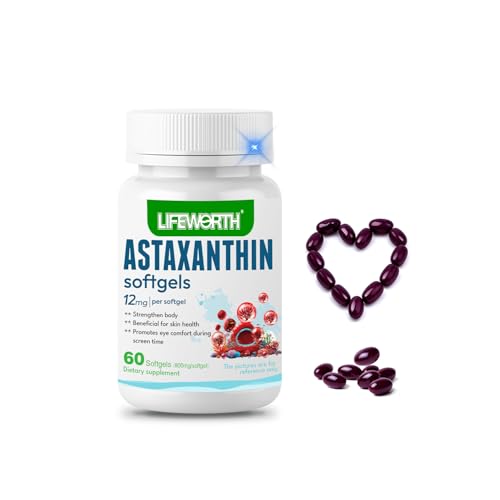
- Nutrex Hawaii BioAstin Hawaiian AstaxanthinLab-tested / studied
softgels, 12 mg per softgel, 90 count — Hawaiian-grown Haematococcus pluvialis, sold as the High Potency 90-softgel bottle - Pure Synergy SuperPure Astaxanthin Extract
capsules, 60 count — Sold as an astaxanthin extract in a capsule rather than a softgel; the listing does not state a mg per capsule, so check the label for the dose before comparing it with the 12 mg bottles here - Naturalis New Zealand Astaxanthin
softgels, 12 mg per softgel, 120 count — New Zealand-grown rather than Hawaiian, and the largest bottle on this list at 120 softgels - NOW Foods Astaxanthin
softgels, 4 mg per softgel — The entry-level 4 mg dose, built on the Zanthin astaxanthin ingredient; a lower starting point than the 12 mg bottles above
As an Amazon Associate we earn from qualifying purchases. Astaxanthin products vary mainly by dose and by source, with 4mg and 12mg the common strengths and most of them derived from Haematococcus pluvialis algae, so check the label for the astaxanthin content per serving and prefer products that publish third-party testing.
A Note on the Evidence
The evidence base for both astaxanthin and CoQ10 consists primarily of small, short-duration trials, and neither compound has large long-term randomized data demonstrating disease prevention or treatment benefits. This article is informational only and is not medical advice — supplementation decisions should be made in consultation with a qualified healthcare provider, particularly for individuals with existing conditions, those taking medications, or those who are pregnant or breastfeeding.
Frequently Asked Questions
Is astaxanthin a stronger antioxidant than CoQ10?
They are not directly comparable on a single potency scale because they act in different cellular locations and through different mechanisms. CoQ10 is localized to the inner mitochondrial membrane; astaxanthin spans both surfaces of the full cell membrane bilayer and operates in both lipid and aqueous phases. Framing them on a single ‘strength’ axis misrepresents how each actually works.
Does CoQ10 supplementation actually increase energy levels?
CoQ10 is essential for mitochondrial ATP production, so when endogenous levels are genuinely low — due to aging, statin use, or other factors — restoring them may support normal energy metabolism. Whether supplementation noticeably increases perceived energy in healthy individuals with normal CoQ10 levels is less clear. The research evidence for energy outcomes specifically in healthy adults is limited, and ubiquinol form appears better absorbed than ubiquinone.
Can astaxanthin affect antioxidant biomarkers in humans?
Early human studies suggest it can influence markers of oxidative status. Research on dietary micronutrient supplementation has reported improvements in antioxidant capacity and anti-ageing biomarkers [1], consistent with the biological plausibility of carotenoid antioxidant activity. However, whether changes in these biomarkers translate to meaningful health outcomes has not been established in long-term trials.
Who should avoid astaxanthin supplementation?
Individuals who are pregnant or breastfeeding should avoid astaxanthin supplements because human safety data in these populations is insufficient. At doses above 20 mg per day, reversible carotenodermia has been reported. Anyone taking immunosuppressant medications or antihypertensive drugs should consult a healthcare provider before starting astaxanthin, as interaction data are limited.
Why is CoQ10 often recommended with statins?
Statins inhibit HMG-CoA reductase, which is an enzyme in the mevalonate pathway. CoQ10 is synthesized through this same pathway, so statins reduce endogenous CoQ10 production as a side effect of lowering cholesterol. This pharmacological rationale has led to widespread recommendations to supplement CoQ10 during statin therapy, though the clinical trial evidence for specific patient-level benefits in this context remains mixed and ongoing.
Can you get enough astaxanthin from food?
Wild salmon and other seafood contain astaxanthin, but typical dietary intakes from food are generally well below the 4–12 mg per day doses used in human clinical trials. Farmed salmon often receives synthetic astaxanthin in feed, which differs in molecular configuration from natural astaxanthin derived from Haematococcus pluvialis. For most people, reaching trial-relevant intakes from diet alone is not realistic without supplementation.
References
- Balcerczyk A et al. Enhanced antioxidant capacity and anti-ageing biomarkers after diet micronutrient supplementation. Molecules (Basel, Switzerland) (2014). PMID 25232703
These statements have not been evaluated by the Food and Drug Administration. This information is not intended to diagnose, treat, cure, or prevent any disease. Content is for informational purposes only and is not medical advice; consult a qualified healthcare provider before starting any supplement. As an Amazon Associate we earn from qualifying purchases.
