Astaxanthin is a keto-carotenoid produced by the microalgae Haematococcus pluvialis, and it has attracted serious scientific interest because of an unusual structural property: it spans both the lipid and aqueous layers of cell membranes simultaneously. This means it can quench singlet oxygen and neutralize free radicals in contexts where many antioxidants cannot reach. But biological effects take time to accumulate, and the honest answer to ‘how long does astaxanthin take to work?’ depends entirely on what you are trying to support.
This article walks through the evidence-based timeline for each major area of research — athletic performance, cardiovascular and metabolic health, and reproductive oxidative stress — using only published clinical trial data. Where evidence is limited or absent, that is stated plainly. This is informational content, not medical advice.
Key Takeaways
- Athletic performance and exercise recovery benefits may appear after approximately 4 weeks of daily supplementation, based on trial data in young athletes [1].
- Cardiovascular and metabolic markers such as cholesterol respond more slowly and typically require 8–12 weeks of consistent intake [2].
- Reproductive and fertility-related oxidative stress endpoints have been studied over multi-week periods; research here is early-stage [3].
- Taking astaxanthin with a fat-containing meal meaningfully improves absorption and may shorten the time to tissue accumulation.
- Supplementation is not recommended during pregnancy or breastfeeding due to insufficient safety data.
Why There Is No Single Timeline
The time required to see a measurable effect from any supplement depends on the underlying biology of the outcome you are measuring. Muscle damage markers in blood can shift within days of an intervention; cholesterol metabolism takes weeks of consistent intake; structural changes to skin or eye tissue take even longer. Astaxanthin operates primarily by reducing oxidative stress and inflammation at the cellular level, so faster-responding systems tend to show effects sooner.
Dosage and the formulation also matter. Most clinical trials have used natural astaxanthin derived from Haematococcus pluvialis at doses ranging from 4 mg to 12 mg per day. Because astaxanthin is fat-soluble, it is absorbed significantly better when taken with a meal containing dietary fat. Skipping this step can meaningfully slow tissue accumulation and delay any observable benefit.
The practical implication is that you should set realistic expectations based on your specific goal before starting supplementation, rather than expecting a universal onset window.
Athletic Performance and Muscle Recovery: Around 4 Weeks
One of the more tightly studied timelines involves exercise-induced oxidative stress. Physical exertion generates reactive oxygen species in muscle tissue, and a portion of post-exercise soreness and fatigue reflects this oxidative burden rather than structural damage alone. Because astaxanthin integrates into muscle cell membranes, it may help buffer this load.
A 2025 randomized, double-blind, placebo-controlled trial in young male taekwondo athletes found measurable differences in athletic performance and body composition markers after a 4-week supplementation period [1]. This is a relatively short window for a carotenoid-class antioxidant, and it aligns with the biological logic that accumulation in muscle tissue reaches a functional threshold after several weeks of consistent daily intake.
What this means practically: if your primary goal is supporting exercise recovery or performance, a fair initial trial period is four to six weeks of daily supplementation at a clinically studied dose, taken with food. Expecting results in the first week or two is likely unrealistic based on available data.


Cardiovascular and Metabolic Markers: 8–12 Weeks
Changes in cholesterol fractions, triglycerides, and inflammatory cardiovascular markers are slower-moving endpoints than exercise performance. These reflect processes in the liver, vascular endothelium, and adipose tissue that respond on a longer timescale.
A 2023 randomized trial in adults with prediabetes and dyslipidemia found that astaxanthin supplementation led to measurable reductions in cholesterol and cardiovascular risk markers compared with placebo [2]. The trial duration in that study extended well beyond four weeks, consistent with the expectation that lipid metabolism responds more slowly than acute oxidative stress markers. This is informational — individuals with diagnosed metabolic conditions should work with a clinician rather than self-treating.
The mechanistic rationale here is that astaxanthin’s integration into LDL particles may reduce their susceptibility to oxidative modification, and its anti-inflammatory effects on vascular tissue may contribute to risk marker changes. Both processes require time and consistent intake to accumulate.
Reproductive Oxidative Stress: Typically 8–12 Weeks in Trial Contexts
Oxidative stress in reproductive tissue is a recognized factor in certain fertility challenges, particularly in cases involving poor ovarian response. Astaxanthin’s ability to operate across the lipid-aqueous membrane boundary makes it theoretically relevant to protecting oocyte quality, which is highly sensitive to reactive oxygen species.
A 2024 randomized clinical trial found that astaxanthin supplementation improved outcomes in poor ovarian responders undergoing assisted reproductive technology, with the proposed mechanisms including reductions in oxidative stress, inflammation, and apoptosis [3]. This research area is early-stage, and the finding should not be interpreted as evidence that astaxanthin treats infertility. Rather, it suggests that in specific clinical populations under conditions of high oxidative burden, supplementation over a multi-week period may influence measurable biological parameters.
It is also important to note that evidence for astaxanthin use during pregnancy itself is insufficient. Supplementation is not recommended during pregnancy or breastfeeding given the lack of adequate safety data in those populations.
Other Areas: Eye Fatigue and Skin — Longer Horizons
Human trials on eye fatigue and UV-induced skin aging have generally used supplementation periods of four to twelve weeks, with skin endpoints requiring the longer end of that range. These outcomes reflect tissue-level changes — in the lens, retina, and dermal layers — that respond more slowly than circulating biomarkers.

The evidence base for these specific benefits is smaller and more heterogeneous than for the exercise and cardiovascular endpoints described above. The mechanistic plausibility is clear given astaxanthin’s unique membrane-spanning antioxidant properties, but prospective buyers should understand that the clinical trial base in these areas is not yet large enough to draw firm conclusions about onset timing.

If skin or eye health is the primary motivation, a reasonable minimum trial period based on study durations in the literature is eight to twelve weeks of consistent daily use, with realistic expectations about the magnitude of any effect.
Practical Guidance: Maximizing What the Evidence Supports
Fat-soluble carotenoids like astaxanthin require dietary fat for adequate absorption. Taking astaxanthin with a meal — particularly one containing at least some fat — is one of the most practical steps you can take to support tissue accumulation and reach an effective threshold faster.
Doses used in published trials have generally ranged from 4 mg to 12 mg per day. Natural astaxanthin from Haematococcus pluvialis at these levels has shown no serious adverse effects in trials up to twelve weeks in duration. The only consistently observed side effect at very high doses (above approximately 20 mg per day) is carotenodermia, a reversible yellow-orange tint to the skin caused by carotenoid accumulation, which resolves when supplementation is stopped.
Consistency matters more than dose within the studied range. Missing doses intermittently will likely delay the accumulation timeline. Setting a specific daily cue — a particular meal, for example — improves adherence and gives you a realistic window to evaluate whether the supplement is doing anything meaningful for your specific goal.
🛒 Where to Buy Astaxanthin
- Nutrex Hawaii BioAstin Hawaiian AstaxanthinLab-tested / studied
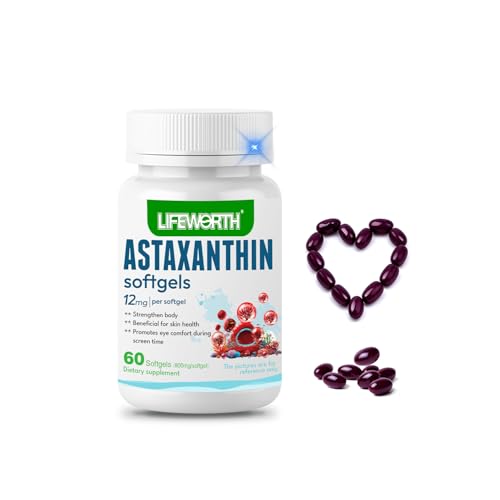
softgels, 12 mg per softgel, 90 count — Hawaiian-grown Haematococcus pluvialis, sold as the High Potency 90-softgel bottle - Pure Synergy SuperPure Astaxanthin Extract
capsules, 60 count — Sold as an astaxanthin extract in a capsule rather than a softgel; the listing does not state a mg per capsule, so check the label for the dose before comparing it with the 12 mg bottles here - Naturalis New Zealand Astaxanthin
softgels, 12 mg per softgel, 120 count — New Zealand-grown rather than Hawaiian, and the largest bottle on this list at 120 softgels - NOW Foods Astaxanthin
softgels, 4 mg per softgel — The entry-level 4 mg dose, built on the Zanthin astaxanthin ingredient; a lower starting point than the 12 mg bottles above
As an Amazon Associate we earn from qualifying purchases. Astaxanthin products vary mainly by dose and by source, with 4mg and 12mg the common strengths and most of them derived from Haematococcus pluvialis algae, so check the label for the astaxanthin content per serving and prefer products that publish third-party testing.
A Note on the Evidence
The clinical evidence for astaxanthin is promising but still limited in scale — most trials are short-term, involve small samples, and focus on specific populations. This article is informational and does not constitute medical advice; anyone managing a diagnosed health condition should consult a qualified healthcare provider before adding any supplement to their routine. Supplementation during pregnancy or breastfeeding is not recommended.
Frequently Asked Questions
How long does astaxanthin take to work for exercise recovery?
A randomized controlled trial in taekwondo athletes observed changes in athletic performance and body composition markers after 4 weeks of supplementation [1]. For most people using astaxanthin to support exercise recovery, a fair minimum trial period is four to six weeks of daily use taken with food.
Does astaxanthin lower cholesterol, and how long does that take?
A 2023 randomized trial found that astaxanthin supplementation was associated with reductions in cholesterol and cardiovascular risk markers in individuals with prediabetes and dyslipidemia [2]. Lipid changes are slower-moving than acute oxidative stress markers, so this endpoint generally requires a longer supplementation window — typically at least eight weeks. Anyone with diagnosed lipid abnormalities should manage treatment under medical supervision.

Can astaxanthin affect fertility or reproductive health?
A 2024 clinical trial found improved outcomes in poor ovarian responders undergoing assisted reproductive technology, with mechanisms attributed to reduced oxidative stress, inflammation, and apoptosis [3]. This is an early area of research and should not be interpreted as a fertility treatment. Supplementation during pregnancy is not recommended due to insufficient safety data.
What is the best way to take astaxanthin to make it work faster?
Because astaxanthin is fat-soluble, absorption is significantly higher when it is taken with a meal containing dietary fat. This is one of the most evidence-consistent steps you can take to support tissue accumulation. Consistency of daily intake also matters more than the precise timing within the day.
Are there any side effects from taking astaxanthin?
Natural astaxanthin from Haematococcus pluvialis has shown no serious adverse effects in human trials at doses up to 12 mg per day for up to twelve weeks. At very high doses above approximately 20 mg per day, some individuals develop carotenodermia — a reversible yellow-orange tint to the skin — which resolves when supplementation is discontinued.
How long should I try astaxanthin before deciding if it works?
This depends on your goal. For exercise-related outcomes, four to six weeks is a reasonable minimum based on available trial durations [1]. For metabolic or cardiovascular markers, eight to twelve weeks is more appropriate [2]. Expecting results within the first one to two weeks is not supported by current evidence for any endpoint.
References
- Zhang XC et al. Effects of 4-week astaxanthin supplementation on athletic performance and body composition in young male taekwondo athletes: a randomized, double-blind, placebo-controlled trial. Frontiers in nutrition (2025). PMID 41473192
- Ciaraldi TP et al. Astaxanthin, a natural antioxidant, lowers cholesterol and markers of cardiovascular risk in individuals with prediabetes and dyslipidaemia. Diabetes, obesity & metabolism (2023). PMID 36999233
- Shafie A et al. Astaxanthin improves assisted reproductive technology outcomes in poor ovarian responders through alleviating oxidative stress, inflammation, and apoptosis: a randomized clinical trial. Journal of ovarian research (2024). PMID 39482765
These statements have not been evaluated by the Food and Drug Administration. This information is not intended to diagnose, treat, cure, or prevent any disease. Content is for informational purposes only and is not medical advice; consult a qualified healthcare provider before starting any supplement. As an Amazon Associate we earn from qualifying purchases.
