There is a small body of research on astaxanthin and the stomach, and most of it is in mice. The one human randomized controlled trial is from 2008, it enrolled 132 patients, and its headline conclusion is that astaxanthin did not work [1]. That conclusion is almost never quoted, which is reason enough to write it down carefully.
Key Takeaways
- 132 patients with functional dyspepsia were randomized into three groups of 44: placebo, 16 mg/day astaxanthin, or 40 mg/day astaxanthin, for four weeks [1].
- At the end of treatment there was no difference between the three groups in abdominal pain, indigestion, or reflux syndrome scores. The same held at follow-up [1].
- One secondary signal survived: the reduction in reflux symptoms from baseline to week 4 was significantly greater at 40 mg than at 16 mg or placebo, and the response was more pronounced in patients who tested positive for H. pylori [1].
- 40 mg/day is roughly three to ten times a normal consumer dose and well above the intake EFSA has assessed as safe for supplement use [2].
- The supportive H. pylori work is in mice at 5 mg/kg body weight per day, and a review notes astaxanthin reduced inflammation in infected tissue without reducing cytokine levels [3][4].
What functional dyspepsia is
Functional dyspepsia is persistent upper abdominal discomfort, fullness, early satiety, or burning without a structural cause that endoscopy can find. It is common, it is frustrating to treat, and it is exactly the kind of condition where supplements get tried, because conventional options are limited and the symptoms fluctuate enough that almost anything can appear to help for a while.
That fluctuation is why the placebo arm in a dyspepsia trial is not a formality. Symptom scores in this condition improve substantially on placebo, which is precisely what makes a controlled comparison necessary.
The trial design
Published in Phytomedicine, this was a prospective, randomized, double-blind, placebo-controlled study. Patients were split into three equal groups of 44, receiving placebo, 16 mg of astaxanthin, or 40 mg of astaxanthin daily for four weeks [1].
Research note: In mice, feeding astaxanthin (from Haematococcus pluvialis) or the algal polysaccharide ulvan shifted gut bacterial groups, though treatment duration changed the community more than the treatment type; no health outcome was measured [7].
Participants underwent gastroscopy before treatment, and completed two validated instruments: the Gastrointestinal Symptom Rating Scale (GSRS), which breaks symptoms into syndromes including abdominal pain, indigestion, and reflux, and SF-36, a general quality-of-life measure. A urea breath test was done before treatment to determine H. pylori status, so the trial could look at infected and uninfected patients separately.
The stated primary hypothesis was that astaxanthin at either dose would improve overall gastrointestinal discomfort measured by GSRS, in patients either positive or negative for H. pylori, after four weeks.
The result
At week 4, there was no difference between the three treatment groups in mean GSRS scores for abdominal pain, indigestion, or reflux syndromes. At the end of follow-up, the same. The authors state it directly: in general, no curative effect of astaxanthin was found in functional dyspepsia patients [1].
The one exception was a within-trial comparison of change over time. The reduction in reflux syndrome score from before treatment to week 4 was significantly more pronounced at 40 mg than in the 16 mg and placebo groups, at p = 0.04. And the response was more pronounced in patients who were H. pylori positive [1].
How much weight that reflux finding can carry
Not much, for three reasons.
First, it is a secondary outcome in a trial whose primary outcome was null. When the main comparison fails and a sub-score succeeds, the sub-score is a lead to follow up, not a conclusion.
Second, p = 0.04 is a marginal result, and the trial tested three symptom syndromes across two doses at two time points. With that many comparisons, one landing just under 0.05 is close to what chance alone would produce.
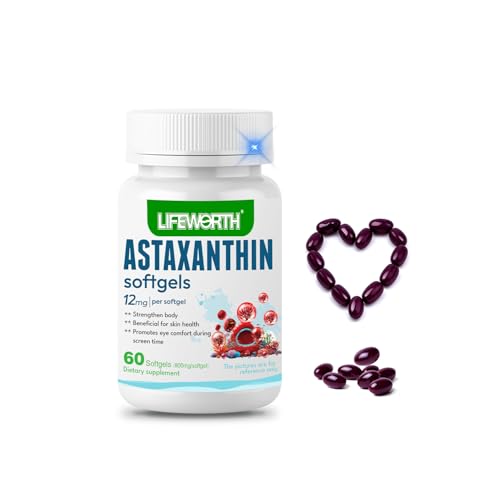
Third, the dose. Forty milligrams per day is not a consumer dose. Standard astaxanthin softgels come in 4 mg and 12 mg, as our 4 mg versus 12 mg article covers. EFSA’s 2020 assessment concluded that 8 mg/day from supplements alongside a normal diet is safe for adults, working from an acceptable daily intake of 0.2 mg per kilogram of body weight [2]. Forty milligrams is five times that supplement level. And the 16 mg arm, which is the closer of the two to anything a person would actually take, showed nothing at all.
The H. pylori thread
The stronger-response-in-infected-patients observation is the most interesting thing in the trial, because there is a mechanistic literature behind it.
In mice inoculated with H. pylori and then fed an astaxanthin-supplemented diet at 5 mg per kilogram of body weight daily for seven weeks, astaxanthin attenuated the infection-driven increases in lipid peroxide production and myeloperoxidase activity, and reduced expression of interferon-gamma and the oncogenes c-myc and cyclin D1. It also reduced the neutrophil infiltration and gastric mucosal hyperplasia that infection produced [3].
A review of the mechanism adds an important qualification. Astaxanthin shifts the H. pylori-induced immune response from a T helper type 1 pattern toward type 2, and inhibits the growth of the bacterium itself. But the same review notes that while astaxanthin reduces H. pylori-induced gastric inflammation, it does not reduce cytokine levels in the infected tissues [4].
That matches what the review says about the human dyspepsia work: astaxanthin shifted T-cell markers in patients with H. pylori infection, but bacterial load and cytokine levels in the infected tissue were unchanged [4].

Note also the dose scale. Five milligrams per kilogram in a mouse is not five milligrams per kilogram in a person. Metabolic rate differences mean rodent doses routinely translate to much lower human-equivalent doses, and reviews of astaxanthin in other organ systems have flagged that preclinical work often uses concentrations not achievable in humans [5].
What this means practically
There is no human evidence that astaxanthin treats indigestion. There is a single marginal signal on reflux at a dose above what is sold and above what has been assessed for routine supplement use.
Reflux that is persistent enough to be worth treating is also worth investigating, because chronic reflux has consequences that a supplement will not address. H. pylori infection in particular is a recognized risk factor for gastric cancer, it is diagnosable with a breath test, and it is treatable with an antibiotic regimen that has a measurable eradication rate. Substituting a supplement for that is trading a known treatment for an untested one.
Common questions
Can astaxanthin eradicate H. pylori?
No trial has been designed to test that. The 2008 trial measured symptom scores, not eradication, and a review reports that bacterial load in infected patients was unchanged. The mouse work measured inflammation and gene expression rather than clearance of the infection[1][3] [4]. Eradication is confirmed by post-treatment testing and regimens are selected against local resistance patterns.
Does astaxanthin cause stomach upset?
Trials have mostly reported no adverse effects: in an open-label study of 127 healthy adults taking 4, 8 or 20 mg for 4 weeks, the only event attributed to the astaxanthin was red-coloured stool. Taking it with a meal containing fat is standard practice for absorption [6]. Our side effects article covers the reported profile.
Is 40 mg per day safe to try?
The 2008 trial ran it for four weeks without reporting safety problems, which is a limited observation from 44 people. It is five times the supplement intake EFSA assessed as safe for adults [2]. Our safety profile covers what is and is not known at higher intakes.
Why is this trial from 2008 still the best human evidence?
Because nobody has run a better one. That is worth noticing in itself: eighteen years of commercial growth in the astaxanthin category has not produced a follow-up human gastrointestinal trial, positive or negative.
References
- Efficacy of the natural antioxidant astaxanthin in the treatment of functional dyspepsia in patients with or without Helicobacter pylori infection: A prospective, randomized, double blind, and placebo-controlled study. Phytomedicine (2008). PMID 18467083
- Safety of astaxanthin for its use as a novel food in food supplements. EFSA Journal (2020). PMID 32874213
- Astaxanthin Inhibits Helicobacter pylori-induced Inflammatory and Oncogenic Responses in Gastric Mucosal Tissues of Mice. Journal of Cancer Prevention (2020). PMID 33409257
- Astaxanthin and beta-carotene in Helicobacter pylori-induced Gastric Inflammation: A Mini-review on Action Mechanisms. Journal of Cancer Prevention (2017). PMID 28698858
- The Promising Effects of Astaxanthin on Lung Diseases. Advances in Nutrition (2021). PMID 33179051
- Akira Satoh et al. Preliminary Clinical Evaluation of Toxicity and Efficacy of A New Astaxanthin-rich Haematococcus pluvialis Extract. Journal of Clinical Biochemistry and Nutrition (2009). PMID 19430618
- Kunal Pratap et al. The Algal Polysaccharide Ulvan and Carotenoid Astaxanthin Both Positively Modulate Gut Microbiota in Mice. Foods (2022). PMID 35206042
These statements have not been evaluated by the Food and Drug Administration. This information is not intended to diagnose, treat, cure, or prevent any disease. Content is for informational purposes only and is not medical advice; consult a qualified healthcare provider before starting any supplement. As an Amazon Associate we earn from qualifying purchases.
