Astaxanthin is a red-orange pigment produced by the microalgae Haematococcus pluvialis when it faces environmental stress. Unlike most antioxidants, it sits across both the fat-soluble and water-soluble layers of cell membranes simultaneously, giving it an unusually broad reach inside skin cells. Early human trials have tested it specifically for UV-related skin aging and other markers of skin health, making it one of the more studied carotenoids in this area.
This guide covers what the current evidence actually shows, how the proposed mechanism works, what dose ranges have been studied, and what to look for when choosing a supplement. It is informational only and not a substitute for medical advice. No cure or guaranteed outcome is implied.
Key Takeaways
- Astaxanthin from Haematococcus pluvialis spans both lipid and aqueous cell membrane layers, giving it a broad antioxidant reach that makes it biologically plausible for UV-skin aging applications.
- Human trials have used 4–12 mg per day; no serious adverse effects have been reported at these levels, though the evidence base is still early and largely from small trials.[1]
- The only consistently noted side effect at very high doses (above 20 mg/day) is reversible skin discoloration (carotenodermia); supplementation is not recommended during pregnancy or breastfeeding due to insufficient safety data.[1]
- Choose supplements sourced from H. pluvialis, clearly stating milligram content, ideally with third-party testing, and take with a fatty meal to improve absorption.
- Astaxanthin is not a treatment for skin conditions and works best as part of a broader skin-protection approach that includes sunscreen and sun avoidance.
How Astaxanthin May Benefit Skin: The Proposed Mechanism
Skin aging from sun exposure involves two main processes: oxidative damage from ultraviolet radiation generating singlet oxygen and free radicals, and subsequent inflammation that degrades collagen and elastin.[2] Astaxanthin is a keto-carotenoid with a molecular structure that allows it to anchor across the full thickness of a cell membrane—one end sits in the lipid core, the other in the aqueous surface—so it can intercept reactive oxygen species in both environments.
Singlet oxygen quenching is considered the primary mechanism. Astaxanthin has been measured to quench singlet oxygen far more effectively than beta-carotene or vitamin E in laboratory settings, though in-vitro potency does not automatically translate to the same magnitude of effect in human tissue. Researchers have also proposed that astaxanthin reduces inflammatory signaling downstream of oxidative stress, which may partly explain skin-related findings in human trials.
It is worth being clear that the mechanistic picture is well-supported in cell and animal models, while evidence in living humans is still early and sample sizes in most trials are small. The findings are promising but not definitive.
What Human Trials Have Actually Tested in Skin
Several randomized controlled trials have examined astaxanthin’s effects on skin endpoints. The outcomes most consistently studied include UV-induced moisture loss, skin elasticity, formation of wrinkles, and texture. These trials have generally used doses between 4 mg and 12 mg per day over periods ranging from 6 to 16 weeks, and most have enrolled healthy adults rather than people with skin disease.
Results across these trials have been mixed but broadly favorable for certain markers—particularly measures of skin moisture and the appearance of fine lines in areas exposed to sunlight. Some trials have also used a combination of topical astaxanthin and oral supplementation together, which makes it harder to attribute outcomes solely to the supplement.
No large-scale or long-term trials have been completed. Most studies are manufacturer-funded or involve small groups, which is a meaningful limitation. Readers should treat the findings as preliminary signals rather than established fact.

Dosage: What Ranges Have Been Used and What Is Considered Safe
Human trials focused on skin have typically used 4 mg to 6 mg per day. The broader safety literature on astaxanthin from Haematococcus pluvialis—which holds GRAS (Generally Recognized As Safe) status in the United States—shows no serious adverse effects at doses up to 12 mg per day for up to 12 weeks. No serious adverse events have been reliably attributed to astaxanthin at these levels.
The most consistently noted side effect at very high intakes—typically above 20 mg per day and well above studied supplementation ranges—is carotenodermia, a reversible yellow-orange tint to the skin caused by carotenoid accumulation. This is cosmetic and resolves when intake is reduced. It is the same phenomenon seen with high beta-carotene intake.
There is insufficient evidence on safety during pregnancy or breastfeeding, so supplementation is not recommended for those groups. People taking blood thinners or blood pressure medications should speak with a doctor before starting, as theoretical interactions have been noted in the literature.
Natural vs. Synthetic Astaxanthin: Why Source Matters for Supplements
Astaxanthin can be produced naturally from Haematococcus pluvialis microalgae or synthesized chemically, and it can also come from other natural sources such as yeast or krill. The vast majority of human research has been conducted using natural astaxanthin from H. pluvialis. Synthetic astaxanthin is primarily used in aquaculture and animal feed rather than human supplements, and the two forms differ in their stereochemical structure.[3]
Natural H. pluvialis astaxanthin consists predominantly of the 3S,3’S stereoisomer, while synthetic versions are a mixture of stereoisomers. Whether this difference meaningfully changes efficacy in humans has not been thoroughly tested, but most researchers studying health effects have specifically used natural-source material. For this reason, supplements stating ‘from Haematococcus pluvialis’ or ‘AstaReal’ or ‘Zanthin’ (trademarked natural sources) are the ones most relevant to existing trial data.
Krill oil contains astaxanthin in esterified form alongside omega-3 fatty acids. The astaxanthin content per capsule in krill oil is typically low (around 0.1–0.5 mg), well below the 4–12 mg range used in skin trials. Krill oil is not a practical delivery vehicle for therapeutic astaxanthin doses for skin health.
What to Look for in an Astaxanthin Supplement for Skin
The most important factor is the stated astaxanthin content per serving and the source. Look for products clearly labeled with the amount in milligrams (aim for 4–12 mg per capsule or serving) and sourced from Haematococcus pluvialis. Third-party testing certifications (such as NSF, USP, or Informed Sport) indicate that the stated dose has been independently verified, which is meaningful given that carotenoid content in supplements can degrade with improper storage or poor manufacturing.

Astaxanthin is fat-soluble, so it is better absorbed when taken with a meal containing some fat. Many quality supplements include the astaxanthin in an oil-based softgel specifically to improve bioavailability. Packaging also matters: astaxanthin degrades on exposure to light and oxygen, so dark or opaque bottles are preferable to clear ones.
Price per milligram varies widely. Products from established branded ingredients like AstaReal (from Fuji Chemical) or BGG’s Zanthin have been used in published human research. Generic or very cheap products may contain lower actual doses than labeled or use less stable forms.
Realistic Expectations and Honest Caveats
Astaxanthin is not a treatment for any skin condition and has not been approved by any regulatory body for that purpose. The evidence suggests it may offer modest support for skin parameters related to UV-induced aging—think subtle improvements in hydration and fine-line appearance over weeks of consistent use, not dramatic or rapid visible change.
Sunscreen, avoiding peak UV exposure, adequate hydration, and a diet with sufficient vitamins and antioxidants from whole foods remain the best-supported strategies for skin health. A supplement like astaxanthin, if it does anything useful, is likely an incremental addition rather than a primary intervention.
Human trials to date have been short (under four months), small (often 30–60 participants), and frequently industry-funded. Larger independent trials are needed before confident conclusions can be drawn. Anyone with a specific skin concern should consult a dermatologist.
🛒 Where to Buy Astaxanthin
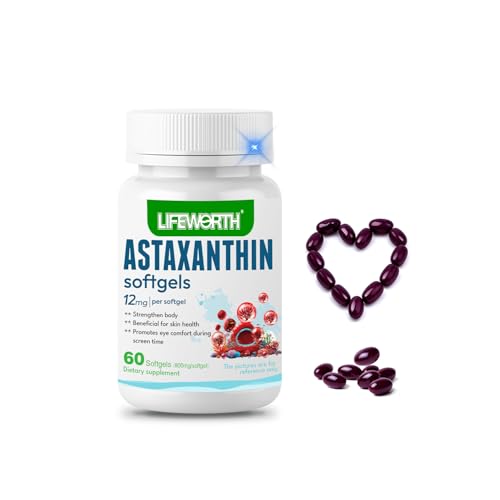
- Nutrex Hawaii BioAstin Hawaiian AstaxanthinLab-tested / studied
softgels, 12 mg per softgel, 90 count — Hawaiian-grown Haematococcus pluvialis, sold as the High Potency 90-softgel bottle - Pure Synergy SuperPure Astaxanthin Extract
capsules, 60 count — Sold as an astaxanthin extract in a capsule rather than a softgel; the listing does not state a mg per capsule, so check the label for the dose before comparing it with the 12 mg bottles here - Naturalis New Zealand Astaxanthin
softgels, 12 mg per softgel, 120 count — New Zealand-grown rather than Hawaiian, and the largest bottle on this list at 120 softgels - NOW Foods Astaxanthin
softgels, 4 mg per softgel — The entry-level 4 mg dose, built on the Zanthin astaxanthin ingredient; a lower starting point than the 12 mg bottles above
As an Amazon Associate we earn from qualifying purchases. Astaxanthin products vary mainly by dose and by source, with 4mg and 12mg the common strengths and most of them derived from Haematococcus pluvialis algae, so check the label for the astaxanthin content per serving and prefer products that publish third-party testing.
A Note on the Evidence
The human trial evidence for astaxanthin and skin health is early-stage, mostly small, and frequently industry-funded; results should be interpreted cautiously and not taken as proof of efficacy. Astaxanthin is not recommended during pregnancy or breastfeeding due to insufficient safety data, and anyone with a skin condition, chronic illness, or taking medications should consult a qualified healthcare provider before supplementing.
Frequently Asked Questions
How long does it take to see any effect on skin from astaxanthin?
Human trials measuring skin outcomes have generally run for 8 to 16 weeks before assessing results. This suggests any effects, if present, develop over at least two to four months of consistent daily use. Short-term use of a few days or weeks is unlikely to produce measurable changes.
Is topical astaxanthin or oral supplementation better for skin?
Some trials have used both together, making comparisons difficult. Oral supplementation distributes astaxanthin systemically and may reach deeper skin layers, while topical application is more concentrated at the surface. There is not enough head-to-head trial data to firmly recommend one over the other for skin health.
Can astaxanthin replace sunscreen?
No. Astaxanthin is not a sunscreen and provides no physical barrier to UV radiation. It has no SPF rating and should never replace broad-spectrum sunscreen. If it offers any benefit for UV-related skin aging, it would be as a complement to—not a substitute for—sun protection measures.
Is astaxanthin from krill oil the same as from an H. pluvialis supplement?
Krill oil does contain astaxanthin, but typically at very low concentrations (0.1–0.5 mg per serving), well below the 4–12 mg doses used in skin-focused research. If you are taking krill oil for omega-3 fatty acids, the astaxanthin content is unlikely to be meaningful for skin-related endpoints studied in trials.
Are there interactions with medications I should know about?
Astaxanthin has theoretical antihypertensive and anticoagulant properties observed in some studies. People taking blood pressure medications or anticoagulants such as warfarin should consult a doctor before supplementing. This is precautionary rather than based on confirmed clinical interaction events.
What does 'GRAS status' mean and does it confirm effectiveness?
GRAS (Generally Recognized As Safe) is a U.S. FDA designation indicating that a substance is considered safe for its intended use, based on available evidence and expert consensus. Natural astaxanthin from H. pluvialis holds this status. GRAS does not indicate effectiveness for any health claim; it is a safety classification only.
References
- Astaxanthin: How much is too much? A safety review. Phytotherapy Research (2019). PMID 31788888
- The Protective Role of Astaxanthin for UV-Induced Skin Deterioration in Healthy People – A Randomized, Double-Blind, Placebo-Controlled Trial. Nutrients (2018). PMID 29941810
- Astaxanthin for the Food Industry. Molecules (2021). PMID 34063189
These statements have not been evaluated by the Food and Drug Administration. This information is not intended to diagnose, treat, cure, or prevent any disease. Content is for informational purposes only and is not medical advice; consult a qualified healthcare provider before starting any supplement. As an Amazon Associate we earn from qualifying purchases.
