Astaxanthin is a red-orange keto-carotenoid produced primarily by the microalgae Haematococcus pluvialis. Unlike most antioxidants, its molecular structure allows it to span the full width of a cell membrane, positioning one end in the lipid core and the other in the aqueous layer. This gives it an unusual ability to quench both fat-soluble and water-soluble free radicals in skin cells simultaneously.
Interest in astaxanthin as a skin-protective compound has grown over the past decade, with a modest but accumulating body of human randomized controlled trials examining outcomes like UV-induced damage, wrinkle depth, skin elasticity, and moisture levels. This article summarizes that evidence honestly, including its limitations.
Key Takeaways
- Astaxanthin spans both lipid and aqueous membrane phases, giving it an unusual antioxidant position in skin cells that may help mitigate UV-generated free radical damage.
- Human RCTs at 4–12 mg/day have shown modest but statistically significant improvements in skin elasticity and wrinkle parameters in several small trials [1][2].
- Reduction in MMP-1 and MMP-12 expression — enzymes that degrade collagen — has been observed in a combination supplement trial [3], providing a plausible mechanism for structural skin effects.
- Natural astaxanthin at trial doses (up to 12 mg/day for 12 weeks) has a good safety profile; the main high-dose side effect is reversible skin discoloration above ~20 mg/day.
- Existing trials are small and short; astaxanthin is not a replacement for sunscreen or established dermatological treatments, and effects are supportive rather than corrective.
How Astaxanthin May Protect Skin: The Proposed Mechanisms
Ultraviolet radiation generates reactive oxygen species in skin tissue, triggering a cascade that damages collagen fibers, degrades elastin, and upregulates matrix metalloproteinases (MMPs) — enzymes that break down structural skin proteins. Astaxanthin’s dual-phase antioxidant activity is thought to intercept this cascade at the membrane level, before oxidative damage propagates into the cell interior.
Beyond direct radical scavenging, astaxanthin appears to modulate inflammatory signaling pathways and reduce the activity of MMP enzymes. A review of protective mechanisms noted that astaxanthin influences NF-κB signaling and reduces UV-induced expression of enzymes responsible for collagen degradation [4]. These are proposed mechanisms supported by in vitro and animal data, and the human trial evidence — while encouraging — remains limited in sample size and duration.
UV-Induced Skin Damage and Photoprotection
One of the better-characterized potential benefits is protection against UV-induced skin changes. Chronic UV exposure drives premature photoaging through oxidative stress, collagen fragmentation, and chronic low-grade inflammation in the dermis. Astaxanthin’s ability to localize within cell membranes positions it at the site where UV-generated radicals are first produced.
A review and synthesis of cosmetic-focused human studies found that oral astaxanthin supplementation was associated with improvements in UV-induced skin deterioration markers, including reductions in wrinkle formation and changes in skin texture following sun exposure [4]. A systematic review and meta-analysis of trials specifically on human skin aging concluded that astaxanthin showed statistically significant effects on several skin aging parameters, though the authors noted that the number of high-quality trials remains small [1].
It is worth being explicit about what photoprotection means in this context: astaxanthin does not function as a sunscreen and does not replace SPF. The evidence pertains to antioxidant-mediated mitigation of UV damage at the cellular level, not to blocking UV radiation from reaching the skin.

Skin Elasticity and Wrinkle Depth
Several small RCTs have examined whether oral or combined oral-topical astaxanthin supplementation affects measurable skin parameters. A 2012 study in healthy male and female subjects using both oral and topical astaxanthin found improvements in skin wrinkle depth, age spot size, skin texture, and moisture content compared to baseline over 6 weeks [2]. The trial was small and lacked a large independent control group, which limits interpretation.

A comparative study found that combining dietary astaxanthin with collagen hydrolysate produced improvements in facial elasticity and reduced the expression of MMP-1 and MMP-12 — two enzymes associated with collagen breakdown — compared to placebo over 12 weeks [3]. The reduction in MMP expression is a plausible mechanism linking antioxidant activity to structural skin changes, though the combined supplement design makes it difficult to isolate astaxanthin’s independent contribution.
The 2021 systematic review and meta-analysis pooled data across eligible trials and found a statistically significant effect of astaxanthin supplementation on skin elasticity, though effect sizes were modest and the authors called for larger, longer trials to confirm clinical relevance [1].
Collagen Support and Matrix Metalloproteinase Inhibition
Collagen is the primary structural protein in the dermis, and its degradation by MMPs — accelerated by UV exposure and oxidative stress — is a central mechanism in visible skin aging. Astaxanthin’s potential to reduce MMP activity is one of the more mechanistically coherent claims in the literature.
In vitro and animal model work has shown that purified astaxanthin from Haematococcus pluvialis can promote tissue regeneration by reducing oxidative stress and supporting collagen synthesis [5]. Human evidence for this specific pathway is more limited, but the MMP-reducing effects observed in the collagen-astaxanthin combination trial [3] are directionally consistent with the laboratory findings.
One important caveat: most collagen-related outcomes in these trials were measured over 8–16 weeks at doses of 4–12 mg/day. Whether longer supplementation produces proportionally greater benefits, or whether a threshold effect exists, has not been established.
Skin Moisture and Surface Quality
Skin hydration and surface smoothness are frequently measured endpoints in cosmetic trials because they are noninvasive and sensitive to change. Several astaxanthin studies have included these as secondary outcomes. The 2012 cosmetic benefits trial found improvements in skin moisture content alongside the elasticity and wrinkle findings [2].

The 2021 meta-analysis identified skin moisture as one of the parameters showing a favorable trend with astaxanthin supplementation across pooled trials, though the effect was less consistently statistically significant than elasticity outcomes [1]. For comparison, other oral compounds such as rose hip powder have shown moisture and elasticity improvements in similar small trials [6], suggesting that multiple dietary antioxidant strategies may affect skin endpoints through overlapping pathways.
These moisture findings are of modest practical significance on their own, but taken alongside elasticity data they suggest a broader pattern of dermal support rather than a single narrow effect.
Dosing, Safety, and What the Evidence Does Not Show
Human trials on skin outcomes have generally used oral doses of 4–12 mg/day of natural astaxanthin from Haematococcus pluvialis, over periods of 6–16 weeks. At these doses, natural astaxanthin holds GRAS (Generally Recognized as Safe) status, and no serious adverse effects have been reported in trials at or below 12 mg/day for 12 weeks. The only consistently noted side effect at higher doses — above approximately 20 mg/day — is a reversible yellowing or orange tinting of the skin (carotenodermia), which resolves when supplementation stops.

What the evidence does not show is equally important. No trial has demonstrated that astaxanthin reverses existing photodamage, eliminates wrinkles, or produces outcomes equivalent to prescription retinoids or clinical procedures. Effect sizes in existing trials are modest, sample sizes are small (most under 50 participants), and few trials have been independently replicated. The 2021 systematic review explicitly noted these limitations while still finding a statistically significant signal on elasticity [1].
Evidence in pregnant or breastfeeding individuals is insufficient to support a safety determination, and supplementation is not recommended during pregnancy or breastfeeding. Anyone with a medical condition or taking medications should consult a healthcare provider before adding astaxanthin to their routine.
🛒 Where to Buy Astaxanthin
- Nutrex Hawaii BioAstin Hawaiian AstaxanthinLab-tested / studied
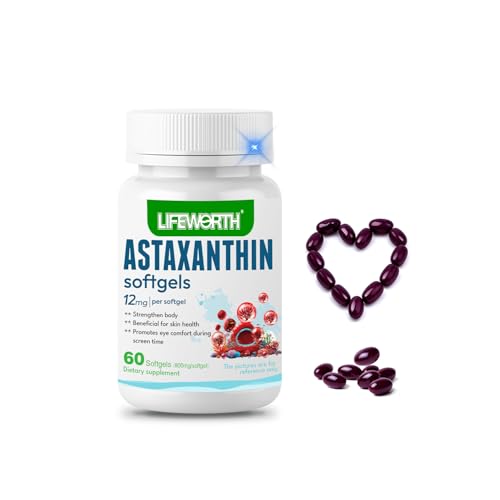
softgels, 12 mg per softgel, 90 count — Hawaiian-grown Haematococcus pluvialis, sold as the High Potency 90-softgel bottle - Pure Synergy SuperPure Astaxanthin Extract
capsules, 60 count — Sold as an astaxanthin extract in a capsule rather than a softgel; the listing does not state a mg per capsule, so check the label for the dose before comparing it with the 12 mg bottles here - Naturalis New Zealand Astaxanthin
softgels, 12 mg per softgel, 120 count — New Zealand-grown rather than Hawaiian, and the largest bottle on this list at 120 softgels - NOW Foods Astaxanthin
softgels, 4 mg per softgel — The entry-level 4 mg dose, built on the Zanthin astaxanthin ingredient; a lower starting point than the 12 mg bottles above
As an Amazon Associate we earn from qualifying purchases. Astaxanthin products vary mainly by dose and by source, with 4mg and 12mg the common strengths and most of them derived from Haematococcus pluvialis algae, so check the label for the astaxanthin content per serving and prefer products that publish third-party testing.
A Note on the Evidence
The human trial evidence on astaxanthin for skin is encouraging but limited — most studies involve fewer than 50 participants and run for under 16 weeks, so long-term effects and clinical significance relative to established treatments remain uncertain. Supplementation is not recommended during pregnancy or breastfeeding due to insufficient safety data, and individuals with medical conditions or on medication should consult a healthcare provider before use. This article is informational and does not constitute medical advice.
Frequently Asked Questions
How does astaxanthin differ from other antioxidants like vitamin C or vitamin E for skin?
Most antioxidants operate in either the water-soluble or fat-soluble compartment of cells, but not both. Astaxanthin’s molecular structure allows it to anchor across the full lipid bilayer, potentially providing protection at a site — the cell membrane — where UV-generated radicals are initially produced. This dual-phase activity is considered one of its distinguishing characteristics [4], though head-to-head human trials comparing astaxanthin directly against vitamin C or E for skin outcomes have not been published.
What dose is used in skin-focused human trials?
Most published human trials on skin outcomes have used oral doses between 4 mg and 12 mg per day of natural astaxanthin, typically over 6 to 16 weeks. The systematic review and meta-analysis pooling these trials found significant effects on skin aging parameters within this dose range [1]. Doses above 12 mg/day have not been well-studied for skin outcomes specifically.
Can astaxanthin replace sunscreen?
No. The evidence for astaxanthin relates to antioxidant mitigation of UV-induced oxidative damage at the cellular level — it does not block or absorb UV radiation. Sunscreen (SPF) remains the primary evidence-based intervention for preventing UV-induced skin damage and photoaging. Astaxanthin supplementation, if beneficial, would be considered a complementary strategy, not a substitute [4].

Does astaxanthin help with collagen loss?
There is preliminary human evidence that astaxanthin may reduce expression of MMP-1 and MMP-12, enzymes that degrade collagen in the dermis [3]. In vitro and animal data also suggest it can support collagen secretion under conditions of oxidative stress [5]. However, the human trial showing MMP reduction used astaxanthin combined with collagen hydrolysate, so astaxanthin’s independent contribution to that result is not fully established.
How long does it take to see skin effects from astaxanthin supplementation?
In the trials that reported positive outcomes, measurable changes in elasticity, wrinkle depth, and moisture were typically observed at 6 to 16 weeks of daily supplementation [2][1]. No trial has established a minimum effective duration, and effects in longer-term use beyond 16 weeks have not been systematically studied.
Is astaxanthin safe, and are there any side effects?
Natural astaxanthin from Haematococcus pluvialis holds GRAS status and has not produced serious adverse effects in human trials at doses up to 12 mg/day for 12 weeks. At very high doses above approximately 20 mg/day, a reversible yellow-orange skin discoloration (carotenodermia) has been reported, which resolves when supplementation is discontinued. Evidence is insufficient to recommend use during pregnancy or breastfeeding.
References
- Zhou X et al. Systematic Review and Meta-Analysis on the Effects of Astaxanthin on Human Skin Ageing. Nutrients (2021). PMID 34578794
- Tominaga K et al. Cosmetic benefits of astaxanthin on humans subjects. Acta biochimica Polonica (2012). PMID 22428137
- Yoon HS et al. Supplementating with dietary astaxanthin combined with collagen hydrolysate improves facial elasticity and decreases matrix metalloproteinase-1 and -12 expression: a comparative study with placebo. Journal of medicinal food (2014). PMID 24955642
- Singh KN et al. Protective effects of astaxanthin on skin: Recent scientific evidence, possible mechanisms, and potential indications. Journal of cosmetic dermatology (2020). PMID 31141292
- Chou HY et al. Purified Astaxanthin from Haematococcus pluvialis Promotes Tissue Regeneration by Reducing Oxidative Stress and the Secretion of Collagen In Vitro and In Vivo. Oxidative medicine and cellular longevity (2020). PMID 32832000
- Phetcharat L et al. The effectiveness of a standardized rose hip powder, containing seeds and shells of Rosa canina, on cell longevity, skin wrinkles, moisture, and elasticity. Clinical interventions in aging (2015). PMID 26604725
These statements have not been evaluated by the Food and Drug Administration. This information is not intended to diagnose, treat, cure, or prevent any disease. Content is for informational purposes only and is not medical advice; consult a qualified healthcare provider before starting any supplement. As an Amazon Associate we earn from qualifying purchases.
