Astaxanthin is a keto-carotenoid — a fat-soluble pigment synthesized primarily by the microalgae Haematococcus pluvialis. Because it belongs to the carotenoid family, it shares a fundamental absorption characteristic with nutrients like beta-carotene, lycopene, and vitamins A, D, E, and K: it cannot dissolve in water, so it requires dietary fat to move from the gut into the bloodstream. Swallowing an astaxanthin capsule on an empty stomach is likely to result in most of the dose passing through unabsorbed.
Understanding why fat matters for astaxanthin absorption is not just academic. The practical gap between a well-timed dose and a poorly timed one can be substantial, and the research into carotenoid pharmacokinetics gives clear guidance on how to close that gap. This article explains the mechanism, the evidence, and the straightforward steps you can take to get more from every milligram.
Key Takeaways
- Astaxanthin is fat-soluble and cannot be meaningfully absorbed without dietary fat — always take it with a fat-containing meal.[2]
- Even a modest amount of long-chain fat (from olive oil, eggs, nuts, or fatty fish) is sufficient to support absorption; a fat-free meal significantly reduces bioavailability.
- Oil-based softgel formulations have an inherent absorption advantage over dry powder capsules, especially if taken away from meals.
- Human trials typically use 4–12 mg/day from natural H. pluvialis sources; no serious adverse effects have been reported in this range for up to 12 weeks.[1]
- Carotenodermia (a reversible skin tint) is the only consistently reported side effect and occurs mainly at doses above 20 mg/day.[1]
What Makes Astaxanthin Fat-Soluble
Astaxanthin’s molecular structure consists of a long polyene chain flanked by two ionone rings, each carrying keto and hydroxyl groups. This structure is almost entirely non-polar, meaning it has no meaningful affinity for water. Like all carotenoids, astaxanthin partitions strongly into lipid environments — including cell membranes, lipoprotein particles in the blood, and fatty tissues.
What makes astaxanthin distinctive among carotenoids is that its polar end groups allow it to span the full width of a cell membrane, anchoring in both the inner and outer lipid layers simultaneously. This positioning is thought to explain its unusually potent antioxidant activity in biological membranes. But this same structural feature means it is essentially insoluble in aqueous digestive fluids and cannot be absorbed without lipid co-ingestion.
The Absorption Pathway: From Gut to Bloodstream
Dietary fat absorption begins when fat-digesting enzymes (lipases) break triglycerides into fatty acids and monoglycerides in the small intestine. These breakdown products, along with bile salts secreted by the liver, spontaneously assemble into structures called mixed micelles — tiny droplets that can carry fat-soluble molecules across the aqueous layer of intestinal fluid to the surface of intestinal cells (enterocytes).
Astaxanthin, like all carotenoids, must be incorporated into these mixed micelles to reach the enterocyte surface. If dietary fat is absent or very low, bile salts are released in smaller amounts and fewer micelles form, leaving astaxanthin largely stranded in the gut lumen. Once inside the enterocyte, astaxanthin is packaged into chylomicrons — lipid-protein particles — and exported into the lymphatic system before eventually entering the bloodstream via the thoracic duct. This lymphatic route, bypassing the portal vein, is characteristic of long-chain fat-soluble nutrients.

The type and amount of fat consumed with astaxanthin influences each step: how well micelles form, how efficiently astaxanthin is incorporated into them, and ultimately how much reaches systemic circulation.
How Much Does Fat Intake Actually Change Absorption?
Research on carotenoid bioavailability consistently shows that co-ingestion of fat is not optional — it is a prerequisite. Studies on closely related carotenoids like lycopene and beta-carotene have demonstrated three- to ten-fold differences in absorption between fat-rich and fat-free meals, and astaxanthin follows the same biochemical logic.
The threshold for meaningful micellarization does not appear to require a large fat intake. Studies on various carotenoids suggest that even 3–5 grams of fat — roughly a teaspoon of olive oil or a small handful of nuts — is sufficient to trigger adequate bile release and micelle formation. However, higher fat intakes in the 10–20 gram range have been associated with more complete absorption in carotenoid research generally. Practically, this means taking astaxanthin with a normal mixed meal that includes some fat is a reliable strategy, while taking it with a fat-free breakfast or a glass of water is not.
Does the Type of Fat Matter?
Fat type influences carotenoid absorption, though the relationship is nuanced. Long-chain fatty acids — found in olive oil, nuts, avocado, fatty fish, and most animal fats — are the primary drivers of chylomicron formation and lymphatic transport. Medium-chain triglycerides (MCTs), found in coconut oil and specific MCT supplements, are absorbed differently: they tend to go directly to the portal vein rather than through the lymphatic system, which may reduce their effectiveness as a carrier for fat-soluble compounds like astaxanthin.
For practical purposes, pairing astaxanthin with foods that contain long-chain fats is the most evidence-aligned approach. A meal containing olive oil, eggs, salmon, avocado, or whole-fat dairy provides the lipid environment that best supports carotenoid micellarization and chylomicron packaging. There is no strong reason to use a specific ‘superfat’ or to supplement additional oil unless your habitual diet is genuinely very low in fat.
Some astaxanthin manufacturers use oil-based softgel formulations — encapsulating the astaxanthin in a lipid carrier such as sunflower oil or fish oil — specifically to improve absorption even without a fat-containing meal. This is a legitimate formulation strategy, though the quantity of oil in a single capsule (typically 0.3–0.5 mL) is modest and may not fully replicate the absorption benefit of a fat-containing meal.
Formulation Factors Beyond the Meal: Particle Size and Emulsification
Beyond the fat you eat, the physical form of astaxanthin in a supplement affects how readily it can be incorporated into intestinal micelles. Crystalline astaxanthin — the raw pigment in its natural solid form — has a large particle size that limits its surface area for enzymatic and micellar solubilization. Manufacturers address this through several strategies: micronization (grinding to very fine particles), emulsification (pre-dispersing in oil), and encapsulation in beadlet or microemulsion systems.

Oleoresin preparations from Haematococcus pluvialis, where astaxanthin is retained in its natural algal oil matrix, tend to have better inherent dispersibility than crystalline isolates. Some newer formulations use self-emulsifying drug delivery systems (SEDDS) or nanoencapsulation approaches to further improve dissolution. When comparing products, oil-based softgels generally have a bioavailability advantage over dry powder capsules, particularly when taken without food — though both formats benefit meaningfully from co-ingestion with dietary fat.
Practical Guidance: Timing, Dose, and Meal Pairing
The clearest practical takeaway from carotenoid pharmacokinetics is to take astaxanthin with your largest fat-containing meal of the day. For most people this is lunch or dinner. If your goal is convenience, a breakfast containing eggs, full-fat yogurt, or nut butter provides an adequate lipid load. Avoid taking astaxanthin capsules first thing in the morning with only water or black coffee.
Typical doses studied in human trials range from 4 mg to 12 mg per day. Natural astaxanthin from H. pluvialis at these doses has shown no serious adverse effects in trials up to 12 weeks, with the only consistently noted side effect at higher doses being carotenodermia — a reversible orange-yellow skin tint that resolves when supplementation stops. There is no established evidence that doses above 12 mg/day provide additional benefit, and routine supplementation above that level is not supported by current human data.
Splitting a daily dose across two meals (e.g., 6 mg at breakfast and 6 mg at dinner) may offer modest absorption advantages compared to a single larger dose, since the intestinal absorption machinery has a finite capacity at any one time, but this has not been definitively established for astaxanthin specifically. A single daily dose with a fat-containing meal remains a practical and evidence-consistent approach.
🛒 Where to Buy Astaxanthin
- Nutrex Hawaii BioAstin Hawaiian AstaxanthinLab-tested / studied
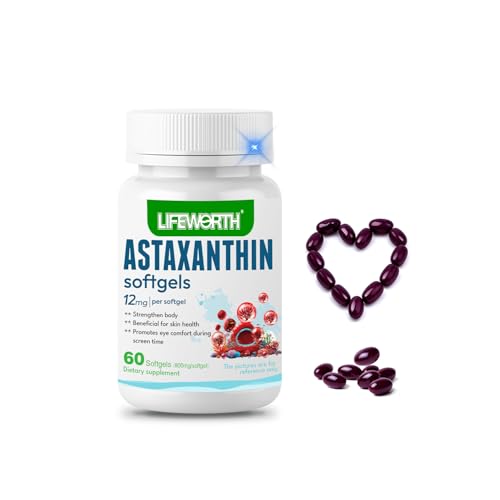
softgels, 12 mg per softgel, 90 count — Hawaiian-grown Haematococcus pluvialis, sold as the High Potency 90-softgel bottle - Pure Synergy SuperPure Astaxanthin Extract
capsules, 60 count — Sold as an astaxanthin extract in a capsule rather than a softgel; the listing does not state a mg per capsule, so check the label for the dose before comparing it with the 12 mg bottles here - Naturalis New Zealand Astaxanthin
softgels, 12 mg per softgel, 120 count — New Zealand-grown rather than Hawaiian, and the largest bottle on this list at 120 softgels - NOW Foods Astaxanthin
softgels, 4 mg per softgel — The entry-level 4 mg dose, built on the Zanthin astaxanthin ingredient; a lower starting point than the 12 mg bottles above
As an Amazon Associate we earn from qualifying purchases. Astaxanthin products vary mainly by dose and by source, with 4mg and 12mg the common strengths and most of them derived from Haematococcus pluvialis algae, so check the label for the astaxanthin content per serving and prefer products that publish third-party testing.
A Note on the Evidence
All evidence on astaxanthin in humans comes from relatively small, short-duration trials; long-term safety data beyond 12 weeks is limited. This article is informational only and does not constitute medical advice — consult a qualified healthcare provider before starting any supplement regimen, particularly if you are pregnant, breastfeeding, managing a chronic condition, or taking prescription medications.
Frequently Asked Questions
Can I take astaxanthin on an empty stomach?
It is not recommended. Astaxanthin is fat-soluble, and without dietary fat to trigger bile secretion and micelle formation in the small intestine, most of the dose will pass through unabsorbed. Even a small amount of fat — a teaspoon of olive oil or a few nuts — meaningfully improves the absorption environment.

Does it matter what kind of fat I eat with it?
Long-chain fats (olive oil, avocado, eggs, fatty fish, most cooking oils) are the most effective because they drive chylomicron formation and lymphatic transport of fat-soluble nutrients. Medium-chain triglycerides (MCT oil, coconut oil) take a different absorption route and may be less effective as co-ingestion aids for carotenoids like astaxanthin.
Are softgel capsules better than powder capsules?
Generally yes. Oil-based softgels pre-disperse astaxanthin in a lipid carrier, improving its ability to form micelles in the gut. This partially compensates for a low-fat meal, though pairing any formulation with dietary fat remains the most reliable strategy for good absorption.
How long does it take for astaxanthin to build up in the body?
Carotenoids accumulate gradually in lipid-rich tissues, including skin, adipose tissue, and the liver. Plasma levels of astaxanthin typically stabilize over several weeks of consistent daily dosing. Human studies have generally run for 4–12 weeks before measuring outcomes, suggesting that short-term use of just a few days is unlikely to build meaningful tissue levels.
Is natural astaxanthin from algae better absorbed than synthetic astaxanthin?
Natural astaxanthin from Haematococcus pluvialis consists predominantly of the 3S,3’S stereoisomer in esterified form (bound to fatty acids), while synthetic astaxanthin is a racemic mixture of stereoisomers in free form. The esterified natural form requires intestinal esterases to cleave before absorption, but once hydrolyzed, the natural isomer appears to be preferentially retained in tissues. Most human trial evidence and GRAS status applies specifically to natural H. pluvialis astaxanthin.
Who should avoid astaxanthin supplementation?
Evidence in pregnancy and breastfeeding is insufficient, so supplementation is not recommended during those periods. People taking blood-thinning medications or hormone therapies should consult a healthcare provider before adding astaxanthin, as high-dose carotenoids can theoretically interact with these. Anyone with a known allergy to shellfish or algae-derived products should exercise caution, though shellfish allergy is driven by protein, not carotenoid pigment.
References
- Astaxanthin: How much is too much? A safety review. Phytotherapy Research (2019). PMID 31788888
- Astaxanthin: sources, extraction, stability, biological activities and its commercial applications – a review. Marine Drugs (2014). PMID 24402174
These statements have not been evaluated by the Food and Drug Administration. This information is not intended to diagnose, treat, cure, or prevent any disease. Content is for informational purposes only and is not medical advice; consult a qualified healthcare provider before starting any supplement. As an Amazon Associate we earn from qualifying purchases.
