Astaxanthin is a red-pink keto-carotenoid that gives salmon flesh and shrimp shells their characteristic color. It is produced naturally by the microalgae Haematococcus pluvialis, and salmon accumulate it by eating organisms in the food chain that trace back to that same algae. When you see astaxanthin supplements or read about its presence in seafood, both ultimately stem from algal biosynthesis—but the form, concentration, and chemical profile differ considerably between the original algal source and the fish that consume it.
For consumers comparing supplement labels or weighing dietary sources, the algae-versus-salmon question has practical implications: how much astaxanthin does each actually deliver, in what chemical form, and does that form affect how the body handles it? This article addresses those questions using established compositional chemistry and the limited available evidence, without overstating what research currently supports.
Key Takeaways
- Astaxanthin is synthesized by the microalgae H. pluvialis; salmon accumulate it through the food chain, so all natural sources ultimately trace to algae.
- Algae-based supplements deliver esterified (3S,3’S) astaxanthin at standardized doses; wild sockeye salmon provides free astaxanthin at roughly 4–6 mg per large serving.
- Isomer form may affect tissue deposition—animal research found Z-isomer-rich diets outperformed E-isomer-rich diets for pigmentation in hens—but human comparative data are not yet available [1].
- Supplements allow consistent dosing at clinically studied amounts (4–12 mg/day); dietary salmon contributes meaningfully but cannot reliably reach the higher end of studied doses.
- Natural astaxanthin from H. pluvialis has shown no serious adverse effects up to 12 mg/day in trials; supplementation during pregnancy or breastfeeding is not recommended due to insufficient evidence.
Why the Source of Astaxanthin Changes Its Chemistry
Astaxanthin exists in several chemically distinct forms: free (unesterified) astaxanthin, mono-esters (one fatty acid attached), and di-esters (two fatty acids attached). It also exists as geometric isomers—principally the all-E (all-trans) configuration and various Z (cis) configurations—and as optical stereoisomers at the 3 and 3′ positions: (3S,3’S), the meso form (3R,3’S / 3S,3’R), and (3R,3’R).
Haematococcus pluvialis under stress accumulates astaxanthin predominantly as mono- and di-esters of the (3S,3’S) stereoisomer, in the all-E geometric form. When fish or crustaceans consume this algae through the food chain, digestive enzymes cleave the ester bonds, releasing free astaxanthin, which is then redeposited in tissue. The stereoisomer profile in wild salmon reflects the (3S,3’S) form predominant in the algal origin. Synthetic astaxanthin, by contrast, is a racemic mixture of all three stereoisomers in roughly equal proportions, and is used primarily in aquaculture feed rather than in human supplements.
These distinctions—ester form, stereoisomer, and geometric isomer—are relevant because they may affect how efficiently astaxanthin is absorbed and how it distributes in tissues, though direct head-to-head human trials comparing these forms remain limited.
Algae as the Primary Production Source
Haematococcus pluvialis is the richest known natural source of astaxanthin by concentration. Under nitrogen deprivation and high light stress, it can accumulate astaxanthin at up to 4–5% of its dry weight—a level no other biological organism approaches. Commercial astaxanthin supplements labeled as ‘natural’ or ‘algae-derived’ are typically produced by inducing this stress response in cultivated H. pluvialis, then extracting and encapsulating the resulting biomass or oleoresin.
Algae-derived astaxanthin retains the esterified form found in the living algae. After ingestion, intestinal esterases and lipases partially hydrolyze these esters, releasing free astaxanthin for absorption. The predominant stereoisomer is (3S,3’S), which is also the form found in human plasma after supplementation with H. pluvialis products. Natural astaxanthin from H. pluvialis holds GRAS (Generally Recognized As Safe) status in the United States and has shown no serious adverse effects in trials up to 12 mg/day for 12 weeks.

Because the source is a controlled cultivation process, algae-based supplements deliver standardized, labeled doses—typically 4 mg, 6 mg, or 12 mg per capsule—with known concentration and isomer profiles.
Salmon as a Dietary Source: Realistic Concentrations
Wild sockeye salmon (Oncorhynchus nerka) contains among the highest astaxanthin concentrations of any commonly eaten food, typically in the range of 26–38 mg per kilogram of flesh. Farmed Atlantic salmon usually contains astaxanthin in a similar or slightly lower range, though this varies with feed formulation—farmed salmon are fed synthetic astaxanthin (primarily the racemic form) or, in some operations, yeast-derived or algae-derived sources to achieve the desired flesh color.
For practical dietary intake, a 150-gram (roughly 5-oz) serving of wild sockeye salmon delivers approximately 4–6 mg of astaxanthin—an amount comparable to a mid-range supplement capsule. Pink salmon and most farmed species typically deliver less per serving. Canned salmon retains most of its astaxanthin, though heat processing and prolonged storage can cause some degradation.
The astaxanthin in salmon flesh is predominantly in the free (unesterified) form, already cleaved from esters during the fish’s own digestive processing. This means the bioavailability picture differs from esterified algae-sourced astaxanthin, though controlled human comparative trials are sparse.
Isomer Composition: What It May Mean for Tissue Deposition
Beyond esterification, astaxanthin exists in geometric (E/Z) isomers. The all-E form predominates in H. pluvialis and in most minimally processed foods; Z-isomers can increase with heat processing or prolonged storage. Whether Z-isomers behave differently from E-isomers in human physiology has not been established by clinical trials.
In animal research, isomer composition has been shown to influence how astaxanthin is deposited in tissue. A study in laying hens found that diets enriched with Z-isomers of astaxanthin produced greater egg yolk pigmentation than diets providing equivalent amounts in the all-E form, suggesting that geometric isomer form can affect tissue deposition even when total astaxanthin intake is held constant [1]. Whether this finding translates to differences in human absorption or health-relevant outcomes has not been studied in controlled trials.
For practical purposes, both algae-sourced and salmon-sourced astaxanthin are predominantly in the all-E configuration and the (3S,3’S) stereoisomer. Synthetic astaxanthin from aquaculture feed is the main commercially produced form with a meaningfully different stereoisomer profile, and it is not typically found in supplements marketed to human consumers.

Supplement Dose vs. Dietary Dose: A Practical Comparison
The most meaningful practical difference between algae and salmon as astaxanthin sources is dose certainty. Supplements derived from H. pluvialis deliver a labeled, consistent amount per capsule, making it straightforward to reach the doses examined in human trials (typically 4–12 mg/day). Salmon contributes a meaningful but more variable amount depending on species, farming practices, preparation, and portion size.
Relying on salmon alone to reach 12 mg/day—the upper end of doses examined in human research—would require roughly two to three substantial servings daily, which is nutritionally impractical for most people. Algae-based supplements are the realistic option for anyone seeking consistent doses at the higher end of the studied range.
From a dietary perspective, regular consumption of fatty fish like wild salmon provides a meaningful background level of astaxanthin alongside omega-3 fatty acids, protein, and other nutrients. Supplements and dietary sources are not mutually exclusive and serve different contexts.
Safety Considerations for Both Sources
Natural astaxanthin from H. pluvialis has a favorable safety record in available human trials. At doses up to 12 mg/day for periods up to 12 weeks, no serious adverse effects have been reported. At very high intakes—above approximately 20 mg/day—a reversible yellow-orange skin tint known as carotenodermia has been observed. This is a cosmetic effect of carotenoid accumulation in skin, not a toxicological concern, and it resolves when intake decreases.
Evidence on astaxanthin supplementation during pregnancy and breastfeeding is insufficient to establish safety, and supplementation is not recommended during these periods. Astaxanthin from salmon consumed as ordinary food does not carry the same concerns, but high-dose supplementation is a different context. Individuals taking blood-thinning medications or with underlying health conditions should consult a healthcare provider before supplementing.
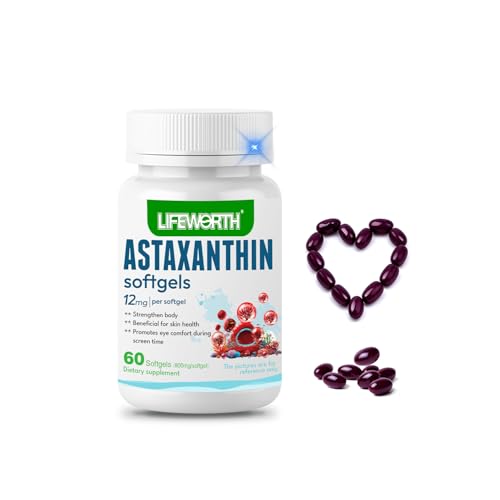
🛒 Where to Buy Astaxanthin
- Nutrex Hawaii BioAstin Hawaiian AstaxanthinLab-tested / studied
softgels, 12 mg per softgel, 90 count — Hawaiian-grown Haematococcus pluvialis, sold as the High Potency 90-softgel bottle - Pure Synergy SuperPure Astaxanthin Extract
capsules, 60 count — Sold as an astaxanthin extract in a capsule rather than a softgel; the listing does not state a mg per capsule, so check the label for the dose before comparing it with the 12 mg bottles here - Naturalis New Zealand Astaxanthin
softgels, 12 mg per softgel, 120 count — New Zealand-grown rather than Hawaiian, and the largest bottle on this list at 120 softgels - NOW Foods Astaxanthin
softgels, 4 mg per softgel — The entry-level 4 mg dose, built on the Zanthin astaxanthin ingredient; a lower starting point than the 12 mg bottles above
As an Amazon Associate we earn from qualifying purchases. Astaxanthin products vary mainly by dose and by source, with 4mg and 12mg the common strengths and most of them derived from Haematococcus pluvialis algae, so check the label for the astaxanthin content per serving and prefer products that publish third-party testing.
A Note on the Evidence
Evidence directly comparing algae-derived and salmon-derived astaxanthin in human trials is limited, and most available clinical research uses algae-based supplements without head-to-head dietary comparisons. This article is informational only and does not constitute medical advice; individuals with health conditions, those taking medications, and those who are pregnant or breastfeeding should consult a qualified healthcare provider before using astaxanthin supplements.
Frequently Asked Questions
Is astaxanthin from salmon as potent as from algae supplements?
Salmon provides free astaxanthin predominantly in the (3S,3’S) stereoisomer—the same form as algae-derived supplements. However, per-serving concentration in salmon is variable and a single serving cannot reliably match a standardized supplement dose. Algae-based supplements offer the dose certainty that dietary salmon cannot.
Does the esterified form in algae supplements affect absorption compared to the free form in salmon?
Esterified astaxanthin from algae requires hydrolysis in the gut before absorption; free astaxanthin from salmon does not. Whether this step produces a clinically meaningful difference in bioavailability has not been definitively resolved in large human trials. Both forms appear to reach human plasma after ingestion.
Do Z-isomers of astaxanthin perform differently than E-isomers?
Animal research suggests isomer form influences tissue deposition. In laying hens, diets enriched with Z-isomers produced greater egg yolk pigmentation than equivalent all-E-isomer diets, indicating that geometric isomer composition affects how astaxanthin is deposited [1]. Whether this difference is meaningful in human physiology or for health outcomes has not yet been established in clinical trials.
How much astaxanthin does a serving of salmon actually contain?
A 150-gram serving of wild sockeye salmon—one of the richest food sources—typically contains roughly 4–6 mg of astaxanthin. Pink salmon, Atlantic farmed salmon, and canned varieties generally contain less, depending on feed and preparation method. These amounts fall within the range studied in human trials but vary considerably.
Is farmed salmon a reliable source of natural astaxanthin?
Most farmed salmon receive synthetic astaxanthin—a racemic stereoisomer mixture—in their feed to achieve expected flesh color. Some producers use algae- or yeast-derived astaxanthin, but consumer-facing labeling rarely specifies the feed source. For the (3S,3’S) stereoisomer predominant in natural sources, algae-derived supplements provide greater certainty than farmed salmon of unknown feed composition.
Can I get enough astaxanthin from diet alone to reach studied doses?
Reaching 12 mg/day—the upper end of doses studied in human research—would require multiple large servings of wild sockeye salmon daily, which is impractical. Algae-derived supplements are the realistic route to consistent dosing at that level. Dietary salmon remains a worthwhile nutritional source alongside, not instead of, supplementation for those targeting studied dose ranges.
References
- Honda M et al. Astaxanthin Z-isomer-rich diets enhance egg yolk pigmentation in laying hens compared to that in all-E-isomer-rich diets. Animal science journal = Nihon chikusan Gakkaiho (2021). PMID 33522058
These statements have not been evaluated by the Food and Drug Administration. This information is not intended to diagnose, treat, cure, or prevent any disease. Content is for informational purposes only and is not medical advice; consult a qualified healthcare provider before starting any supplement. As an Amazon Associate we earn from qualifying purchases.
