Astaxanthin shows up both in softgels and in serums, and the two are usually sold with the same claims. The underlying evidence is not the same at all.
A systematic review that gathered every human study on astaxanthin and skin aging makes the imbalance stark, and it also contains a null result on the outcome most people are buying for.
Key Takeaways
- A systematic review found eleven human studies: nine randomized controlled studies of oral astaxanthin, and only two open-label prospective studies of topical or oral-plus-topical [1].
- Pooled oral results: significantly restored moisture content (SMD 0.53, 95% CI 0.05 to 1.01, p = 0.03) and improved elasticity (SMD 0.77, 95% CI 0.19 to 1.35, p = 0.009) [1].
- Oral astaxanthin did not significantly reduce wrinkle depth (SMD -0.26, 95% CI -0.58 to 0.06, p = 0.11) [1]. That is the claim most products lead with.
- The topical evidence was graded as only slightly protective, and it came from open-label studies with no placebo control [1].
- The most-cited topical study combined 6 mg oral and topical astaxanthin in the same open-label arm, so it cannot separate the two routes [2]. Its companion study, the placebo-controlled one, tested oral only.
- A 2023 topical trial was open-label, uncontrolled, and used a serum containing vitamin C, astaxanthin, fermented turmeric and vitamin E together [3].
The Systematic Review That Counted The Studies
A 2021 systematic review and meta-analysis searched PubMed, Scopus and Web of Science for human studies on astaxanthin and skin aging [1]. It found eleven. The split is the first thing to notice:
- Nine randomized controlled human studies assessing oral astaxanthin.
- Two open-label prospective studies evaluating topical or combined oral-topical astaxanthin [1].
Only the oral studies could be meta-analyzed, because randomized controlled trials are what pooling requires. The topical evidence could only be described.
Its verdict on topical was that the open-label prospective studies suggested “slightly protective” effects [1]. That is deliberately weak language, and it is the correct language for uncontrolled studies.
What Oral Astaxanthin Actually Did
The pooled oral results, expressed as standardized mean differences against placebo:

- Moisture content: significantly restored. SMD 0.53 (95% CI 0.05 to 1.01), heterogeneity I-squared 52%, p = 0.03 [1].
- Elasticity: significantly improved. SMD 0.77 (95% CI 0.19 to 1.35), I-squared 75%, p = 0.009 [1].
- Wrinkle depth: not significantly decreased. SMD -0.26 (95% CI -0.58 to 0.06), I-squared 0%, p = 0.11 [1].
Two things about that wrinkle line. First, it is the endpoint most anti-aging marketing leads with, and it is the one that missed. Second, its heterogeneity is zero, meaning the studies agreed with each other closely. Consistent agreement on a null is more informative than a noisy positive.
The two positive findings carry substantial heterogeneity (52% and 75%), meaning the individual studies varied considerably in how much benefit they showed. The effects are real in the pooled analysis and their size is uncertain.
The Study Everyone Cites For Topical
A widely referenced 2012 paper actually reported two separate studies, and they are routinely merged in citations [2].
Study one was open-label and non-controlled, in 30 healthy women over 8 weeks. Participants took 6 mg per day orally and applied 2 mL of a 78.9 micromolar topical astaxanthin solution daily. Significant improvements were reported in crow’s feet wrinkles at week 8, cheek age spot size at week 8, elasticity at week 8, skin texture at week 4, corneocyte layer moisture in 10 dry-skin subjects at week 8, and corneocyte condition [2].
That result is frequently cited as evidence for topical astaxanthin. It cannot be. There was no control group, no placebo, no blinding, and every participant received both routes simultaneously. An open-label skin study with no control will almost always show improvement, because participants know they are being treated, are moisturizing daily, and are being measured by people who know the same.
Study two, in the same paper, was the rigorous one: randomized, double-blind, placebo-controlled, 36 healthy men, 6 weeks, 6 mg per day oral only. It found improvements in crow’s feet wrinkles, elasticity and transepidermal water loss, with strong tendencies toward improvement in cheek moisture and sebum [2].
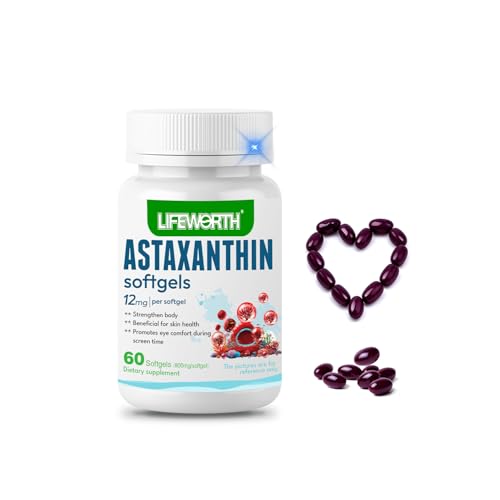
So within one paper, the controlled arm tested oral and the topical arm was uncontrolled. That pattern holds across the whole literature.
The 2023 Topical Serum Study
The most recent topical work is a 2023 clinical evaluation of an antioxidant serum in 32 women aged 35 to 60 with mild to moderate fine lines, wrinkles and hyperpigmentation, applied twice daily for 12 weeks [3]. All subjects showed improvement in overall skin quality, and 100% showed improvement in the appearance of fine lines at week 12 [3].
Three features determine what that can support. It was prospective and open-label, with no placebo arm. The test article was a multi-ingredient formulation containing vitamin C, astaxanthin, fermented turmeric and vitamin E [3]. And a 100% response rate on a subjective appearance measure in an unblinded study is close to what a well-formulated moisturizer plus expectation would produce on its own.
Vitamin C in particular has its own substantial topical evidence base. Attributing this serum’s results to the astaxanthin in it is not supportable.
The Physical Question Behind The Evidence Gap
There is a reason topical astaxanthin is hard to study well. Astaxanthin is a large, strongly lipophilic molecule with a molecular weight around 597 daltons. The commonly used rule of thumb for passive skin penetration puts the practical ceiling near 500 daltons, and highly lipophilic compounds tend to lodge in the stratum corneum rather than move into viable epidermis and dermis.
That does not mean topical astaxanthin does nothing. Antioxidant activity in the stratum corneum itself has value against surface oxidative stress, and formulation with penetration enhancers or liposomes can change the picture. Mouse work on astaxanthin liposomes against UVB damage does show effects on dermal markers [4].

It does mean that a serum listing astaxanthin somewhere on its ingredient list should not be assumed to deliver astaxanthin where photoaging happens.
Practical Guidance
If you want the outcome with the best evidence, take it orally. Six to twelve milligrams per day is the range used across the trials that generated the moisture and elasticity findings, and our dosage guide covers the specifics. Take it with a fat-containing meal, since absorption depends on it, as covered in our bioavailability article.
Set expectations correctly. The controlled evidence supports better moisture retention and elasticity. It does not support wrinkle reduction, where the pooled result was null with zero heterogeneity.
If you want to use a topical astaxanthin product, there is no reason not to, and no evidence it helps beyond what the rest of the formulation does. Judge those serums on their other actives, on vitamin C content, on sunscreen use alongside them. Do not pay a premium for the astaxanthin line on the label.
For photoprotection specifically, see our sunburn prevention article, which addresses the internal sunscreen claim directly, and our skin and UV article for the broader picture.
Frequently Asked Questions
Is topical or oral astaxanthin better?
Oral has far better evidence. A systematic review found nine randomized controlled studies of oral astaxanthin and only two open-label prospective studies of topical or combined use. Pooled oral results significantly improved skin moisture and elasticity, while the topical evidence was described only as slightly protective and came from uncontrolled studies.
Does astaxanthin reduce wrinkles?
The pooled evidence says no. In a meta-analysis of randomized controlled studies, oral astaxanthin did not significantly decrease wrinkle depth (SMD -0.26, 95% CI -0.58 to 0.06, p = 0.11), and heterogeneity was zero, meaning the studies agreed. What it did improve was moisture content and elasticity.
Do astaxanthin serums work?
There is no controlled evidence that the astaxanthin in a serum is what produces any benefit. The most recent topical study was open-label with no placebo group and tested a formulation containing vitamin C, astaxanthin, fermented turmeric and vitamin E together. Vitamin C has its own topical evidence base.
Can astaxanthin penetrate the skin?
It is a large, strongly lipophilic molecule at roughly 597 daltons, above the common rule-of-thumb ceiling near 500 daltons for passive skin penetration, and lipophilic compounds tend to remain in the stratum corneum. Liposomal formulations may change this, but a plain serum should not be assumed to deliver astaxanthin to the dermis.
What dose of oral astaxanthin was used in the skin studies?
The trials behind the moisture and elasticity findings generally used 6 to 12 mg per day, with the placebo-controlled study in the most-cited paper using 6 mg per day for 6 weeks. Take it with a fat-containing meal, since absorption depends on dietary fat.
References
- Zhou X, et al. Systematic Review and Meta-Analysis on the Effects of Astaxanthin on Human Skin Ageing. Nutrients. 2021;13(9):2917. PMID 34578794
- Tominaga K, et al. Cosmetic benefits of astaxanthin on humans subjects. Acta Biochim Pol. 2012;59(1):43-47. PMID 22428137
- Konisky H, et al. A clinical evaluation of the efficacy and tolerability of a novel topical antioxidant formulation featuring vitamin C, astaxanthin, and fermented turmeric. J Cosmet Dermatol. 2023;22(11):3088-3094. PMID 37608511
- Li F, et al. The Preliminary Study on Anti-photodamaged Effect of Astaxanthin Liposomes in Mice Skin. Sichuan Da Xue Xue Bao Yi Xue Ban. 2018;49(5):712-715. PMID 30378331
These statements have not been evaluated by the Food and Drug Administration. This information is not intended to diagnose, treat, cure, or prevent any disease. Content is for informational purposes only and is not medical advice; consult a qualified healthcare provider before starting any supplement. As an Amazon Associate we earn from qualifying purchases.
