Astaxanthin is a keto-carotenoid produced primarily by the microalgae Haematococcus pluvialis. Unlike most antioxidants, it is fat-soluble yet capable of operating across both the lipid and aqueous phases of cell membranes, a structural feature that makes it unusually effective at quenching singlet oxygen and neutralizing free radicals. This chemical versatility has drawn sustained attention from researchers studying chronic inflammation and immune regulation.
Interest in astaxanthin’s effects on the immune system has grown alongside a broader recognition that oxidative stress and chronic low-grade inflammation can meaningfully compromise immune cell function. The evidence base includes in vitro cell studies, animal models, and a limited number of human clinical trials. Each layer of evidence adds something useful, though the human data in particular remains relatively small-scale and larger trials are needed before firm conclusions can be drawn.
Key Takeaways
- Astaxanthin is a membrane-spanning antioxidant carotenoid from Haematococcus pluvialis that works through at least two immune-relevant pathways: activating the Nrf2/Keap1 antioxidant system and suppressing NF-κB-driven chronic inflammation [1].
- In vitro research found astaxanthin enhanced immunoglobulin production in human immune cells through a non-vitamin-A mechanism [2], providing an early cellular rationale for immune applications.
- Animal studies in cats, dogs, mice, and rats consistently show positive effects on immune parameters including both humoral and cell-mediated responses [3][4][5][1].
- A human randomized controlled trial found astaxanthin supplementation reduced oxidative stress and inflammation markers while enhancing immune response in healthy adults [6], though the human evidence base remains limited in size and scope.
- Natural astaxanthin at doses up to 12 mg per day has a good safety profile in adult clinical trials; pregnant or breastfeeding individuals should avoid it due to insufficient evidence in those populations.
How Astaxanthin May Influence Immune Cells: The Proposed Mechanisms
Immune cells are among the most metabolically active in the body and consequently among the most exposed to oxidative damage. Reactive oxygen species (ROS) generated during normal immune activation can, when produced in excess, impair lymphocyte proliferation, suppress antibody synthesis, and blunt protective inflammatory signaling. Antioxidants that can reach inside cell membranes—rather than only operating in the watery cytosol—are of particular interest because lipid peroxidation within the membrane is a key mechanism of immune cell damage.
Astaxanthin’s membrane-spanning antioxidant activity positions it to interrupt this damage at its source. Beyond direct radical scavenging, research in aging rats has shown that astaxanthin activates the Nrf2/Keap1 pathway, a master regulator of the body’s own antioxidant enzyme production, while simultaneously suppressing the NF-κB signaling pathway that drives chronic inflammatory gene expression [1]. These two complementary actions—boosting endogenous antioxidant defenses while moderating inflammatory overactivation—represent the primary proposed biological mechanisms for its immune-related effects.
Laboratory Evidence: Antibody Production and Human Immune Cells
One of the earliest lines of evidence comes from in vitro work using human peripheral blood mononuclear cells (PBMCs). Research published in 1995 found that astaxanthin enhanced immunoglobulin production by these cells in response to a T-dependent stimulant and antigen—and did so without any contribution from vitamin A activity, which some other carotenoids can exert [2]. This pointed to astaxanthin’s antioxidant and signaling properties, rather than a provitamin A mechanism, as the driver of the effect.
In vitro findings carry inherent limitations: cells in culture do not replicate the complexity of a living immune system, and concentrations achievable in laboratory settings may differ from what oral supplementation can produce in human tissues. Nevertheless, this early work helped establish a plausible cellular mechanism that subsequent animal and human studies could build upon.

Animal Studies: Immune Parameters Across Multiple Species
Several controlled animal studies have examined astaxanthin’s effects on immune measures. Work in cats found that dietary astaxanthin supplementation stimulated both cell-mediated and humoral immune responses—two distinct arms of adaptive immunity involving T-cell function and antibody production respectively [3]. A parallel study in dogs demonstrated that dietary astaxanthin enhanced immune responses across relevant measured parameters [4].
Rodent research has explored additional dimensions. A mouse study found that astaxanthin’s antioxidant properties contributed to protection against stress-induced promotion of cancer metastasis, with restraint stress used as a model of ROS-mediated immune suppression [5]. In an aging rat model, astaxanthin attenuated both oxidative stress and immune impairment induced by D-galactose, with effects linked to the Nrf2/Keap1 and NF-κB pathways described above [1].
Animal data are valuable for understanding mechanisms and identifying dose ranges worth investigating in humans, but extrapolation across species must be made cautiously. Differences in metabolism, immune system architecture, and dosing between animals and humans mean that human clinical trials remain essential for confirming these findings.
Human Clinical Research: The Most Directly Relevant Evidence
The most directly applicable evidence comes from a randomized controlled trial published in Nutrition & Metabolism in 2010. That study found that astaxanthin supplementation decreased markers of oxidative stress and inflammation while enhancing immune response in healthy adult participants [6]. The improvements included measurable changes in immune cell populations and reductions in inflammatory biomarkers, suggesting that the mechanisms observed in laboratory and animal settings do translate, at least in part, to human physiology.
A 2021 study specifically examining astaxanthin sourced from Haematococcus pluvialis investigated its capacity to enhance immune function, adding further evidence in support of the compound’s immune-related activity in this context [7]. Natural astaxanthin from this microalgae source holds GRAS (Generally Recognized as Safe) status, and human trials using doses up to 12 mg per day for up to 12 weeks have not identified serious adverse effects.
The human evidence base, however, remains limited in scale. Most trials to date have involved relatively small participant numbers, short durations, and generally healthy adult populations. How astaxanthin performs in people with compromised immunity, chronic illness, or across different age groups remains an open and important research question.
Oxidative Stress, Aging, and Immune Decline
One area where the existing evidence converges is the relationship between oxidative stress, aging, and declining immune function—sometimes called immunosenescence. As cells age and the body’s antioxidant defenses become less efficient, chronic low-grade inflammation can impair both innate and adaptive immune responses. The D-galactose aging model used in rat research showed that astaxanthin could meaningfully attenuate both oxidative damage and the associated immune impairment, operating through the Nrf2/Keap1 and NF-κB pathways [1].

The restraint-stress mouse model [5] similarly points to a role in protecting against stress-induced immune suppression, a state in which elevated ROS production and glucocorticoid signaling together weaken immune surveillance. While these are not direct human aging studies, they offer a mechanistic rationale for investigating astaxanthin specifically in aging populations, a direction that future large-scale human trials are well-positioned to explore.
Dosage, Source Quality, and Practical Considerations
Human clinical studies examining immune and antioxidant endpoints have generally used doses in the range of 2–12 mg per day of natural astaxanthin from Haematococcus pluvialis. Doses within this range have not produced serious adverse effects in trials lasting up to 12 weeks. At very high doses above 20 mg per day, a reversible yellowing or orange tint of the skin (carotenodermia) has been reported; this is considered benign and resolves upon stopping supplementation.
Because astaxanthin is fat-soluble, absorption is improved when it is consumed alongside a meal containing dietary fat. Natural astaxanthin from H. pluvialis is the form consistently represented in clinical research and holds GRAS status for use in foods and supplements. Synthetic astaxanthin, derived from petrochemical sources, is chemically similar but has not been as thoroughly studied in human health trials and carries different regulatory status.
Pregnant or breastfeeding individuals should avoid astaxanthin supplementation because the evidence in those populations is insufficient to establish safety. Anyone taking immunosuppressive medications or managing a diagnosed immune condition should consult a qualified healthcare provider before adding any new supplement to their routine.
🛒 Where to Buy Astaxanthin
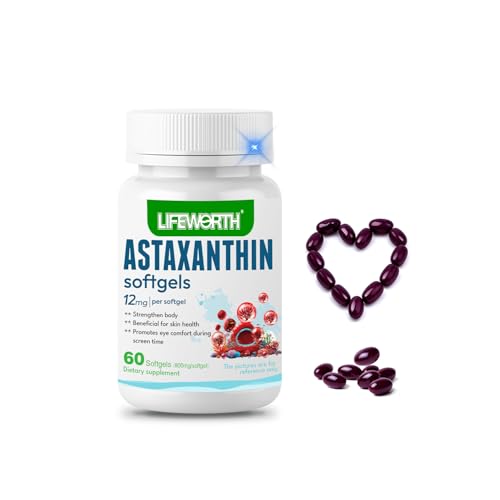
- Nutrex Hawaii BioAstin Hawaiian AstaxanthinLab-tested / studied
softgels, 12 mg per softgel, 90 count — Hawaiian-grown Haematococcus pluvialis, sold as the High Potency 90-softgel bottle - Pure Synergy SuperPure Astaxanthin Extract
capsules, 60 count — Sold as an astaxanthin extract in a capsule rather than a softgel; the listing does not state a mg per capsule, so check the label for the dose before comparing it with the 12 mg bottles here - Naturalis New Zealand Astaxanthin
softgels, 12 mg per softgel, 120 count — New Zealand-grown rather than Hawaiian, and the largest bottle on this list at 120 softgels - NOW Foods Astaxanthin
softgels, 4 mg per softgel — The entry-level 4 mg dose, built on the Zanthin astaxanthin ingredient; a lower starting point than the 12 mg bottles above
As an Amazon Associate we earn from qualifying purchases. Astaxanthin products vary mainly by dose and by source, with 4mg and 12mg the common strengths and most of them derived from Haematococcus pluvialis algae, so check the label for the astaxanthin content per serving and prefer products that publish third-party testing.
A Note on the Evidence
The human clinical evidence on astaxanthin and immune function is promising but comes from a small number of trials with modest participant numbers; most supportive data comes from in vitro and animal research that may not fully translate to human physiology. Pregnant or breastfeeding individuals should avoid astaxanthin supplementation due to insufficient safety data, and anyone with a diagnosed immune condition or taking immunosuppressive or other prescription medications should consult a qualified healthcare provider before supplementing. This article is informational and does not constitute medical advice.
Frequently Asked Questions
What does research say about astaxanthin and the immune system?
Research across multiple levels of evidence suggests astaxanthin supports immune function. A human randomized controlled trial found it decreased oxidative stress and inflammation while enhancing immune response in healthy adults [6], and in vitro work showed it enhanced antibody production in human immune cells [2]. Animal studies have consistently supported these effects, though the human clinical dataset remains small.
How does astaxanthin support immune function at the cellular level?
Astaxanthin neutralizes free radicals across both lipid and aqueous phases of cell membranes, protecting immune cells from oxidative damage. It also activates the Nrf2/Keap1 antioxidant pathway and suppresses NF-κB inflammatory signaling, two mechanisms documented in an aging rat model [1]. These complementary actions reduce the oxidative burden on immune cells while moderating chronic inflammatory overactivation.
Have human studies confirmed astaxanthin's effects on immunity?
Yes, though the evidence is limited. A randomized controlled trial published in Nutrition & Metabolism found that astaxanthin supplementation decreased markers of oxidative stress and inflammation and enhanced immune response measures in healthy adults [6]. A 2021 study examining astaxanthin from Haematococcus pluvialis also investigated immune function enhancement [7]. Larger and longer human trials are needed to confirm these findings.
Do animal studies on astaxanthin and immunity translate to humans?
Animal studies in cats [3], dogs [4], mice [5], and rats [1] consistently show immune-related benefits, which strengthens the overall evidence picture. However, direct extrapolation to humans requires caution due to differences in metabolism, immune system architecture, and dosing between species. Animal data is best understood as mechanistic support for—not a substitute for—human clinical evidence.
What dose of astaxanthin is used in immune research?
Human trials studying immune and antioxidant effects have generally used 2–12 mg of natural astaxanthin per day for periods of up to 12 weeks, a range that has shown no serious adverse effects in published research. Very high doses above 20 mg per day may produce reversible carotenodermia, a harmless orange-yellow skin tint, but this has not been reported at the doses used in immune studies.
Is astaxanthin safe for ongoing immune support?
Natural astaxanthin from Haematococcus pluvialis holds GRAS status and has demonstrated a favorable safety profile in trials up to 12 weeks at doses up to 12 mg per day. Long-term safety data beyond 12 weeks is limited. Pregnant or breastfeeding individuals should not use astaxanthin supplements due to insufficient safety data in those populations, and anyone with a diagnosed immune condition or taking prescription medications should consult a healthcare provider first.
References
- Chen Z et al. Astaxanthin attenuates oxidative stress and immune impairment in D-galactose-induced aging in rats by activating the Nrf2/Keap1 pathway and suppressing the NF-κB pathway. Food & function (2020). PMID 32857080
- Jyonouchi H et al. Effect of carotenoids on in vitro immunoglobulin production by human peripheral blood mononuclear cells: astaxanthin, a carotenoid without vitamin A activity, enhances in vitro immunoglobulin production in response to a T-dependent stimulant and antigen. Nutrition and cancer (1995). PMID 7644386
- Park JS et al. Astaxanthin stimulates cell-mediated and humoral immune responses in cats. Veterinary immunology and immunopathology (2011). PMID 21930306
- Chew BP et al. Dietary astaxanthin enhances immune response in dogs. Veterinary immunology and immunopathology (2011). PMID 21208664
- Kurihara H et al. Contribution of the antioxidative property of astaxanthin to its protective effect on the promotion of cancer metastasis in mice treated with restraint stress. Life sciences (2002). PMID 12173414
- Park JS et al. Astaxanthin decreased oxidative stress and inflammation and enhanced immune response in humans. Nutrition & metabolism (2010). PMID 20205737
- Fan Q et al. Study on the Enhancement of Immune Function of Astaxanthin from Haematococcus pluvialis. Foods (Basel, Switzerland) (2021). PMID 34441624
These statements have not been evaluated by the Food and Drug Administration. This information is not intended to diagnose, treat, cure, or prevent any disease. Content is for informational purposes only and is not medical advice; consult a qualified healthcare provider before starting any supplement. As an Amazon Associate we earn from qualifying purchases.
