Carotenoids are fat-soluble pigments found in plants, algae, and some marine organisms, and several of them concentrate in ocular tissue. Lutein and zeaxanthin accumulate selectively in the macula, forming the macular pigment that filters high-energy blue light. Astaxanthin, a keto-carotenoid from the microalgae Haematococcus pluvialis, is structurally distinct: it spans both the lipid and aqueous phases of cell membranes and crosses the blood-retinal barrier, giving it access to the entire eye rather than just the macula.
Consumers browsing eye-health supplements encounter all three names, often on competing products and in contradictory claims. This article compares what is actually known about each carotenoid, what conditions the evidence addresses, and where meaningful knowledge gaps remain. The honest answer is not that one carotenoid wins outright, but that each operates differently and the clinical evidence base behind them is not equally mature.
Key Takeaways
- Lutein and zeaxanthin have the strongest clinical evidence for slowing AMD progression, supported by large multi-year trials including AREDS2 [1].
- Astaxanthin distributes across multiple ocular compartments and has biological properties relevant to eye fatigue and oxidative stress, but its human trial evidence base is smaller and shorter than the AREDS literature.
- The two carotenoid types target different aspects of eye health rather than competing directly: macular protection versus broad-membrane antioxidant activity.
- Both have acceptable safety profiles at typical supplemental doses; high-dose astaxanthin (above 20 mg/day) can cause reversible skin discoloration.
- Neither carotenoid type should be treated as a substitute for regular eye examinations or proven medical management of diagnosed eye disease.
How Lutein and Zeaxanthin Protect the Macula
Lutein and zeaxanthin are dietary xanthophylls that the human body cannot synthesize on its own. After absorption they are transported to the retina and deposited in the macula lutea at concentrations far exceeding those found elsewhere in the body. There they serve two documented functions: absorbing short-wavelength blue light before it reaches the photoreceptors, and scavenging reactive oxygen species generated by constant light exposure.
The most influential evidence comes from the Age-Related Eye Disease Study program. The original AREDS formulation tested vitamins C and E, beta-carotene, and zinc in people with moderate to advanced age-related macular degeneration (AMD) and found a meaningful reduction in progression risk [2]. The follow-up AREDS2 trial specifically replaced beta-carotene with lutein and zeaxanthin, and the results supported lutein and zeaxanthin as the safer and at least equally effective substitutes, particularly because beta-carotene raised lung cancer risk in smokers [1]. A separate randomized trial also found that macular xanthophyll supplementation affected outcomes in AMD-related endpoints [3].
A 2017 Cochrane review synthesizing the broader evidence base concluded that antioxidant vitamin and mineral supplementation may slow AMD progression in people who already have the disease, though the evidence for preventing onset in healthy eyes was less certain [4]. This distinction matters: the strongest clinical signal for lutein and zeaxanthin is disease modification in diagnosed AMD, not general eye protection in low-risk populations.
Cataracts: A Supporting Role for Antioxidants
The lens is vulnerable to oxidative damage over decades, and antioxidant intake has long been studied as a potential modifier of cataract risk. A review comparing findings from the AREDS and REACT cataract studies found that antioxidant micronutrients including vitamin C, vitamin E, and carotenoids were associated with lens protection in some analyses, though the magnitude and consistency of effects varied across study designs [5].


Lutein and zeaxanthin are present in lens epithelial cells, which provides a plausible biological rationale for their involvement in cataract risk. However, clinical trial evidence specifically demonstrating that supplemental lutein or zeaxanthin delays cataract formation in humans remains limited compared with the AMD data. The cataract evidence is suggestive but not conclusive enough to make firm recommendations.
What Makes Astaxanthin Structurally Different
Astaxanthin belongs to a subgroup of carotenoids called keto-carotenoids. Unlike beta-carotene or the xanthophylls, its molecular architecture includes polar end groups that anchor to both the inner and outer surfaces of cell membranes simultaneously, while the central chain sits within the lipid bilayer. This allows it to quench singlet oxygen and neutralize free radicals in both the aqueous and lipid environments of the cell, a property that most other antioxidants do not share.
Critically, astaxanthin crosses the blood-retinal barrier, reaching the retina, choroid, and lens after oral supplementation. It does not, however, accumulate selectively in the macula the way lutein and zeaxanthin do. Astaxanthin distributes more broadly across ocular tissues rather than concentrating in any single anatomical structure. This difference in distribution likely explains why the two compound types have been studied for different outcomes: lutein and zeaxanthin for macular pigment density and AMD, astaxanthin more often for eye fatigue, accommodation, and oxidative stress in the context of high screen use.
Astaxanthin and Digital Eye Strain: Early but Relevant Evidence
Screen-related eye fatigue, also called digital eye strain or computer vision syndrome, involves symptoms such as blurred vision, difficulty shifting focus, and visual discomfort after prolonged near work. It is increasingly studied as a target for nutritional intervention. A 2022 narrative review in Nutrients examined whether dietary components including carotenoids could play a role in ameliorating digital eye strain, noting biological plausibility for antioxidants that access the ciliary muscle and retinal tissue [6].
Early randomized trials on astaxanthin have examined outcomes such as accommodative amplitude and subjective eye fatigue in screen users, and some reported statistically significant improvements. A 2020 review of astaxanthin clinical applications in ocular disease lists asthenopia among the conditions in which human data exist, while concluding that longer trials are still needed to settle dosage and formulation [7]. A 2025 randomized, double-blind, placebo-controlled trial reported that 4 mg per day for 84 days improved computer vision syndrome scores in children aged 10 to 14 with heavy screen use [8]. The important caveat is that these studies are typically small, short in duration, and do not establish the kind of long-term disease outcomes that the AREDS program established for lutein and zeaxanthin. Promising early signals are not equivalent to established efficacy.
Direct Comparison: What Each Carotenoid Is Best Supported For
Lutein and zeaxanthin have the stronger and more mature clinical evidence base for eye health, specifically for slowing the progression of intermediate to advanced AMD [1] [3]. Their role in forming and maintaining macular pigment is well-established, and the AREDS2 trial represents one of the largest and longest-running ophthalmology trials ever conducted. If AMD risk or progression is the concern, lutein and zeaxanthin are the better-supported choice.

Astaxanthin occupies a different niche. Its broad-membrane antioxidant activity and access to multiple ocular compartments make it biologically interesting for conditions involving oxidative stress throughout the eye, including lens aging and screen-related fatigue. But the clinical trial record for astaxanthin in human eye outcomes is smaller, shorter, and less definitive than the AREDS literature. Calling it a clear winner over lutein and zeaxanthin for eyes overall would not be accurate.

The most honest framing is that these carotenoids are not truly competing for the same indication. Lutein and zeaxanthin defend a specific anatomical target — the macula — with well-documented evidence. Astaxanthin acts as a broader membrane antioxidant across ocular tissues with a plausible but earlier-stage evidence profile. Some formulations combine all three, which is physiologically rational, though combined supplementation has not been tested in large RCTs for eye outcomes.
Safety Profile and Practical Dosing
Lutein and zeaxanthin have an extensive safety record. They replaced beta-carotene in the AREDS2 formulation partly because beta-carotene raised lung cancer risk in smokers; lutein and zeaxanthin showed no such signal [1]. Doses used in AMD trials have typically ranged from 10 mg lutein and 2 mg zeaxanthin daily. No serious adverse effects were reported at these doses.
Natural astaxanthin from Haematococcus pluvialis holds GRAS (Generally Recognized As Safe) status in the United States. Human trials have used doses from 4 mg to 12 mg per day for periods up to twelve weeks without serious adverse events. At very high doses above 20 mg per day, a reversible yellowing or orange tint of the skin called carotenodermia has been reported; this is harmless and resolves when intake is reduced. Evidence in pregnancy and breastfeeding is insufficient, so supplementation during those periods is not recommended for either carotenoid class.
🛒 Where to Buy Astaxanthin
- Nutrex Hawaii BioAstin Hawaiian AstaxanthinLab-tested / studied
softgels, 12 mg per softgel, 90 count — Hawaiian-grown Haematococcus pluvialis, sold as the High Potency 90-softgel bottle - Pure Synergy SuperPure Astaxanthin Extract
capsules, 60 count — Sold as an astaxanthin extract in a capsule rather than a softgel; the listing does not state a mg per capsule, so check the label for the dose before comparing it with the 12 mg bottles here - Naturalis New Zealand Astaxanthin
softgels, 12 mg per softgel, 120 count — New Zealand-grown rather than Hawaiian, and the largest bottle on this list at 120 softgels - NOW Foods Astaxanthin
softgels, 4 mg per softgel — The entry-level 4 mg dose, built on the Zanthin astaxanthin ingredient; a lower starting point than the 12 mg bottles above
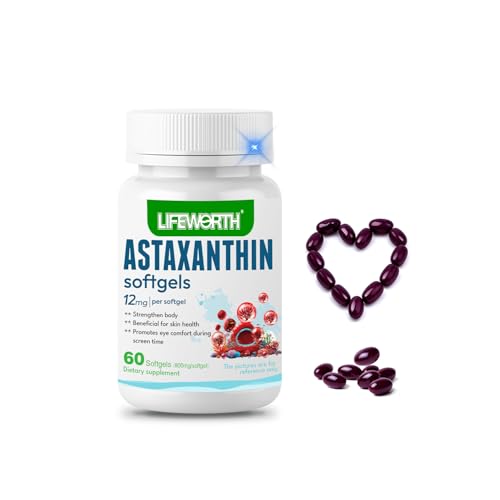
As an Amazon Associate we earn from qualifying purchases. Astaxanthin products vary mainly by dose and by source, with 4mg and 12mg the common strengths and most of them derived from Haematococcus pluvialis algae, so check the label for the astaxanthin content per serving and prefer products that publish third-party testing.
A Note on the Evidence
The evidence reviewed here is primarily from population trials in people with existing AMD or at elevated risk; it does not establish that supplementing with any carotenoid prevents eye disease in healthy individuals with no risk factors. Astaxanthin evidence for eye outcomes specifically comes from small, short trials and should be interpreted cautiously. Anyone with existing eye conditions, those taking medications affecting fat-soluble nutrient absorption, pregnant or breastfeeding individuals, and smokers considering antioxidant supplementation should consult a qualified eye care provider or physician before starting any carotenoid supplement.

Frequently Asked Questions
Which carotenoid is better for age-related macular degeneration?
Lutein and zeaxanthin have the strongest and most direct clinical evidence for AMD. The AREDS2 trial found that supplementing with lutein and zeaxanthin reduced risk of AMD progression compared with the original AREDS formula containing beta-carotene [1]. Astaxanthin has not been tested in large AMD trials to the same standard.
Does astaxanthin help with eye strain from screen use?
There is biological plausibility for astaxanthin in digital eye strain, and early human trials have shown some benefit for accommodative function and fatigue symptoms. A 2022 review noted nutritional approaches including antioxidants as candidates for ameliorating digital eye strain [6]. However, these findings come from small, short studies, and the evidence is not as robust as the AMD data for lutein and zeaxanthin.
Can lutein and zeaxanthin prevent cataracts?
The evidence is suggestive but not definitive. A review of the AREDS and REACT studies found associations between antioxidant micronutrients and lens protection [5], and lutein and zeaxanthin are present in lens tissue. Large-scale RCT evidence specifically confirming that supplemental lutein or zeaxanthin prevents cataracts in humans is still limited.
Is it safe to take astaxanthin and lutein together?
Combining them is physiologically rational since they act on different tissue compartments, and no safety concerns have been identified with combination use. Neither compound has shown serious adverse effects at typical supplemental doses. That said, no large RCT has tested the combined formulation for eye-specific outcomes, so efficacy of the combination versus each alone is not established.
How much lutein and zeaxanthin did the AREDS2 trial use?
The AREDS2 trial used 10 mg of lutein and 2 mg of zeaxanthin daily over approximately five years [1]. This is the dose range most commonly referenced in clinical contexts for AMD risk modification, though it should not be self-prescribed without medical evaluation.
Can astaxanthin cause skin discoloration?
At doses above roughly 20 mg per day, astaxanthin can cause carotenodermia, a reversible yellowing or orange tint of the skin. This has not been reported as a serious adverse effect and resolves when intake is reduced. At doses used in typical human trials — generally 4 to 12 mg per day — this effect has not been consistently observed.
References
- Age-Related Eye Disease Study 2 Research Group et al. Lutein + zeaxanthin and omega-3 fatty acids for age-related macular degeneration: the Age-Related Eye Disease Study 2 (AREDS2) randomized clinical trial. JAMA (2013). PMID 23644932
- Age-Related Eye Disease Study Research Group et al. A randomized, placebo-controlled, clinical trial of high-dose supplementation with vitamins C and E, beta carotene, and zinc for age-related macular degeneration and vision loss: AREDS report no. 8. Archives of ophthalmology (Chicago, Ill. : 1960) (2001). PMID 11594942
- Arnold C et al. Macular xanthophylls and ω-3 long-chain polyunsaturated fatty acids in age-related macular degeneration: a randomized trial. JAMA ophthalmology (2013). PMID 23519529
- Evans JR et al. Antioxidant vitamin and mineral supplements for preventing age-related macular degeneration. The Cochrane database of systematic reviews (2017). PMID 28756617
- Schalch W et al. [Antioxidant micronutrients and cataract. Review and comparison of the AREDS and REACT cataract studies]. Der Ophthalmologe : Zeitschrift der Deutschen Ophthalmologischen Gesellschaft (2003). PMID 12640546
- Lem DW et al. Can Nutrition Play a Role in Ameliorating Digital Eye Strain?. Nutrients (2022). PMID 36235656
- Giannaccare G et al. Clinical Applications of Astaxanthin in the Treatment of Ocular Diseases: Emerging Insights. Mar Drugs (2020). PMID 32370045
- Hecht KA et al. Astaxanthin (AstaReal) Improved Acute and Chronic Digital Eye Strain in Children: A Randomized Double-Blind Placebo-Controlled Trial. Adv Ther (2025). PMID 40014233
These statements have not been evaluated by the Food and Drug Administration. This information is not intended to diagnose, treat, cure, or prevent any disease. Content is for informational purposes only and is not medical advice; consult a qualified healthcare provider before starting any supplement. As an Amazon Associate we earn from qualifying purchases.
